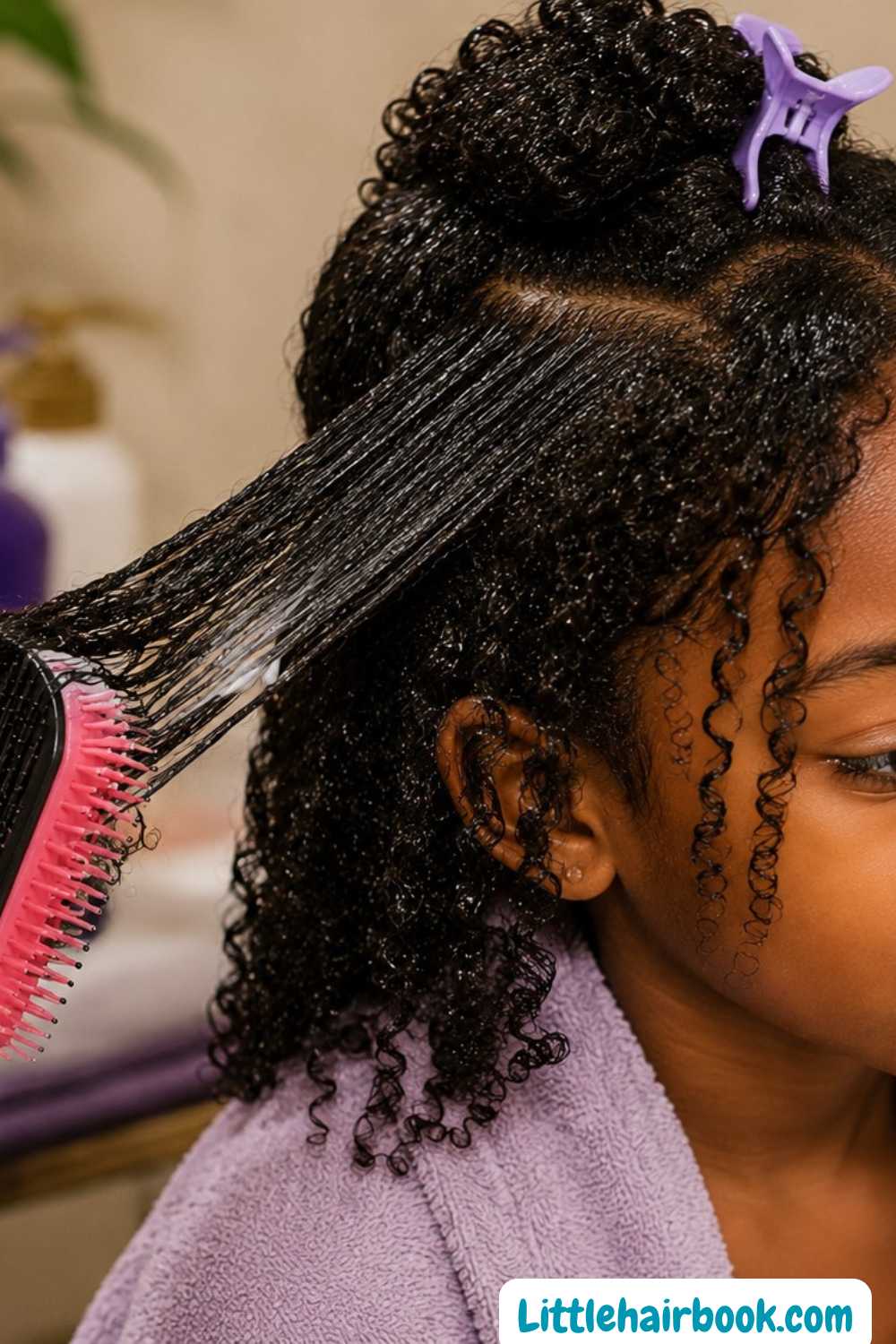
Soft hair is beautiful but soft hair that breaks every time you touch it is a problem. Strength and softness are not opposites in healthy hair. They are partners.
Truly healthy children’s hair is both soft and strong. It bends under tension without snapping. It stretches slightly and springs back. It survives daily handling, protective styling, and wash days without leaving piles of broken strands behind.
If your child’s hair feels soft but breaks constantly, or feels rough and snaps at the slightest tension, strength is what is missing. And building that strength is very achievable with the right approach applied consistently over time.
The last post we covered on Little Hair Book was children’s hair growth routine which gave you the full weekly and monthly plan for growing your child’s hair.
Strength is a major part of what makes that routine work because hair that breaks constantly cannot retain its growth no matter how good the rest of the routine is.
Today we are going deep into how to build genuine strength into your child’s hair from the root all the way to the ends.
Understanding What Makes Hair Weak
Before we talk about how to strengthen the hair, it helps to understand what actually causes weakness in the first place. Hair does not become weak randomly.
There are specific reasons and knowing them helps you address the root cause rather than just managing the symptoms.
Protein deficiency: Hair is made of a protein called keratin. When the hair shaft lacks adequate protein, it becomes soft in the wrong way. Mushy, limp, and stretchy rather than elastically strong.
This kind of weakness leads to breakage during everyday handling.
Chronic dryness: Dry hair becomes brittle. Brittle hair snaps under tension rather than bending. When hair has been chronically dry for a long time, the cuticle becomes rough and damaged which further weakens the overall structure of each strand.
Mechanical damage: Rough combing, tight styles, rubbing against cotton pillowcases, and using the wrong tools all cause mechanical damage that weakens the hair shaft over time.
Each individual incident of rough handling causes microscopic damage. Accumulated over weeks and months, that damage becomes visible as breakage and weakness.
Chemical damage: Harsh shampoos, relaxers, colour treatments, and heat damage all compromise the chemical structure of the hair shaft.
Chemically damaged hair is structurally weaker than healthy hair and more prone to breakage at every stage of handling.
Nutritional deficiencies: The hair follicle needs a steady supply of nutrients to produce strong hair. Iron, protein, zinc, biotin, and omega-3 fatty acids are all essential for producing hair that is structurally strong from the very root.
For more on how nutritional habits connect to hair strength from the inside, children’s hair growth tips on Little Hair Book covers the dietary side of hair health in detail.
Protein Treatments (The Core of Hair Strengthening)
If there is one tool that is specifically designed to strengthen the hair, it is a protein treatment. Everything else we cover in this post supports strength indirectly. Protein treatments address it directly at the structural level.
Hair is a protein fiber. When the hair shaft is damaged by dryness, mechanical stress, or chemical treatments, gaps and weak spots develop in the protein structure.
Protein treatments work by depositing hydrolyzed proteins into those gaps and weak spots, filling them in and restoring structural integrity to the strand.
The result after a protein treatment is hair that is noticeably stronger and more resistant to breakage. It passes the elasticity test better. It handles detangling more easily. It feels firmer and more resilient under tension.
Bookmark this post: 10 Signs of Healthy Children’s Hair Every Parent Should Know
How to Use Protein Treatments Correctly
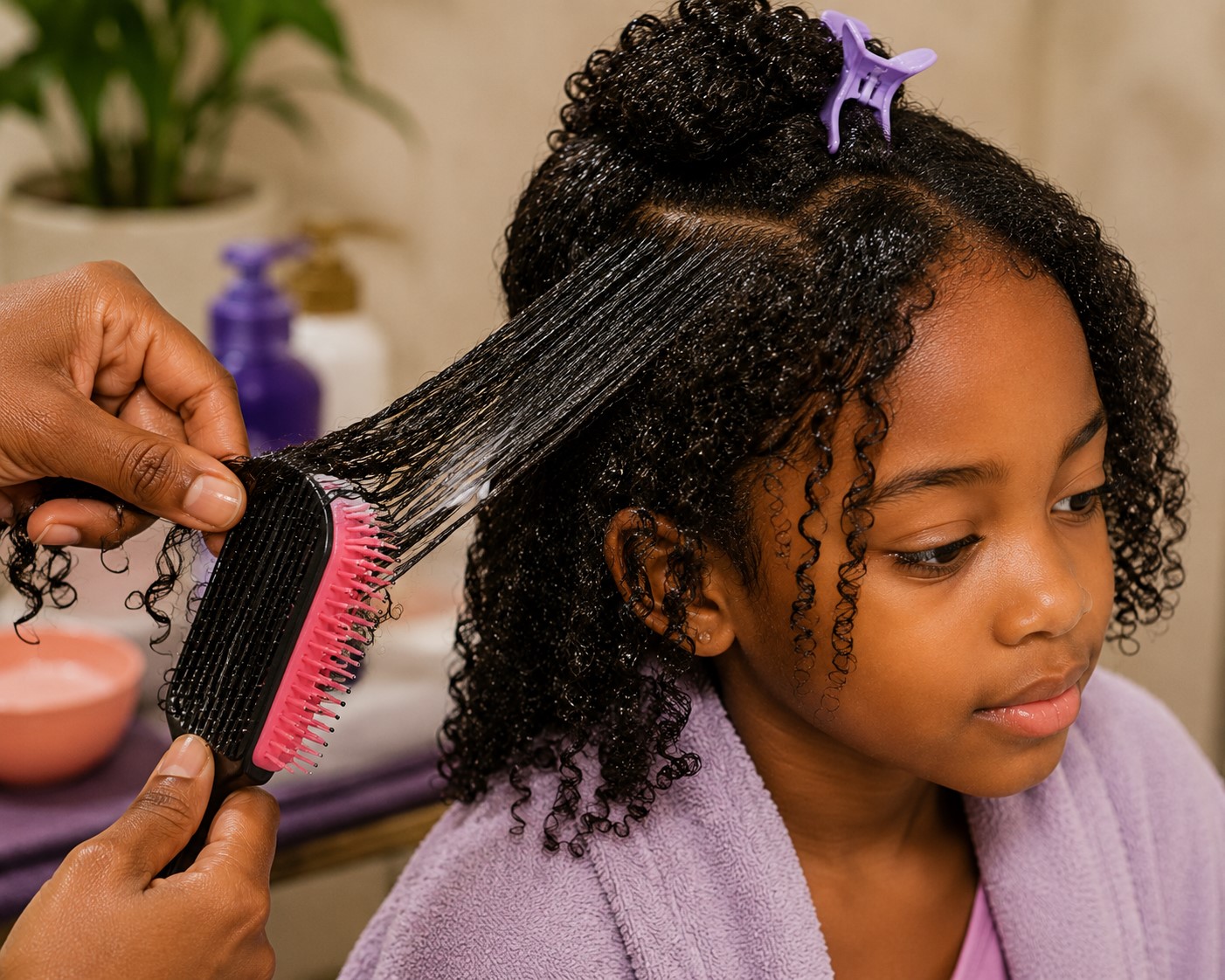
Apply a protein treatment after shampooing the hair on wash day. Work it through the hair section by section from roots to ends. Cover with a plastic cap and leave on for fifteen to thirty minutes. Rinse thoroughly with cool water.
Always follow a protein treatment with a moisturizing deep conditioner. Protein treatments can make the hair feel slightly stiff immediately after rinsing.
A moisturizing deep conditioner right after balances that out and leaves the hair feeling strong and soft at the same time.
Use protein treatments every four to six weeks for most hair types. Children whose hair breaks excessively may benefit from protein treatments every two to three weeks until the breakage reduces.
Once the hair is stronger, scale back to once a month or every six weeks for maintenance.
Do not overdo protein treatments. Too much protein makes the hair stiff and brittle which is the opposite of what you want. Always balance protein with moisture. The hair needs both in the right proportion to be truly strong and healthy.
You will love this: How to Brush Children’s Hair
Choosing the Right Protein Treatment Products
Not all protein treatments are equal. Some are light protein treatments that work well for regular maintenance. Others are stronger reconstructors designed for severely damaged or very weak hair.
Light protein treatments work well for children’s hair as a regular monthly strengthening step. They deposit a moderate amount of protein and are gentle enough for consistent use.
Look for products containing hydrolyzed silk protein, hydrolyzed wheat protein, or keratin amino acids.
Deep protein reconstructors are stronger and more intensive. They are designed for hair that is severely damaged, extremely weak, or has been chemically treated.
Use these sparingly once every six to eight weeks is enough even for very weak hair.
Protein-rich deep conditioners are a gentler way to get regular protein into the hair without using a dedicated protein treatment every time.
Products containing egg protein, hydrolyzed keratin, or silk amino acids provide strengthening benefits alongside conditioning benefits.
These work well as the weekly deep conditioning step for children whose hair needs consistent light protein support.
SheaMoisture Jamaican Black Castor Oil Strengthen and Restore Treatment Masque is a popular option that balances protein and moisture well. It is strong enough to address weakness without being so intense that it causes protein overload with regular use.
Aphogee Two Minute Keratin Reconstructor is a light protein treatment that works quickly and effectively for regular maintenance strengthening.
It is gentle enough for children’s hair and works well as a monthly addition to the wash day routine.
Save this post: How to Care for Curly Children’s Hair
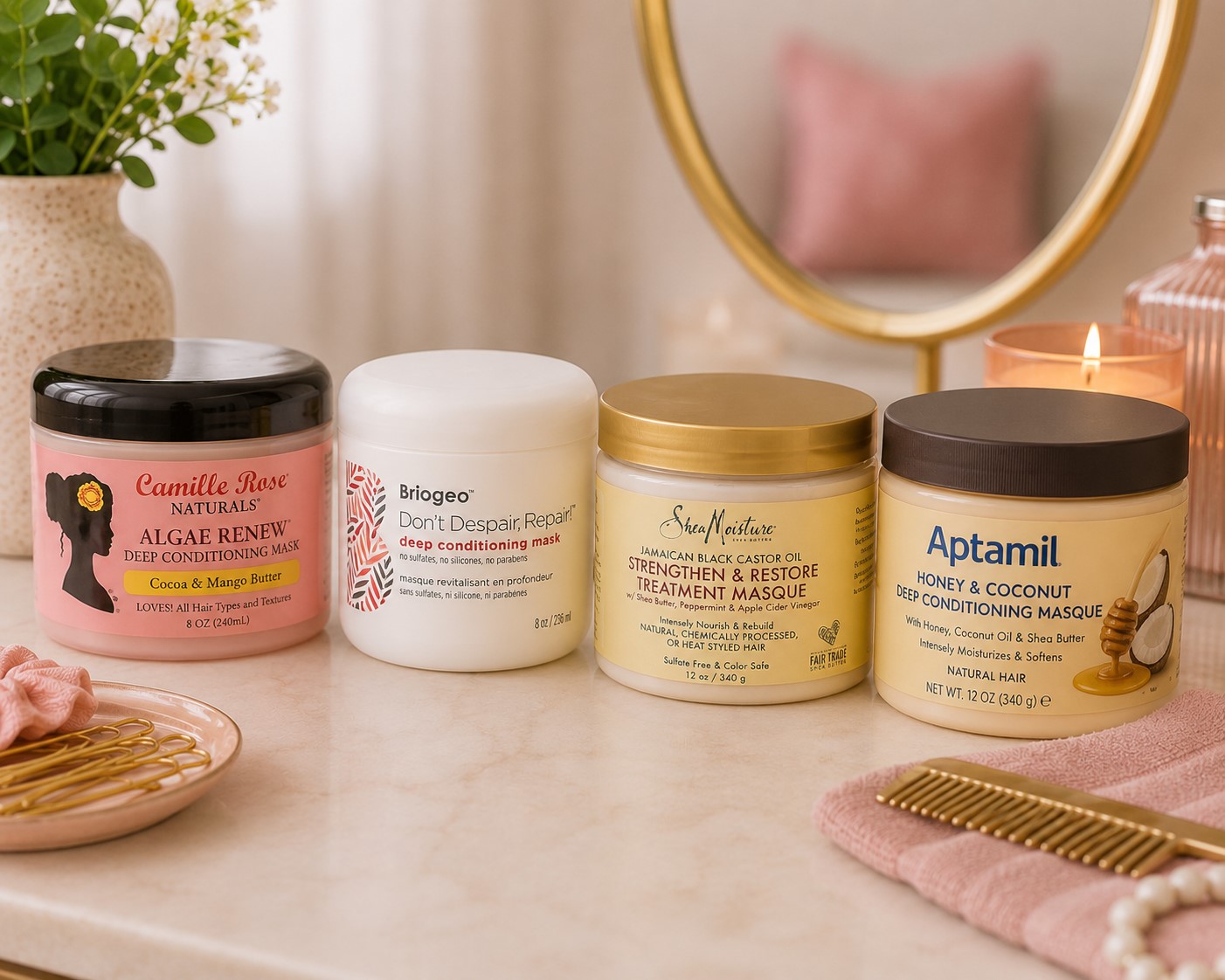
Moisture and Protein Balance
The Balance That Makes Hair Both Strong and Soft
Hair needs both moisture and protein to be truly healthy. Too much moisture without enough protein produces mushy, overly soft hair that stretches too far and snaps.
Too much protein without enough moisture produces stiff, brittle hair that snaps under tension because it has no flexibility.
The goal is balance. Strong, elastic hair that stretches slightly and springs back is the result of having the right amount of both moisture and protein consistently.
Here is a simple way to assess your child’s hair balance. Take a strand of hair and stretch it gently. If it snaps immediately without stretching at all, it needs moisture.
If it stretches significantly without springing back and feels mushy when wet, it needs protein. If it stretches a little and springs back, the balance is right.
Adjust your routine based on what the hair tells you. Increase moisturizing treatments when the hair feels dry and brittle. Add a protein treatment when the hair feels mushy and overly stretchy and maintain the balance once you find it by alternating protein and moisturizing treatments consistently.
For more on how to build the moisturizing side of this balance into your routine, how to moisturize children’s hair on Little Hair Book covers every aspect of moisturizing correctly for every hair type.
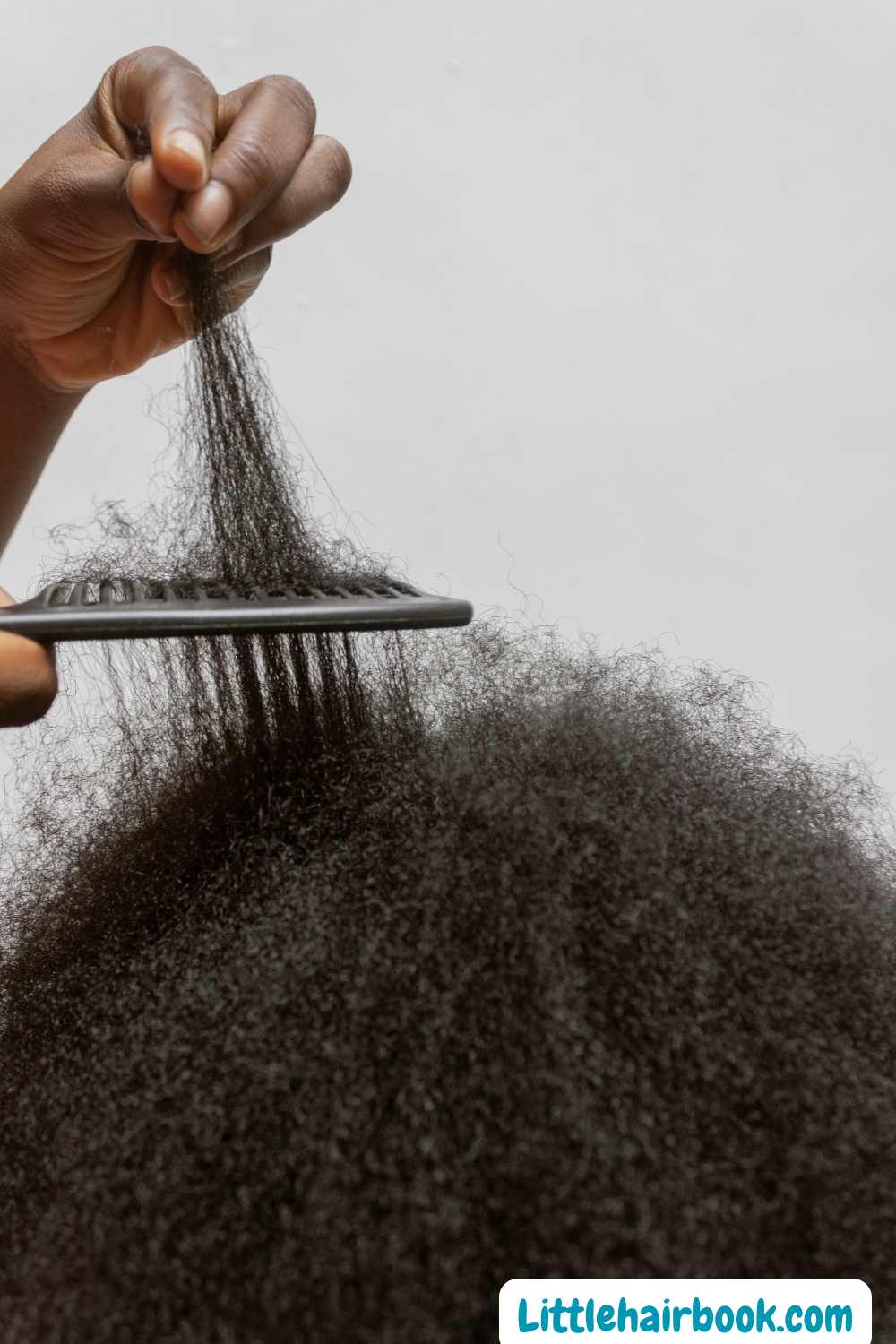
Scalp Health and Hair Strength
Strong hair starts at the scalp. The quality of the hair produced by the follicle determines how strong that hair is throughout its entire length.
Follicles that are well nourished and functioning optimally produce stronger, thicker hair than follicles that are clogged, dry, or stressed.
Keeping the scalp clean through regular washing removes the buildup that clogs follicles and weakens hair production.
Using a clarifying shampoo once a month ensures that even the deeper buildup that regular shampoo misses gets removed properly.
Regular scalp massage stimulates blood circulation and brings more oxygen and nutrients to the follicles. Better nourished follicles produce stronger hair from the very root.
Even five minutes of scalp massage several times a week makes a measurable difference in hair strength over months of consistent practice.
Oiling the scalp two to three times a week keeps it from drying out between wash days. A dry scalp produces dry, weak hair from the very start. Use light oils like jojoba or sweet almond oil for the scalp. Apply small amounts and massage in gently with fingertip pads.
This might help you: How to Comb Children’s Hair Without Tears

Strengthening the Hair Through Careful Handling
Every time the hair is handled roughly, the hair shaft sustains microscopic damage. Each broken cuticle, each strand snapped during rough combing, each hair pulled out by a tight style adds to the cumulative weakness of the hair over time.
Handling the hair carefully is one of the most powerful strengthening strategies because it stops the ongoing mechanical damage that is making the hair weaker every day.
When you eliminate rough handling, the hair stops accumulating new damage. Combined with protein treatments that repair existing damage, the hair becomes measurably stronger within weeks.
Always detangle on damp hair with product. Never drag a comb through dry hair. Work in sections. Hold the hair above where you are combing. Start from the ends every single time. Use a wide-tooth comb rather than a fine-tooth one for detangling.
During styling, avoid anything that puts excessive tension on the hair shaft. Braids that are too tight. Ponytails that pull the hair to its stretching limit. Cornrows that start right at the hairline with significant tension.
Each of these damages the hair shaft at the point of tension and causes weakness that leads to breakage.
For more on how to handle the hair during brushing in a way that builds rather than damages strength, how to brush children’s hair on Little Hair Book covers the right technique and tools for every hair type.
Nutrition for Stronger Hair
Hair strength is built from the inside as much as from the outside. The nutrients your child eats directly determine the quality of the hair their follicles produce.
Protein is the most critical nutrient for hair strength. Without enough dietary protein, the body cannot produce strong keratin and the hair that grows is structurally weaker from the very start.
Make sure your child eats protein at every meal. Eggs, meat, fish, beans, lentils, and dairy are all excellent sources.
Iron carries oxygen to the hair follicles through the blood. Iron-deficient follicles produce thinner, weaker hair. Leafy greens, red meat, lentils, and fortified cereals all provide good amounts of iron. Pair iron-rich foods with vitamin C to help the body absorb the iron more efficiently.
Biotin supports the production of keratin and is one of the most important vitamins for hair strength. Eggs, almonds, sweet potatoes, and avocados are naturally rich in biotin. Most children who eat a balanced diet get enough biotin without supplementation.
Zinc supports the oil glands around the hair follicles and helps maintain a healthy hair growth cycle. Nuts, seeds, whole grains, and meat are good zinc sources for children.
Silica, found in oats, bananas, and leafy greens, strengthens the hair shaft directly and improves its resistance to breakage. Adding these foods regularly to your child’s diet supports stronger hair from a nutritional angle that no external product can replicate.

Protective Styles for Strength Preservation
Protective styles do not directly strengthen the hair but they preserve the strength that your protein treatments and careful handling are building.
When hair is in a protective style, it is not being manipulated daily. The ends are tucked away. Friction against clothing and pillowcases is eliminated.
The hair shaft gets a break from the daily mechanical stress that accumulates into weakness over time.
Think of protective styles as rest periods for the hair. Just as muscles need rest between workouts to grow stronger, hair needs periods of low manipulation to consolidate the strengthening work you are doing with protein treatments and careful handling.
Keep the hair in protective styles for two to four weeks at a time. During that period, maintain moisture through light misting and scalp oiling but avoid daily manipulation of the style itself.
When taking down a protective style, be just as gentle as when putting it in. Work section by section. Use a rat tail comb to loosen ends before unraveling. Never pull or rip a style out.
The taking-down process causes as much potential breakage as the styling process if it is rushed.
For a complete guide on protecting the hair from all the daily and environmental factors that cause weakness and damage, how to protect children’s hair on Little Hair Book covers every protective strategy in detail.

Signs That Strengthening Is Working
As you follow a consistent strengthening routine, watch for these specific signs that the hair is getting stronger.
Less hair in the comb during detangling. Reduced breakage is the most immediate and obvious sign that the strengthening routine is working.
When the comb moves through the hair with significantly less hair coming out in it, the hair is stronger and more resistant to breakage.
Better elasticity test results. When you stretch a strand of hair and it stretches slightly before springing back rather than snapping immediately, the protein and moisture balance is improving.
Styles lasting longer between wash days. Stronger hair holds styles better. When the protective style is still looking neat and intact on day four or five rather than frizzing up immediately, the hair has more structural integrity.
Less pain during detangling for your child. When the hair is strong and properly moisturized, the comb moves through it more easily. Less snagging means less pain means a happier child during hair sessions.
Visible fullness and thickness. As breakage reduces, the hair appears fuller and thicker because strands that were previously snapping off are now being retained.
This fullness is one of the most visually satisfying signs that the strengthening routine is genuinely working.

