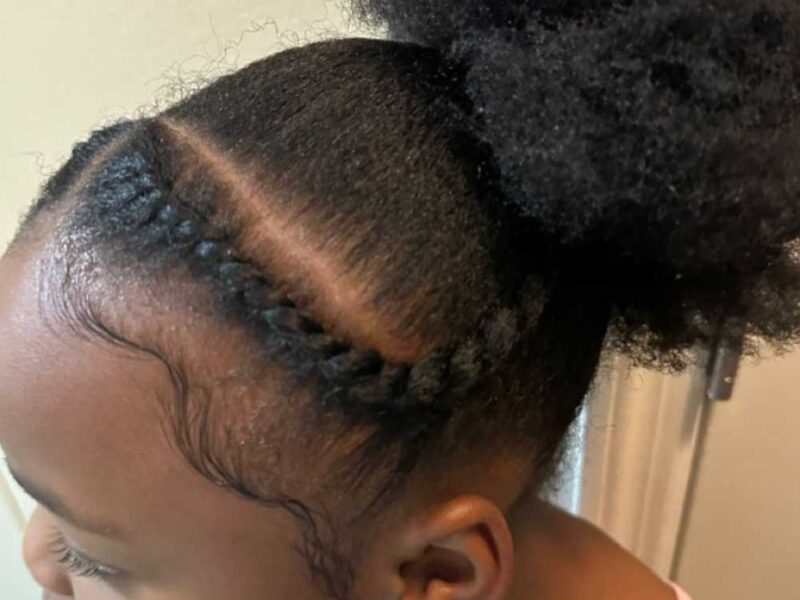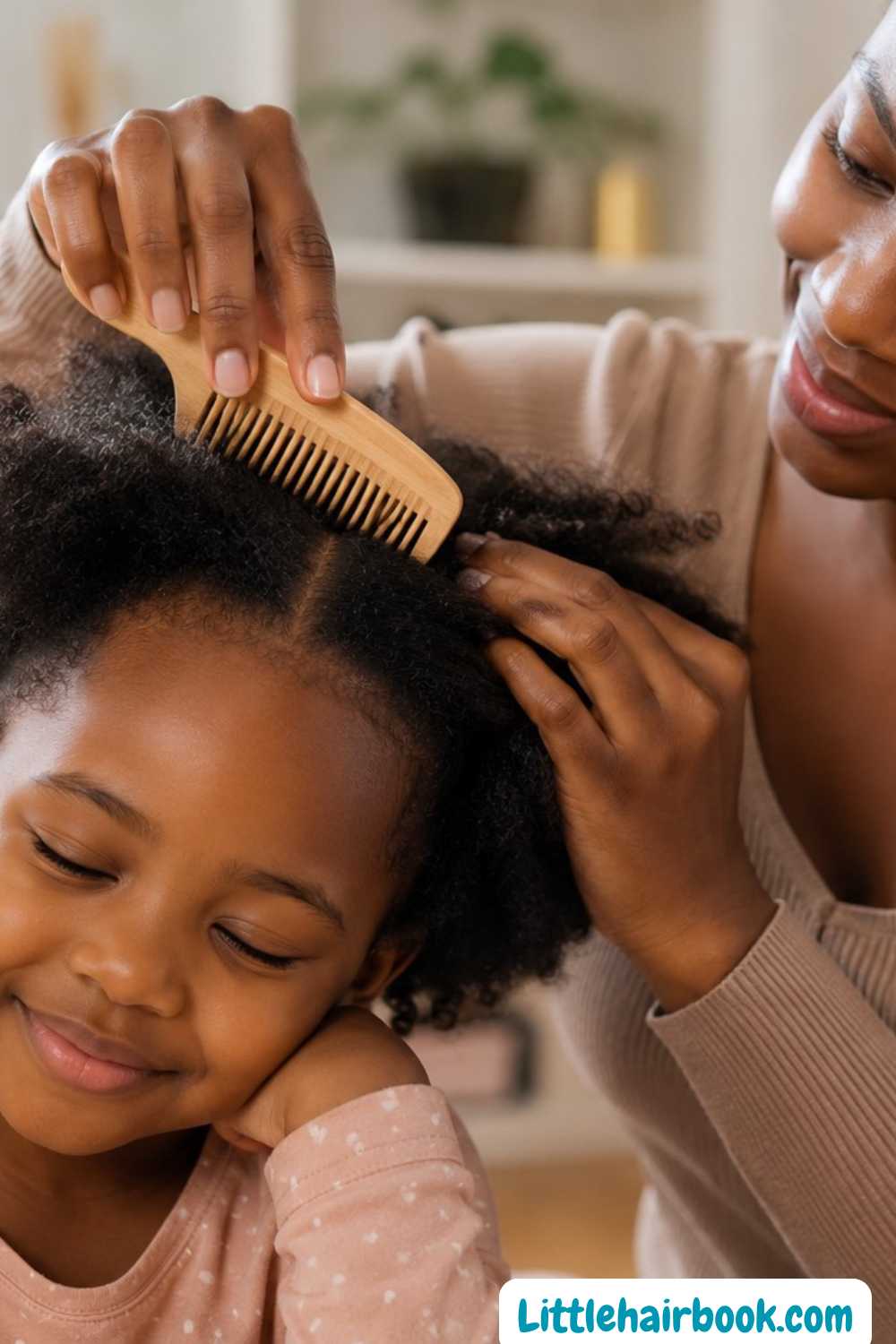
If you’ve ever tried to comb your child’s hair, this probably sounds familiar. The moment you pick up the comb, they start pulling away, covering their head, or trying to negotiate.
“Can we do it later?”
“It’s going to hurt.”
“Please, not today.”
And you haven’t even touched their hair yet.
If that is your reality right now, I want you to know it does not have to stay that way. Combing does not have to be the thing your child dreads most. With the right approach, the right tools, and a little patience, it can become one of the most peaceful parts of your hair care routine.
We just finished talking about brushing in the last post on Little Hair Book, and if you have not read it yet, how to brush children’s hair is a great companion to this one. Brushing and combing are different steps that serve different purposes and understanding both gives you the full picture.
Today we are going deep into combing. What combs to use, when to use them, how to use them, and how to make the whole experience so much calmer for your child.
Why Combing Hurts and How to Fix It
Most of the pain that comes from combing is not actually about the comb itself. It is about the technique.
When a comb is dragged through the hair from root to tip without any product and without holding the hair, every single knot becomes a painful tug that the child feels all the way at their scalp. Do that enough times and of course they are going to resist.
The fix is not a magic comb or an expensive product. The fix is changing how you use the comb. Once the technique is right, even a basic wide-tooth comb becomes a gentle tool that moves through the hair smoothly.
We will get into the full technique shortly. But first, let us talk about choosing the right comb because that matters just as much.
Bookmark this post: Daily Hair Care for Kids
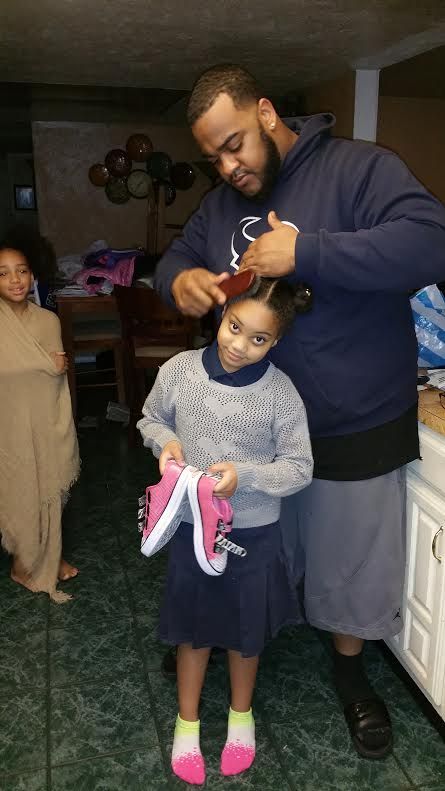
Choosing the Right Comb for Your Child’s Hair
Not Every Comb Works for Every Hair Type
Walk into any store and you will see dozens of different combs. Knowing which one to pick for your child’s specific hair type saves you a lot of frustration.
Wide-tooth comb: This is the most important comb to own for children’s hair, regardless of hair type. The wide spaces between the teeth mean the comb does not catch on every strand. It moves through the hair more gently and is the safest option for detangling. Every parent should have one of these.
Rat tail comb: This comb has a long thin handle that is used for parting the hair into sections. The teeth are finer so it should never be used for detangling. Use it only after the hair is already fully combed through and you are creating parts for styling.
Fine-tooth comb: This is a finishing comb only. It smooths and polishes hair that is already completely tangle-free. Never use it for detangling. On tangled hair, it catches on every knot and causes significant pain and breakage.
Seamless comb: These combs are made without seams along the teeth, which means the edges are smooth and do not snag on the hair. If you can find a seamless wide-tooth comb, it is worth the investment. Regular combs that are made with a mold often have a tiny ridge along each tooth that catches on the hair.
For natural and coily hair, always start with a wide-tooth comb. For straight and wavy hair, a wide-tooth comb for detangling followed by a fine-tooth comb for finishing works well.
You will love this post: How to Wash Children’s Hair Properly
Products That Make Combing Easier
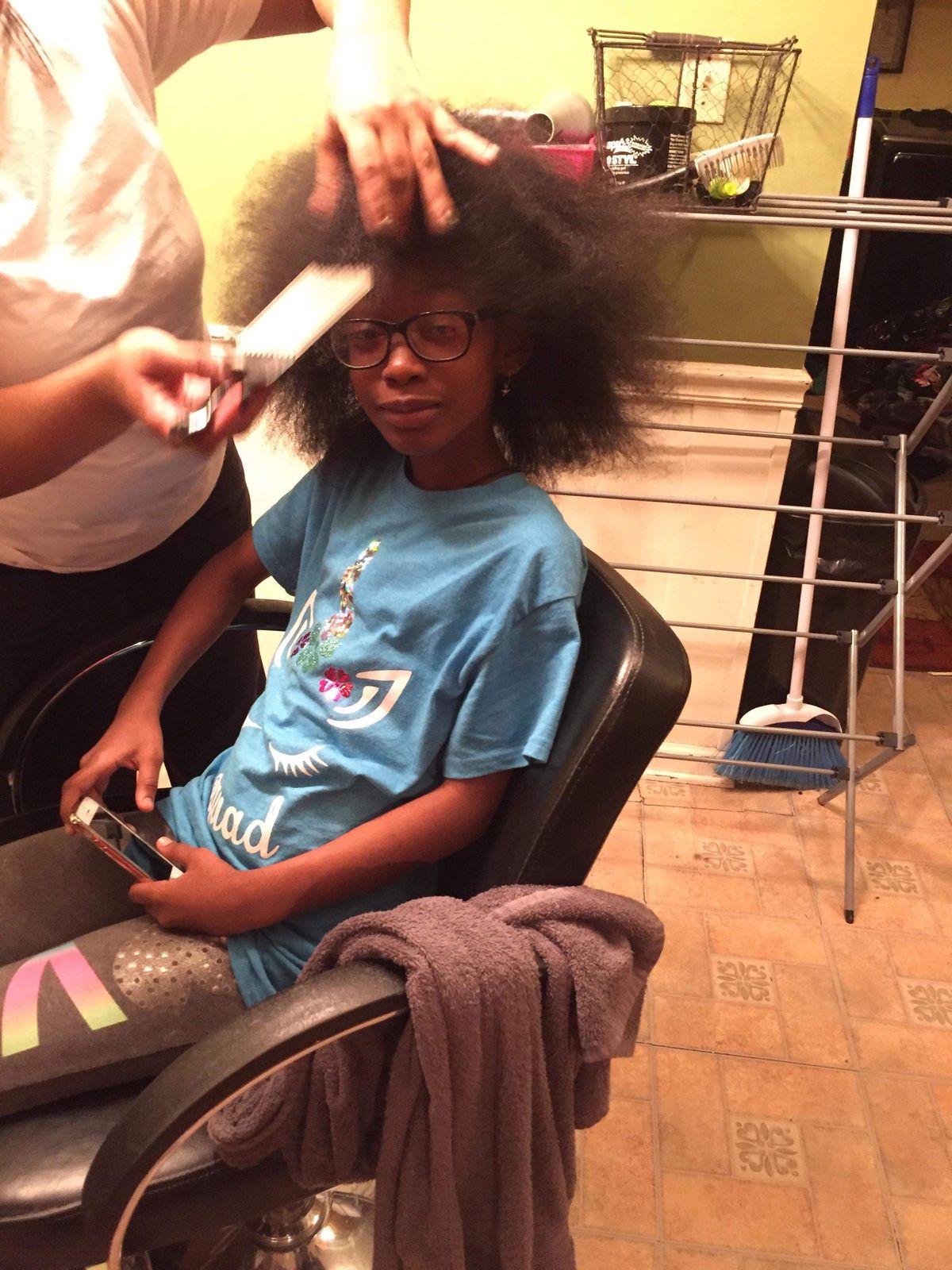
Trying to comb through dry hair without any product is the fastest way to cause pain. The hair needs slip before you bring in any tool.
Water is your first step always. Lightly mist the section you are working on before you comb. Even just a few sprays makes the hair more pliable and easier to work through.
Leave-in conditioner adds moisture and slip at the same time. Apply a small amount to the section and work it through with your fingers before combing. For children with natural or curly hair, this step is non-negotiable.
Detangling spray is a leave-in conditioner in spray form. It is convenient and easy to apply section by section. Look for one that lists water as the first ingredient and does not contain heavy alcohols that dry out the hair.
Conditioner straight from the bottle provides the most slip of all. If your child’s hair is very tangled or very dry, apply a generous amount of regular conditioner to the section before combing. You can rinse it out after or leave it in if you are using a light enough conditioner.
The key rule is simple. Never comb a dry section. Every section gets product before the comb touches it. That one habit alone will cut your child’s discomfort in half.
For more on how moisturizing connects to easier combing throughout the week, how to moisturize children’s hair on Little Hair Book explains exactly how keeping the hair hydrated reduces how much effort combing takes.
How to Comb Your Child’s Hair Step by Step
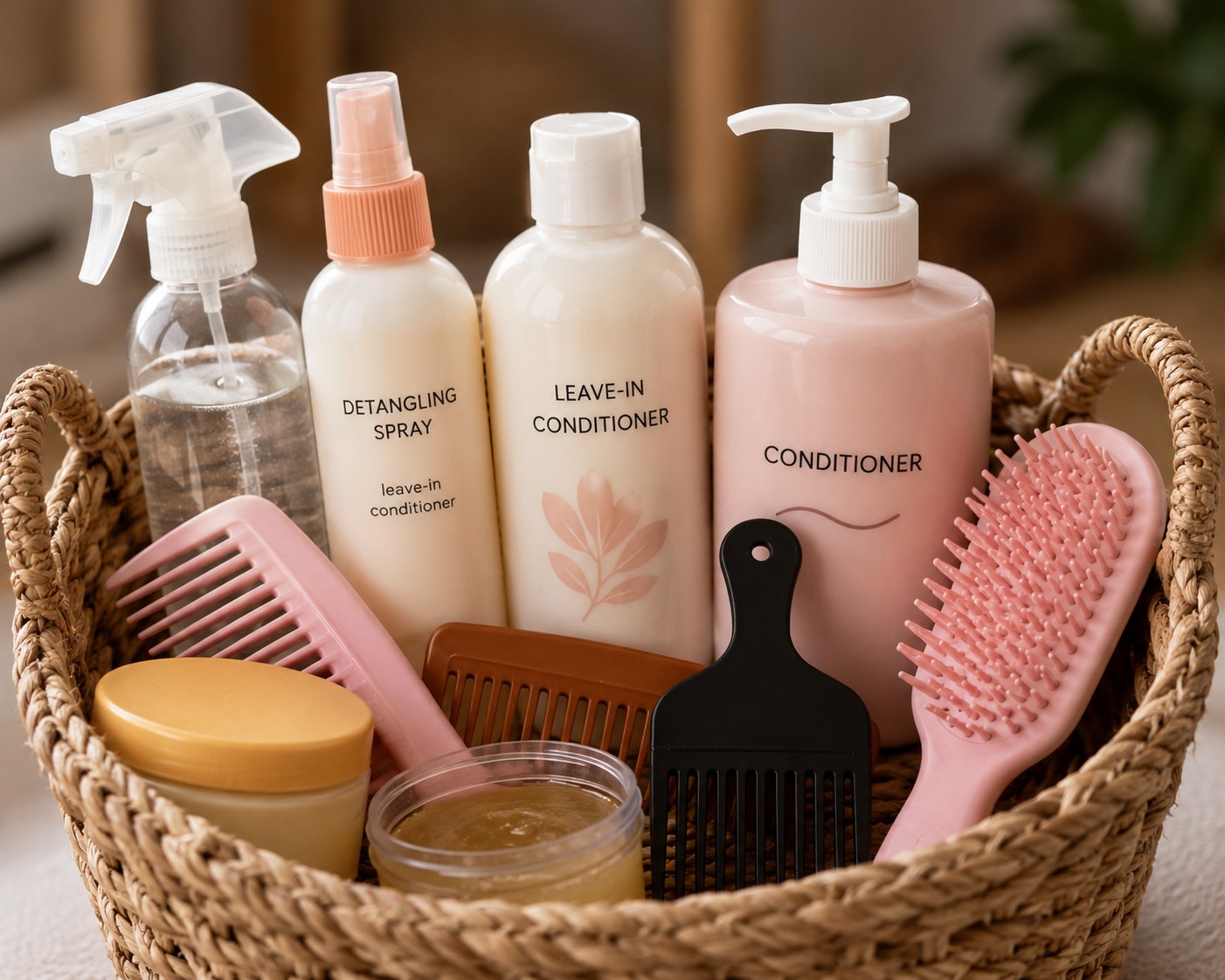
Now let us get into the actual technique. Follow these steps every single time and you will see a significant difference in how your child responds to combing.
Step 1: Divide the hair into sections and never try to comb all the hair at once. Divide it into at least four sections, for thick or long hair, use more.
Clip or twist each section to keep them separate while you work on one at a time.
Step 2: Mist the section with water, you want the hair damp, not soaking. Just enough moisture to soften the strands.
Step 3: Apply your leave-in conditioner or detangling spray, work it through the section with your fingers first.
Finger detangling before the comb comes in removes the biggest knots and makes the combing step so much faster and gentler.
Step 4: Hold the hair firmly above where you are combing, this is the most important step. Use your non-dominant hand to hold the hair just above where the comb is working.
This stops the pulling sensation from traveling up to the scalp. Your child will feel almost nothing when you do this correctly.
Step 5: Start at the very ends of the section, place the comb about two inches from the ends and comb downward through just those bottom two inches.
Once they are smooth, move the comb a little higher and comb through that section. Keep working your way up gradually until you reach the roots.
Step 6: Once the section is fully combed through, twist or braid it and clip it out of the way. Move to the next section and repeat.
What to Do When You Hit a Knot
Handling Stubborn Tangles Without Causing Pain
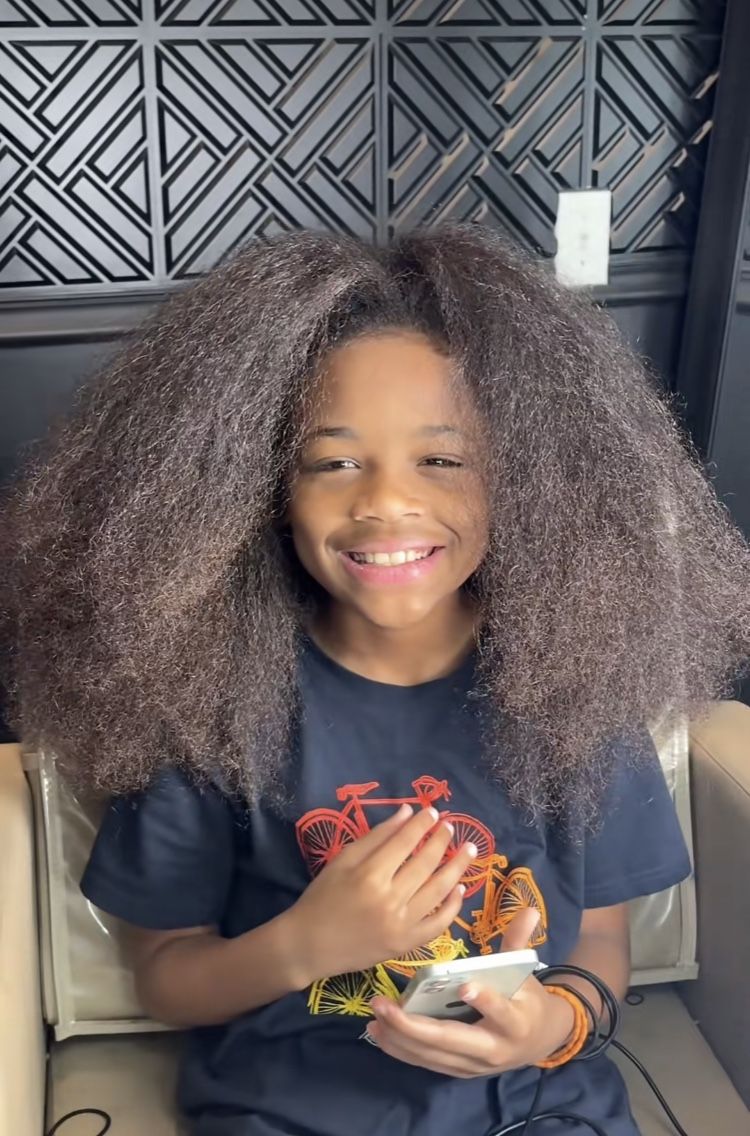
Every combing session will have at least one knot that does not want to cooperate. How you handle that moment makes all the difference.
The most important thing is to stop the comb the moment you feel resistance. Do not push through it, forcing the comb through a knot is what causes the sharp pain that makes children afraid of combing.
Put the comb down and go back to your fingers. Hold the hair above the knot with one hand and use the fingers of your other hand to gently tease the knot apart.
Work from the outside of the knot inward, loosening the edges before trying to separate the middle.
Add more product if needed, sometimes a stubborn knot just needs more slip. Spray a little more water or add a little more leave-in conditioner directly to the knot and let it sit for a few seconds before trying again.
Once the knot is loosened with your fingers, bring the wide-tooth comb back in and gently work through the area. Go slowly and hold the hair above the knot the whole time.
If the knot is truly impossible to remove without causing significant breakage, it is okay to carefully cut it out. A small snip is always better than tearing through the hair.
Combing Different Hair Types
Every hair type has slightly different needs when it comes to combing. Here is a quick guide.
Straight hair: This is the most straightforward hair type to comb. A wide-tooth comb for detangling followed by a fine-tooth comb for finishing works well.
Straight hair can be combed daily without much risk of damage as long as the technique is gentle.
Wavy hair: Wavy hair tangles more easily than straight hair, especially overnight. Always add product before combing and work section by section.
A wide-tooth comb works best, try to avoid combing wavy hair when it is completely dry as this disrupts the wave pattern and causes frizz.
Curly hair: Curly hair is best combed when it is wet and has conditioner in it. Combing dry curly hair breaks up the curl pattern and causes frizz.
Use a wide-tooth comb or a Denman brush on wet conditioned hair during wash day. Between washes, use your fingers to manage any tangles rather than a comb.
Natural and coily hair: This hair type needs the most care during combing. It is the most fragile hair type and the most prone to breakage when not handled gently.
Always work on damp hair with plenty of product and remember to finger detangle first and also use a wide-tooth comb. Work in small sections and go slowly and never rush this hair type.
For children with natural hair specifically, how to care for natural children’s hair on Little Hair Book gives you all the extra guidance you need for managing this beautiful but delicate hair type.
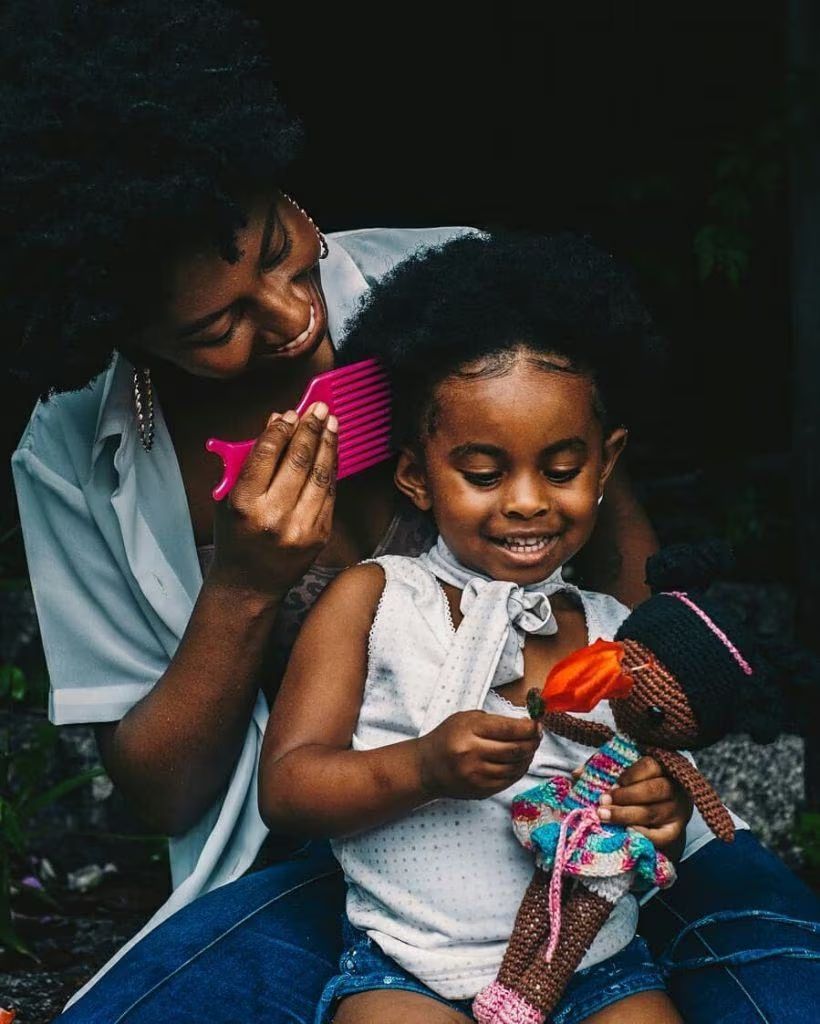
How Often Should You Comb Your Child’s Hair
How often you comb depends on your child’s hair type and what style the hair is in.
For straight and wavy hair worn loose, daily combing is usually necessary to keep tangles from building up. Keep it gentle and quick with the right product and it should not take long at all.
For curly hair, limit combing to wash day when the hair is wet and conditioned. On other days, finger detangle as needed.
For natural and coily hair in a protective style, you may only need to fully comb through the hair on wash day. Between washes, keep the hair in its protective style and use your fingers for any maintenance.
The goal is always to comb as gently and as infrequently as your child’s hair type allows. More combing does not mean healthier hair.
Gentle, intentional combing on the right schedule for your child’s hair type is what actually makes a difference.
Pin this post: Weekly Hair Care Routine for Children
Building Positive Associations With Combing
This part is something I feel strongly about and I think it deserves its own space in this post.
Children who have had painful combing experiences carry that fear for a long time. You cannot undo years of painful sessions in one day but you can start building new, positive associations one session at a time.
Go slower than you think you need to: Even if you are in a rush, slowing down during combing saves time in the long run because your child cooperates instead of fighting you.
Let them hold the section above where you are combing: Older children especially love this because it gives them some control over the process. It also naturally tightens your grip technique because they are helping hold the hair taut.
Narrate what you are doing: “I am starting at the ends now.” “Almost through this section.” “This part might feel a little tight, tell me if it hurts.” When children know what is coming next they feel less anxious.
End every session with a compliment: Tell them how beautiful their hair looks. Tell them how patient they were. Make the end of combing feel like a reward in itself.
For more on building a full routine that your child actually enjoys, children’s hair care routine on Little Hair Book is a great read for putting all of these individual steps together into something that flows naturally for your family.
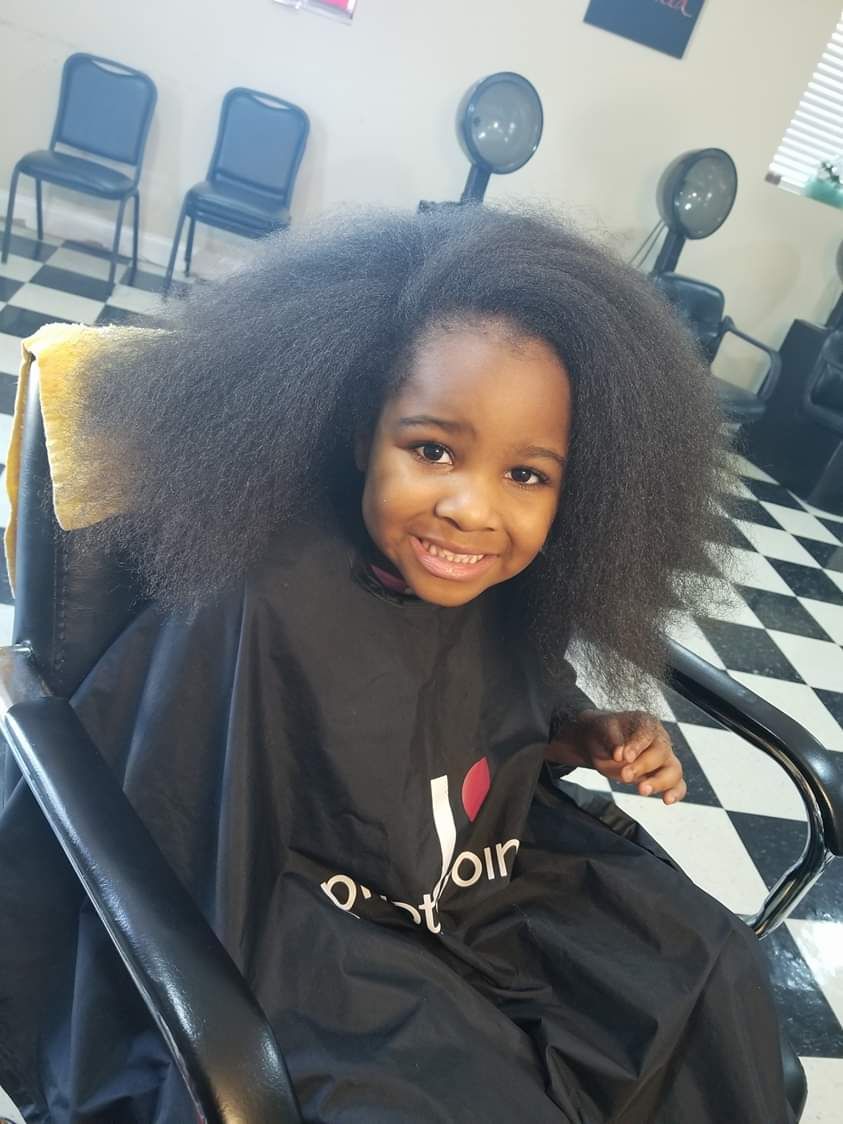
Common Combing Mistakes to Avoid
Even with good intentions it is easy to fall into habits that are working against you. Here are the ones to watch for.
Using a fine-tooth comb on tangled hair: A fine-tooth comb on knots is one of the most painful things a child can experience during hair care. Reserve fine-tooth combs for finishing only, after the hair is already fully detangled.
Combing without product: Dry combing causes unnecessary breakage and pain. Always add moisture before you comb. No exceptions.
Not holding the hair above where you are combing: This is the most common mistake and the one that causes the most pain. Make it a non-negotiable habit every single time.
Rushing: Rushing leads to forcing the comb through knots, missing sections, and an unhappy child. Give yourself enough time so you are not stressed and hurrying through the process.
Starting at the roots: Always bottom up, roots last every time.
Using a dirty comb: Product buildup on a comb transfers right back into clean hair. Rinse your comb with warm water and a little shampoo every week and let it air dry.
Final Thoughts
Combing your child’s hair without tears is genuinely possible. It is not about having perfect hair or perfect products. It is about showing up with the right technique, the right tools, and a gentle consistent approach every single time.
The tears stop when the pain stops. The pain stops when the technique changes. And the technique changes when you decide to be intentional about it. That is it. That is the whole secret.
Keep going. Your child’s hair and your child’s trust in you are both worth the effort.