
Growing a child’s hair is one of those things where the simplest habits consistently done make the biggest difference. You do not need expensive products or complicated routines. You need the right information and the commitment to apply it every single day. That is genuinely it.
We talked about the full foundation of growing children’s hair naturally in the last post on Little Hair Book and if you have not read it yet, how to grow children’s hair naturally covers everything from scalp health to retention habits that you need to understand before diving into these tips.
Today we are getting practical. These are specific, actionable tips that you can start implementing immediately and that will show real results in your child’s hair over time.
Ten Children’s Hair Growth Tips
1. Make Wash Day Consistent Every Single Week
Consistency on wash day is one of the most underrated hair growth tips there is. When wash day keeps getting pushed back or skipped entirely, product buildup accumulates on the scalp, the hair gets increasingly dry and tangled, and the detangling session when you finally do wash becomes so rough that it causes significant breakage.
Picking a specific wash day and sticking to it removes all of that unpredictability. The hair gets cleaned on schedule. The scalp stays healthy.
The detangling sessions stay manageable because the hair has not been neglected long enough to become severely tangled.
For children with natural or coily hair, washing every one to two weeks is the right frequency. For children with straight or wavy hair, once a week works well.
Whatever schedule fits your child’s hair type, commit to it and treat it like an appointment that does not get cancelled.
The products you use on wash day matter just as much as the consistency. Using the wrong shampoo strips the hair and undoes the growth work you are doing the rest of the week.
For guidance on choosing the right one, best shampoo for children on Little Hair Book breaks down which shampoos support hair health rather than working against it.
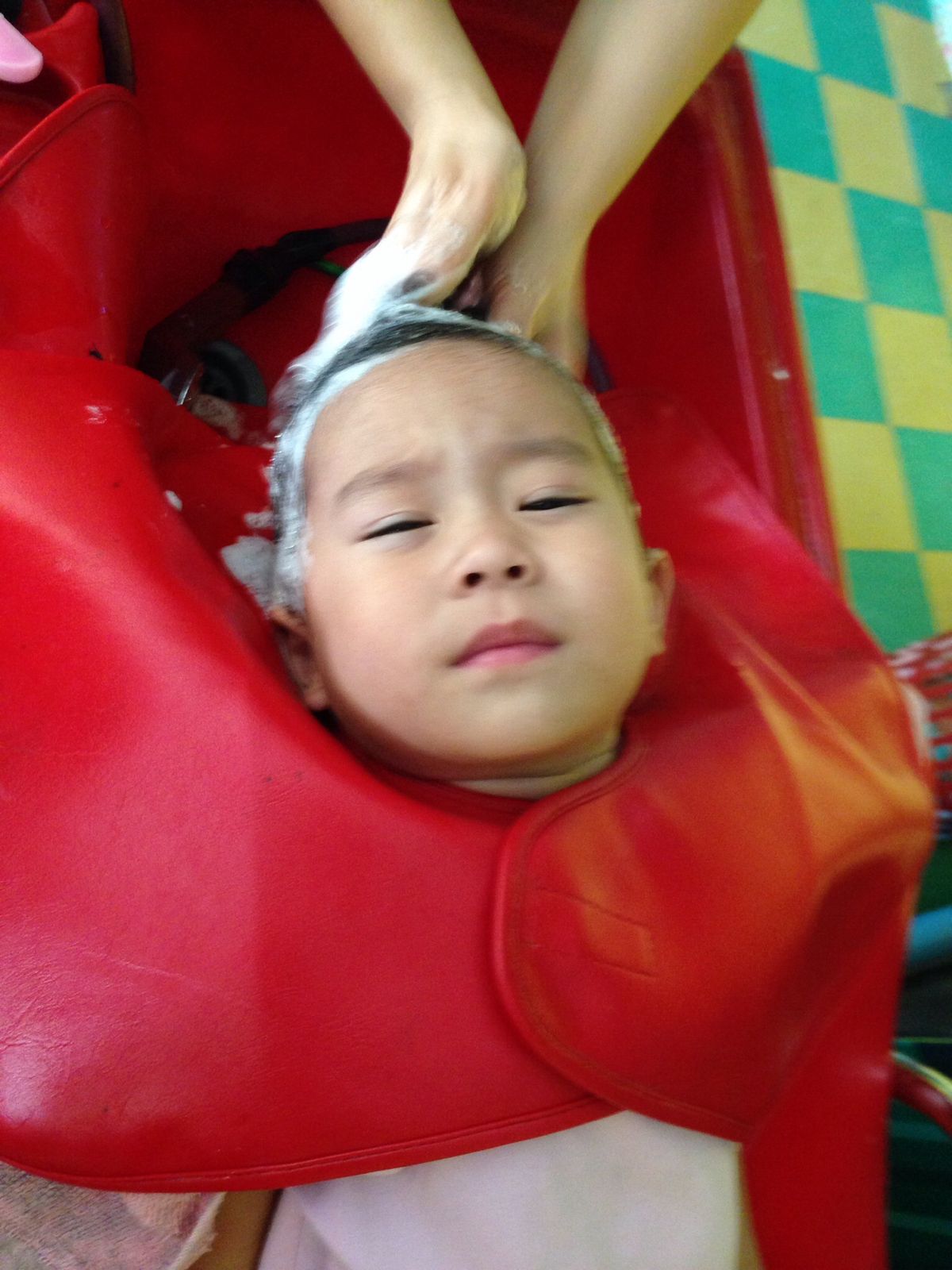
2. Deep Condition Every Single Wash Day
A lot of parents use a regular rinse-out conditioner and call it sufficient. For hair growth, it is not enough on its own. Deep conditioning is what takes the hair from surviving to actually thriving.
Deep conditioners penetrate the hair shaft and replenish moisture and strength from the inside out. They repair damage, restore elasticity, and make the hair significantly more resistant to breakage.
Hair that does not break retains its length, Length retention is growth.
Apply deep conditioner after every shampoo without exception. Leave it on for at least fifteen to thirty minutes with a plastic cap on.
The heat trapped under the cap opens the cuticle and allows the conditioner to penetrate deeper. For very dry or damaged hair, leaving it on for an hour gives even better results.
Make this step non-negotiable on every single wash day regardless of how busy the day is. If you are short on time, skip something else. Do not skip the deep conditioner.
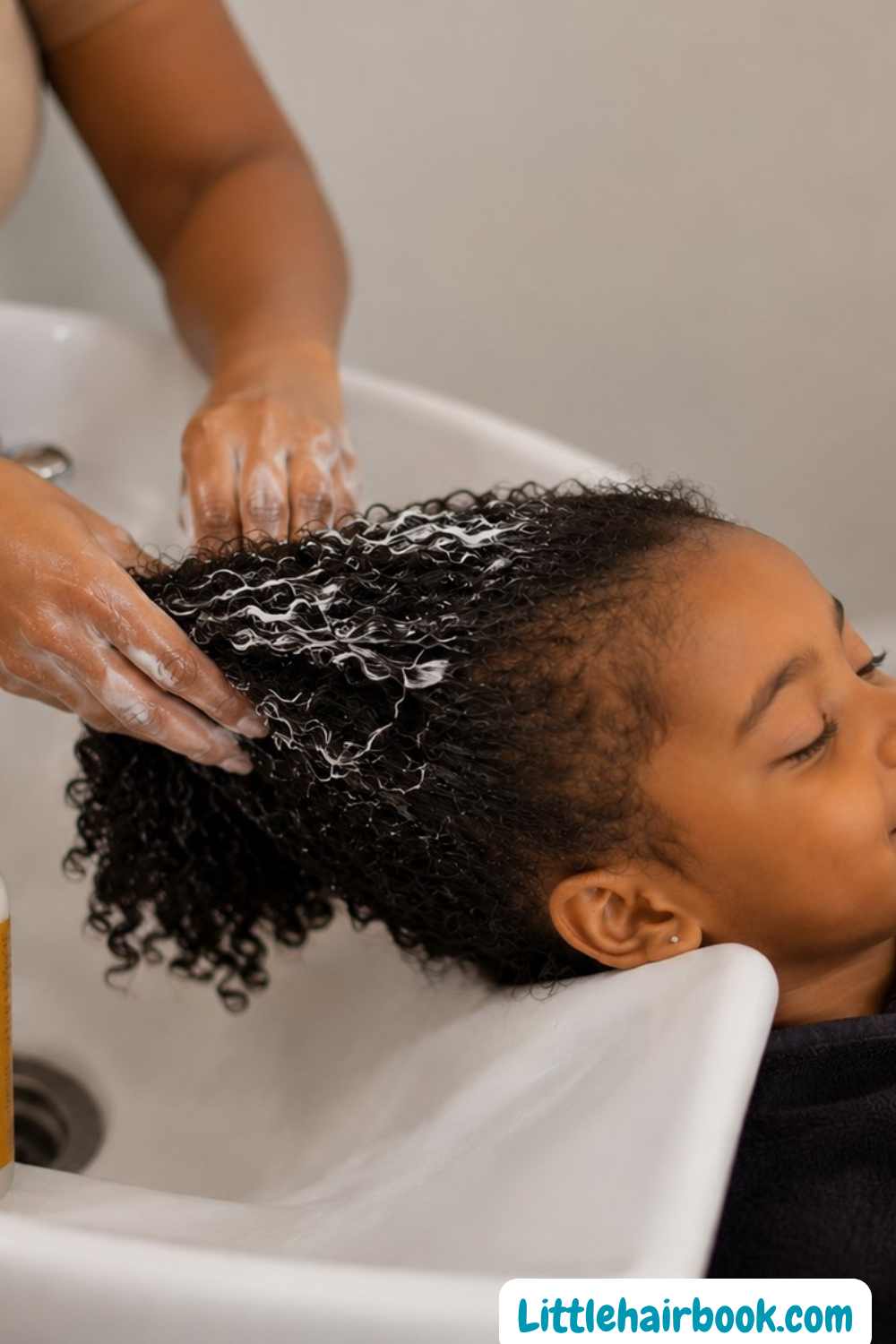
3. Protect the Ends at All Times
The Ends Are Where Growth Lives or Dies
The ends of the hair are the oldest, most fragile, and most exposed part. They are also the part that determines whether the hair looks like it is growing or staying the same length. Protecting the ends is directly connected to length retention which is directly connected to visible hair growth.
Here is what protecting the ends actually looks like in practice.
Keep the ends moisturized always. Every time you moisturize the hair, give the ends extra attention. Apply a little more product to them than to the rest of the hair. Seal them well with oil and cream.
Keep the ends tucked away in protective styles as much as possible. When the ends are exposed they rub against clothing, car seats, and pillowcases constantly. That friction causes breakage that removes the very length you are trying to retain.
Trim split ends before they travel. A split end that is left alone splits further up the shaft and causes breakage higher up the hair. A quick trim every six to eight weeks keeps the ends healthy and prevents that traveling damage.
Never let the ends sit in a dry, unprotected state for extended periods. If your child wears their hair loose, make sure the ends are always moisturized and sealed before they go out. Dry ends break. It is that simple.
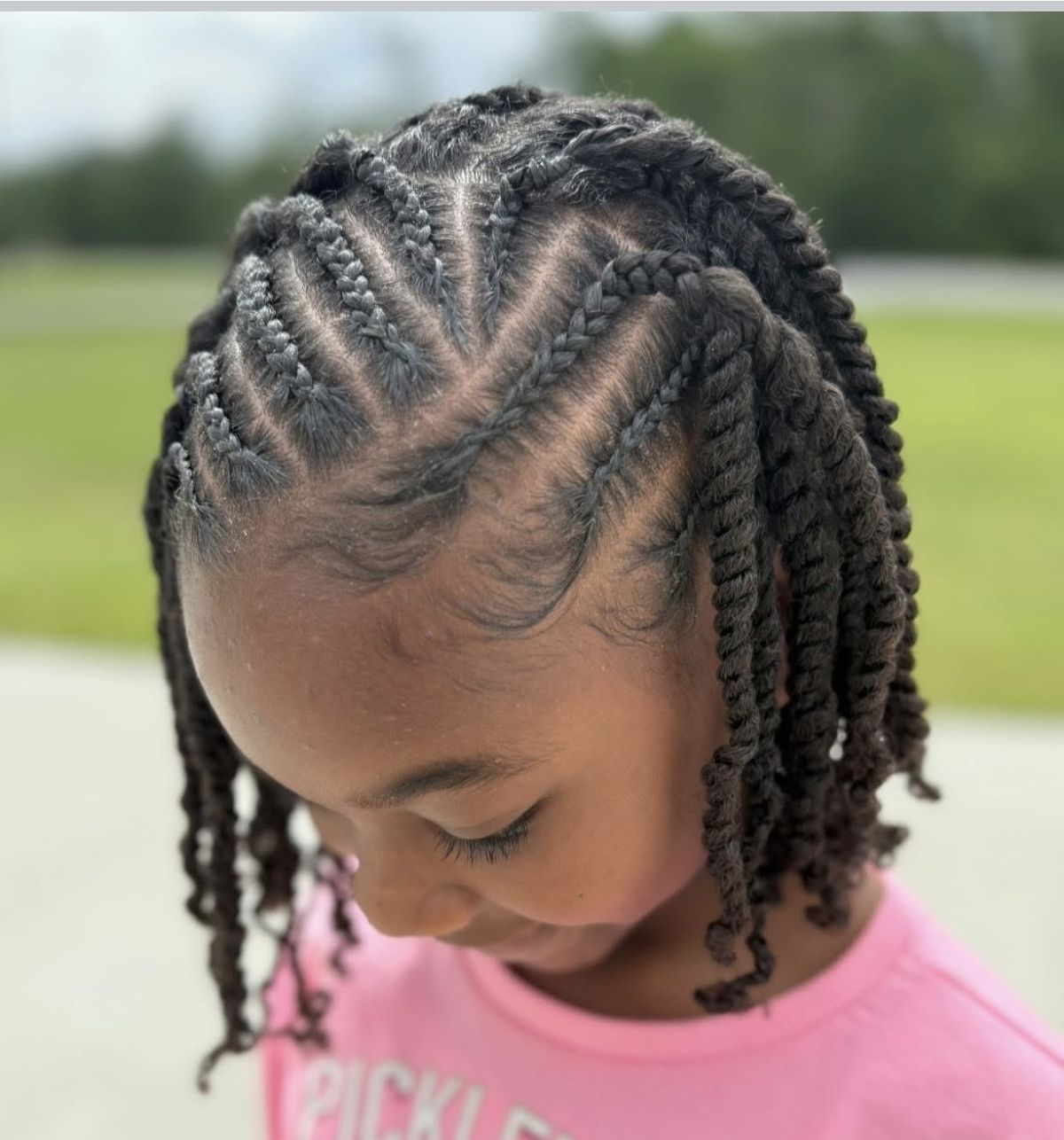
4. Massage the Scalp Regularly
We talked about scalp massage in the previous post and it is worth repeating here as a specific tip because it is one of the simplest and most effective things you can do for hair growth.
Scalp massage stimulates blood circulation in the scalp. Better blood flow means the hair follicles receive more oxygen and nutrients, which supports stronger and healthier hair production.
Studies have shown that regular scalp massage over several months leads to measurable improvements in hair thickness and growth rate.
You do not need any special tool to do this. Your fingertips are enough. Use the pads of your fingers and massage in small circular motions across the whole scalp for three to five minutes several times a week.
Adding a growth-supporting oil to your fingertips before massaging amplifies the benefits. Rosemary oil diluted in jojoba oil is one of the most researched options for hair growth support.
Peppermint oil diluted in a carrier oil is another good option. Always dilute essential oils properly before applying to a child’s scalp.
For a structured routine that incorporates scalp massage alongside all the other growth-focused habits, children’s hair growth routine on Little Hair Book maps out exactly when and how to do each step through the week.

5. Use Satin Every Single Night
The Nighttime Tip That Changes Everything
This tip costs less than most hair products and has one of the biggest impacts on hair growth of anything on this list. A satin bonnet or satin pillowcase at night protects the hair from the friction and moisture loss that happens during sleep.
Cotton pillowcases are rough on a microscopic level. Every time your child moves their head during sleep, their hair rubs against that rough surface.
Over the course of a night that is hundreds of small friction events that weaken the hair shaft and cause breakage. Multiply that by seven nights a week and three hundred and sixty five nights a year and the cumulative damage is significant.
Satin is smooth. Hair glides over it rather than rubbing against it. Moisture stays in the hair instead of being absorbed by the pillowcase. Styles stay intact instead of being crushed and tangled during sleep.
The result is hair that wakes up in better condition every single morning and breaks far less over time.
If your child will not keep a bonnet on, use a satin pillowcase instead. If they move around too much for a pillowcase to stay under their head all night, try a satin-lined cap that fastens under the chin.
There is always a solution. Not using satin at all is not one of them when you are focused on growing the hair.
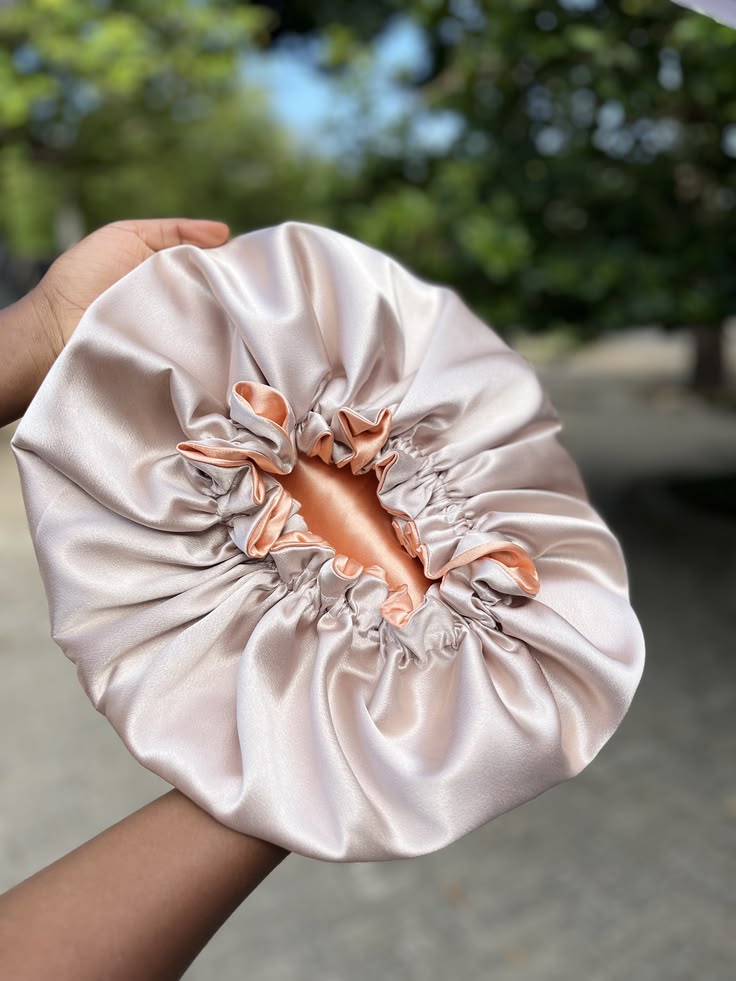
6. Be Gentle During Detangling and Styling
Rough handling during detangling and styling is one of the biggest causes of breakage in children’s hair. And breakage is the enemy of growth.
Every strand that snaps during a rough combing session is a strand that is not contributing to your child’s length retention.
Always detangle on damp hair with product in it. Never on dry hair without anything. Start from the ends and work your way up to the roots.
Hold the hair above where you are combing so your child does not feel the tension at the scalp. Take your time and work in sections.
During styling, avoid styles that put too much tension on the hair especially around the edges and hairline. Tight ponytails and tight cornrows right at the hairline cause traction alopecia over time which is hair loss caused entirely by tension.
Keep styles comfortable and loose enough that your child is not complaining of tightness immediately after the style is done.
For everything you need to know about handling the hair gently enough to protect growth during the combing process, how to comb children’s hair without tears on Little Hair Book covers the full technique in detail.
7. Keep the Scalp Clean and Unclogged
A clogged scalp is a slow-growing scalp. When product buildup, excess oil, sweat, and dead skin cells accumulate on the scalp, they block the follicles and interfere with healthy hair production.
Keeping the scalp clean is a direct hair growth tip.
Beyond your regular wash day shampoo, use a clarifying shampoo once a month to remove the deeper buildup that regular shampoo does not fully address.
Clarifying shampoos are stronger and more thorough. They strip everything from the hair and scalp including buildup that has accumulated over weeks of product use.
After a clarifying shampoo, always follow up immediately with a deep conditioner. The clarifying process is thorough enough that it strips some natural moisture from the hair alongside the buildup.
The deep conditioner restores that moisture and brings the hair back to a healthy baseline.
Between wash days, if the scalp feels itchy or looks flaky, a cotton pad dampened with diluted apple cider vinegar applied directly to the scalp can help cleanse between washes without disrupting the hair.
8. Eat for Hair Growth
What Goes Into the Body Shows Up in the Hair
Hair growth starts from the inside. No amount of external products can compensate for a diet that is not giving the body what it needs to produce strong healthy hair.
The hair follicles are some of the most metabolically active cells in the body. They need a constant supply of nutrients to function properly. When the diet is lacking in key nutrients, the body prioritizes other functions over hair growth and the hair suffers as a result.
Here are the most important dietary tips for supporting your child’s hair growth naturally.
Make sure your child is eating enough protein every single day. Hair is made of protein and without enough of it in the diet the body cannot produce strong hair. Eggs, meat, fish, beans, and lentils are all excellent protein sources for children.
Include iron-rich foods regularly. Iron deficiency is one of the leading causes of hair loss and slow growth in children. Spinach, red meat, fortified cereals, and lentils are good sources.
Pair them with vitamin C rich foods like oranges or tomatoes to help the body absorb the iron more effectively.
Add omega-3 fatty acids to the diet through fish, walnuts, or flaxseeds. These nourish the scalp and support the production of healthy hair from the follicle level.
Make water a habit. A well-hydrated child has a healthier scalp and stronger hair than a dehydrated one. The scalp needs water to stay healthy and produce quality hair just like every other part of the body.

9. Choose the Right Products for Your Child’s Hair Type
Using the wrong products is one of the most common reasons children’s hair fails to grow as well as it should. Products that contain harsh sulfates, heavy mineral oil, petrolatum, or drying alcohols work against hair growth by causing dryness, breakage, and scalp irritation.
Choosing products that are specifically suited to your child’s hair type and that contain gentle, nourishing ingredients makes a significant difference in how the hair responds over time.
For natural and coily hair, look for sulfate-free shampoos, rich deep conditioners, water-based leave-in conditioners, and sealing oils and creams that do not contain mineral oil or petrolatum.
For curly hair, lightweight moisturizing products that define without buildup work best. Avoid heavy silicones that build up with regular use and block moisture from getting into the hair.
For straight and wavy hair, lighter products that add moisture without weighing the hair down are the right choice. Heavy butters and thick creams are too much for these hair types and cause buildup quickly.
For guidance on finding the right moisturizing products to support your child’s hair growth, best hair moisturizers for children on Little Hair Book covers the best options for every hair type in detail.

10. Track Progress and Stay Consistent
Hair growth is slow. Half an inch per month is the average rate. That means in three months you are looking at an inch and a half of new growth. In six months, three inches.
Those numbers sound small but on a child whose hair starts at four inches, three inches of retained growth is a significant and visible change.
The problem is that when you are looking at your child’s hair every single day, you do not notice the gradual change. It happens so slowly that it is easy to feel like nothing is working even when it actually is.
Take a photo of your child’s hair every month in a stretched or blown out state. The same position, the same lighting, the same style if possible.
After three to four months of consistent photos, you will see the growth clearly. Those monthly photos are also incredibly motivating. Seeing visible progress is what keeps you showing up consistently when the daily routine starts to feel like a lot.
Staying consistent is genuinely the most important tip on this entire list. All of these habits work. But they only work when they are done consistently over time.
Show up for your child’s hair every day, every wash day, every nighttime routine, and the growth will come.
For more on recognising the signs that your consistency is paying off and the hair is truly healthy and thriving, signs of healthy children’s hair on Little Hair Book helps you know exactly what healthy growing hair looks and feels like.

