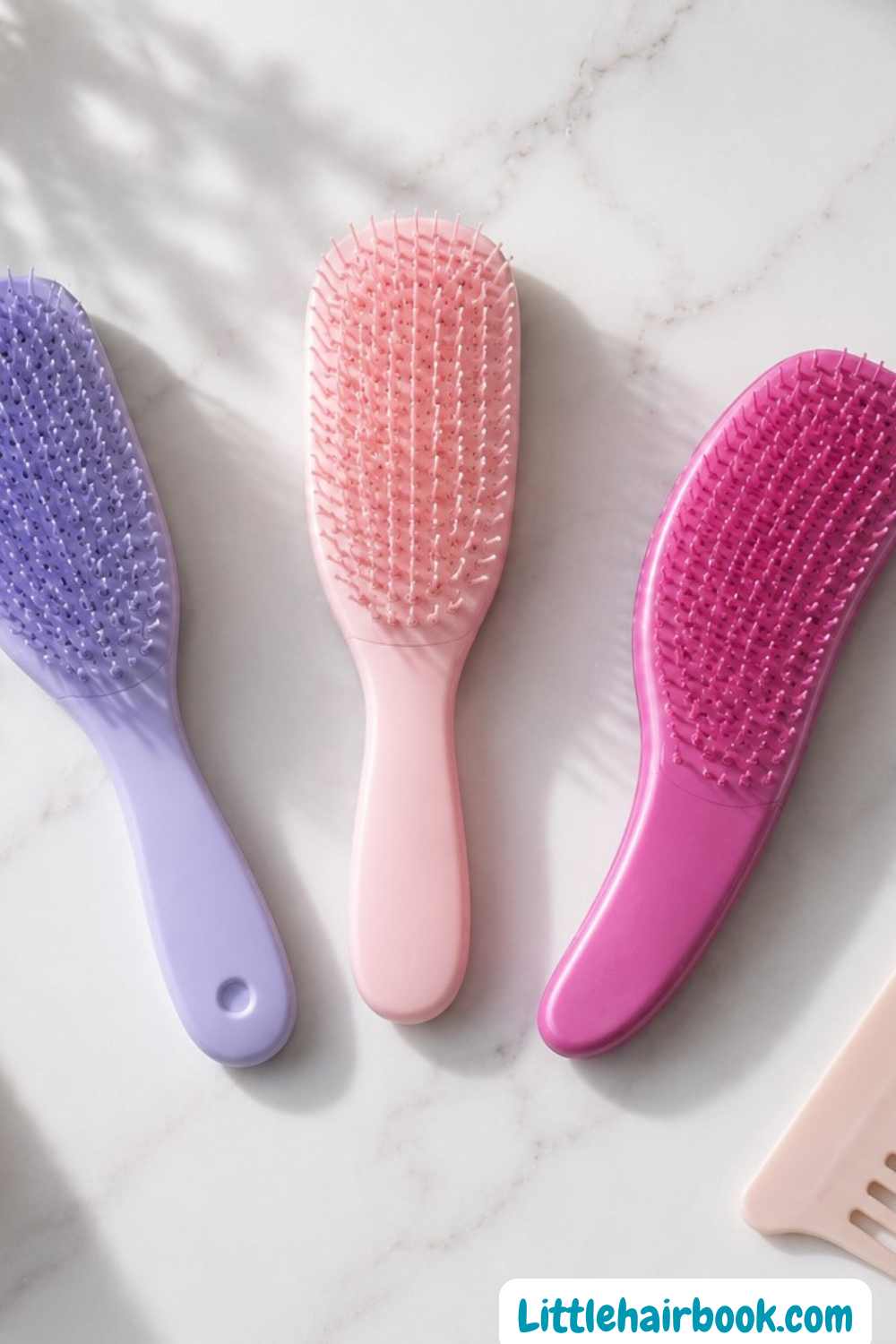
Choosing the right hair brush for your child is more important than many parents realize. The right brush can make brushing easier, reduce tangles, prevent breakage, and keep your child’s hair healthy.
On the other hand, using the wrong brush can cause pain, frizz, and unnecessary damage, especially if your child has curly, coily, or thick hair.
The truth is, choosing the right brush is not complicated once you know what you are looking for. It just requires knowing your child’s hair type and understanding what different brushes are actually designed to do.
We have already covered the best brushes available on the market in best hair brushes for children on Little Hair Book, and we went through combs in detail in best combs for kids too. This post is different though, this one is specifically about how to make the right choice for your individual child, because what works for someone else’s child may not work for yours at all.
Let us get into it.
Start With Your Child’s Hair Type
Everything starts here. Before you look at a single brush, you need to know what kind of hair you are working with. Buying a brush without knowing your child’s hair type is like buying shoes without knowing their size. You might get lucky but most of the time you will not.
Hair types range from straight to wavy to curly to coily. Within each of those categories there are also subcategories based on texture and density.
Two children can both have curly hair and still need completely different brushes because one has fine loose curls and the other has thick tight ones.
Here is a quick way to identify your child’s hair type if you are not already sure. Wash the hair, apply no products at all, and let it air dry completely. Whatever the hair does naturally with zero interference is its true hair type.
Straight hair dries flat and smooth, wavy hair dries with a gentle S-shape, curly hair dries in defined ringlets or spirals and coily hair dries in tight coils or a fluffy undefined cloud depending on the subtype.
Once you know the hair type, choosing a brush becomes so much more straightforward. For more on understanding different hair types and what they need, how to care for natural children’s hair on Little Hair Book goes into the differences in detail.
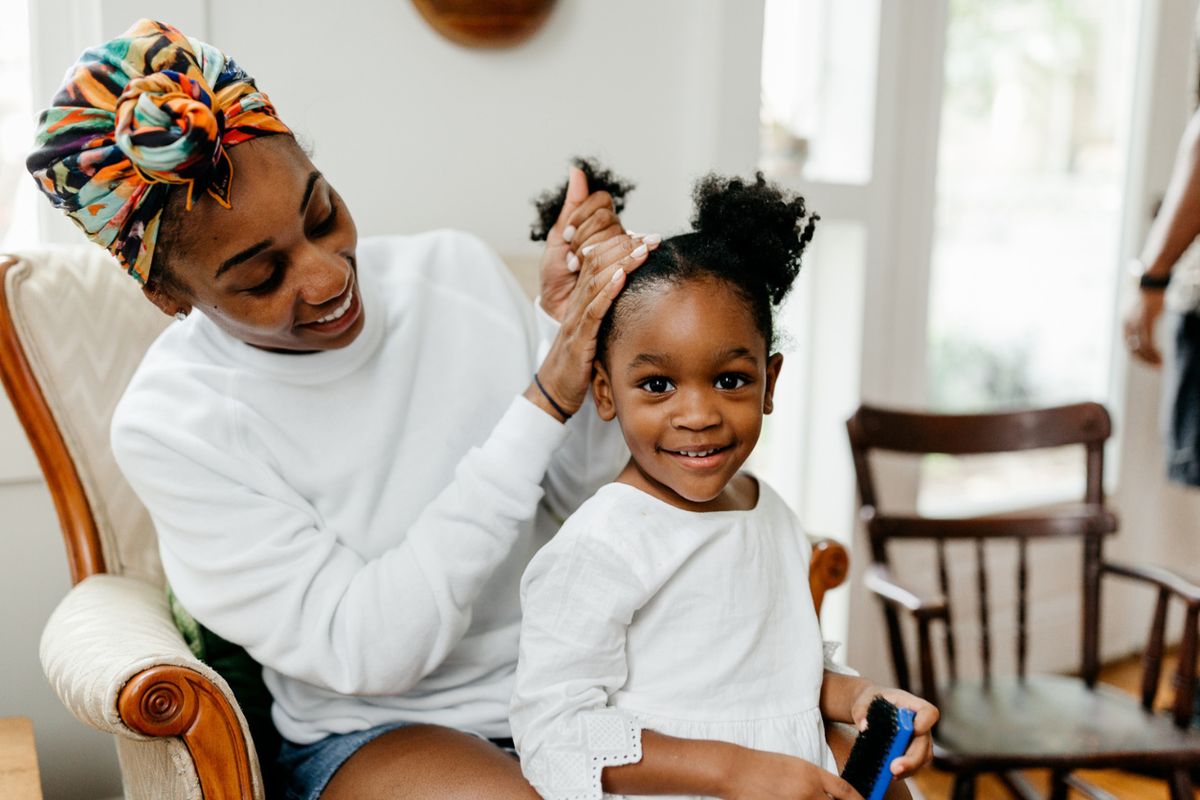
Understanding Hair Density and Texture
Hair type is not the only thing that matters when choosing a brush, density and texture play just as big a role.
Hair density is how much hair your child has on their head. Some children have very thick, dense hair where you can barely see the scalp even when the hair is parted.
Others have fine, sparse hair where the scalp is easily visible. Density affects which brush size and bristle firmness works best.
Hair texture refers to the thickness of each individual strand. Fine texture means each strand is thin and delicate. Coarse texture means each strand is thick and strong. Medium texture falls in between.
A child with thick dense hair and coarse texture needs a brush that can penetrate the density without being so stiff that it scratches. A child with fine sparse hair needs a brush with very soft bristles that will not snap the delicate strands.
Knowing both the density and texture of your child’s hair alongside the hair type gives you a complete picture of what the hair needs from a brush.
Choosing a Brush for Straight Hair
Simple But Still Worth Getting Right
Straight hair is the most straightforward hair type to brush. It does not have a curl pattern to preserve and the scalp’s natural oils travel down the hair shaft easily. But that does not mean any old brush will do.
For fine straight hair, the most important thing is using a brush with soft enough bristles that it does not snap the delicate strands.
A soft bristle brush or a boar bristle brush works beautifully here. The boar bristles distribute the scalp’s natural oils down the length of the hair as you brush, which gives fine straight hair a lovely natural shine.
For thick straight hair, you need something with a bit more firmness to actually penetrate the density. A mixed bristle brush with both boar and nylon bristles works well.
The nylon bristles help move through the thickness while the boar bristles smooth and add shine.
For all straight hair types, a paddle brush is a useful addition. The wide flat base covers a large surface area quickly which makes brushing long or thick straight hair much faster.
Pair it with a boar bristle brush for finishing and you have a very solid two-brush routine for straight hair.
One thing to avoid with straight hair is using a brush that is too firm. Straight hair lies flat and is fully exposed to whatever the brush does to it.
A stiff brush drags over the hair and causes friction that leads to breakage over time even if it does not feel painful in the moment.
Choosing a Brush for Wavy Hair
Wavy hair sits between straight and curly in terms of its needs. It has a natural wave pattern that you want to enhance rather than disrupt, and it tends to frizz more easily than straight hair.
The best approach for wavy hair is to brush only when the hair is damp and has a little product in it. Brushing completely dry wavy hair disrupts the wave pattern and causes frizz. A light mist of water and a small amount of leave-in conditioner before brushing makes a significant difference in how the hair looks afterward.
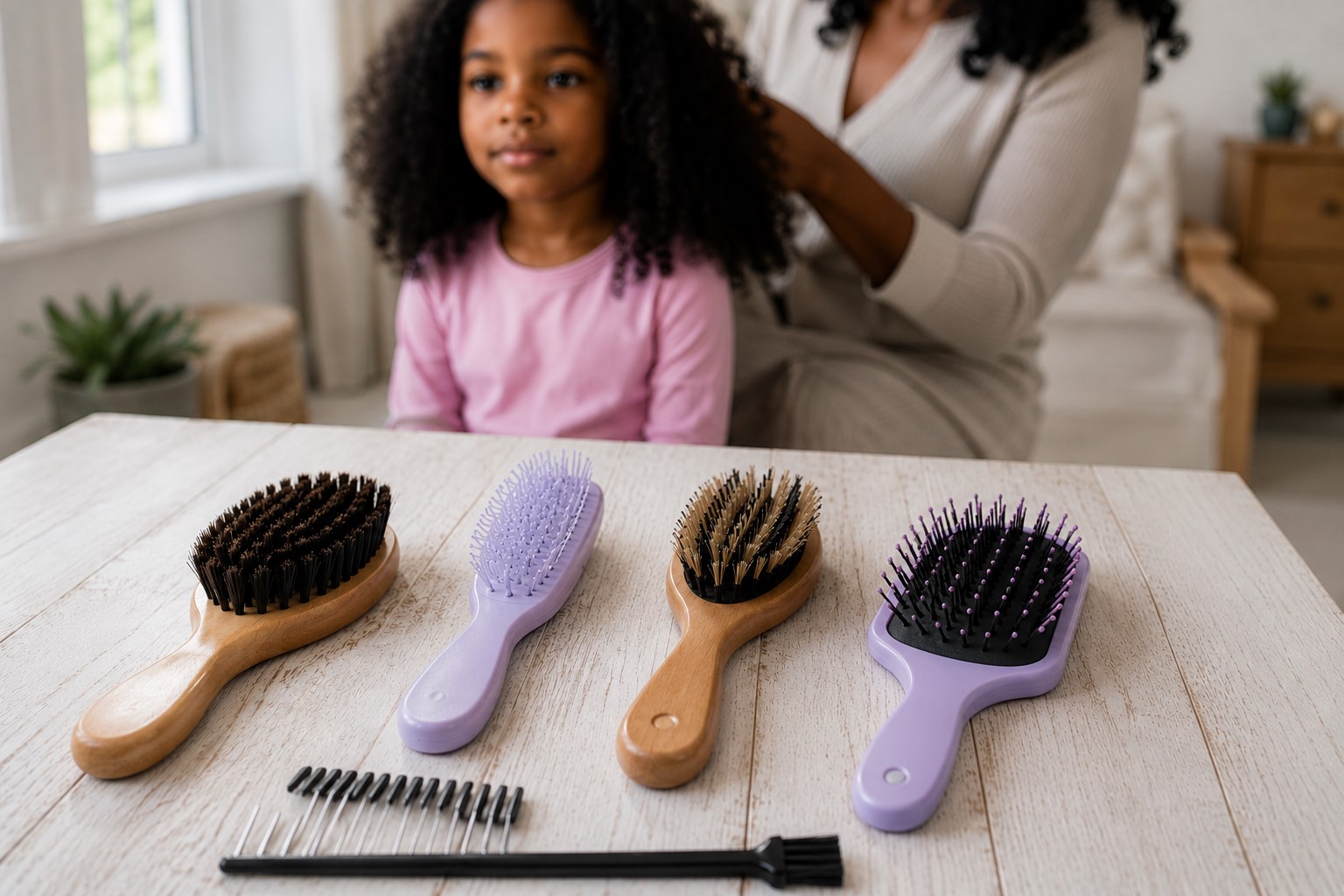
A mixed bristle brush works well for wavy hair. The combination of boar and nylon bristles handles the slight texture of the wave without being too harsh. A detangling brush is also a good option for wavy hair, especially for children whose wavy hair tends to tangle easily overnight.
For wavy hair, always brush in the direction of the wave rather than against it. Working with the natural movement of the hair rather than against it keeps the wave pattern defined and reduces frizz significantly.
Avoid stiff nylon brushes on wavy hair. They are too harsh for the wave pattern and tend to cause frizz by roughing up the hair cuticle as they move through. Flexibility in the bristles is always better for wavy hair than stiffness.
For more on keeping wavy hair moisturized between brushing sessions, how to moisturize children’s hair on Little Hair Book covers all the product and technique details you need.
Choosing a Brush for Curly Hair
Curly hair needs the most careful approach to brushing of all the non-coily hair types. The curl pattern is what makes curly hair beautiful and a brush used incorrectly disrupts that pattern and causes frizz that is hard to reverse once it is there.
The golden rule for curly hair is this. Only brush when the hair is wet and loaded with conditioner. Never brush dry curly hair. Dry brushing breaks the curl clumps apart and leaves the hair looking frizzy and undefined rather than bouncy and springy.
On wash day, after applying conditioner and before rinsing, is the ideal time to brush curly hair. The conditioner provides slip that allows the brush to move through the curls without pulling. A Denman brush or a detangling brush with flexible bristles works best at this stage.
Between wash days, leave the brush out of it entirely. Use your fingers for any maintenance on dry curly hair. Finger detangling and finger styling preserve the curl pattern far better than any brush on dry hair.
The soft bristle brush still has a place in a curly hair routine but only for the edges. Use it to smooth the hairline gently with a little edge control or water. Never run it through the length of curly hair.

What About Curl-Defining Brushes
There are brushes marketed specifically for curl definition. The Denman brush is the most well-known of these. It has rows of firm nylon pins that, when raked through wet conditioned hair, help define and separate the curls beautifully.
Some natural hair parents also modify their Denman brush by removing a row or two of pins to reduce the tension on the hair.
This is a popular technique in the curly and natural hair community and it does make the brush gentler, especially for tighter curl patterns.
If you are considering a curl-defining brush for your child, always use it on wet conditioned hair only and always start from the ends and work toward the roots just like you would with a comb.
For tips on keeping curls healthy and defined between wash days, how to care for curly children’s hair on Little Hair Book covers everything in detail.
Choosing a Brush for Natural and Coily Hair
Natural and coily hair has the most specific and non-negotiable brush requirements of any hair type. Getting this wrong causes breakage that accumulates quietly over time and shows up as hair that never seems to grow past a certain length.
For natural hair, the brush is used in two specific contexts only. On wash day when the hair is wet and fully conditioned, and on the edges during daily styling.
That is it. Running any brush through dry natural hair is not part of the routine regardless of how gentle the brush claims to be.
On wash day, a Denman D3 or a Felicia Leatherwood brush works well for smoothing and defining the coils while conditioner is still in the hair. Work in small sections, hold the hair above where you are brushing, and always start from the ends.
For the edges, a soft bristle brush is the only appropriate tool. The hairline is the most delicate part of natural hair and it needs the softest bristles available.
Apply a small amount of water or edge control first and use gentle motions to smooth the edges without putting tension on the hairline.
For daily care of natural hair between brush sessions, fingers and a wide-tooth comb do all the necessary work. Keeping the hair in protective styles reduces how much manipulation is needed daily and keeps the hair healthier overall.
For a full breakdown of the daily and weekly care that natural hair needs alongside brushing, daily hair care for kids on Little Hair Book maps out the whole routine.
Choosing the Right Brush Size
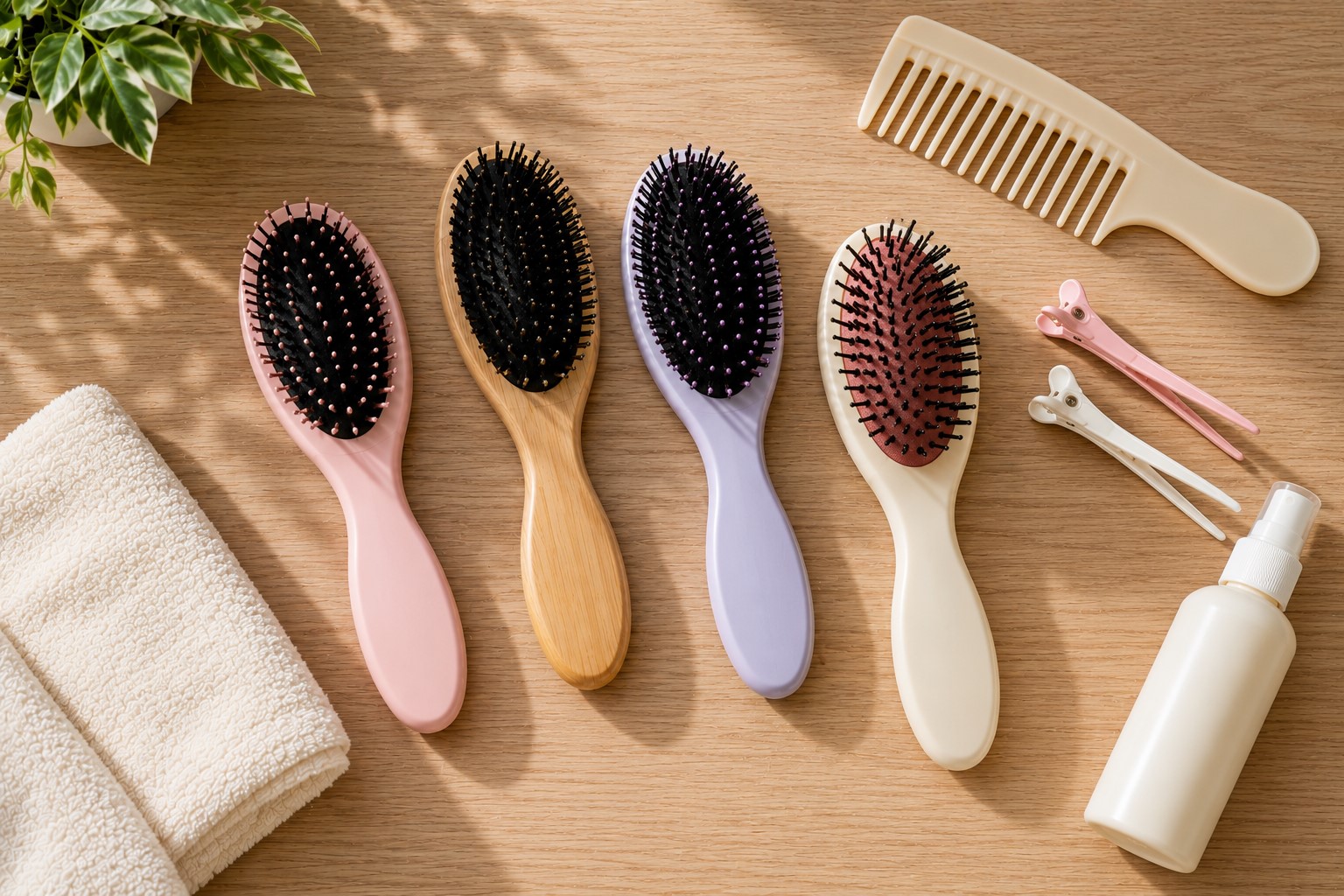
Brush size is something parents often overlook but it actually matters quite a bit in terms of control and efficiency.
Small brushes give you the most control and are ideal for working in sections, smoothing the edges, and handling areas around the ears and nape of the neck. They are also better for younger children with shorter hair.
Medium brushes are the most versatile size. They cover a reasonable amount of surface area while still being maneuverable enough to work through sections carefully. A good medium-sized brush works for most children across most hair types.
Large paddle brushes cover the most surface area and are great for quickly smoothing long straight or wavy hair. They are harder to control in tight sections though and are not suitable for curly or natural hair.
For most parents, a medium brush for general use and a small soft bristle brush for edges covers everything. You rarely need a large paddle brush unless your child has very long straight or wavy hair.
How Many Brushes Does Your Child Actually Need
Parents sometimes assume they need a different brush for every single purpose and end up with a collection that overwhelms them. The reality is much simpler.
Most children only need two to three brushes maximum.
Every child needs a soft bristle brush regardless of hair type, this brush is used for the edges and is gentle enough for the most delicate areas of the hair.
Children with straight or wavy hair need a boar bristle or mixed bristle brush for daily smoothing and oil distribution.
Those with curly hair need a detangling brush or Denman brush for wash day use on wet conditioned hair.
Children with natural hair need a Denman or Felicia Leatherwood brush for wash day use only, plus the soft bristle brush for edges.
That is two brushes for most children. Three at the most. You do not need more than that to run a thorough and effective brushing routine.
Signs You Have the Wrong Brush
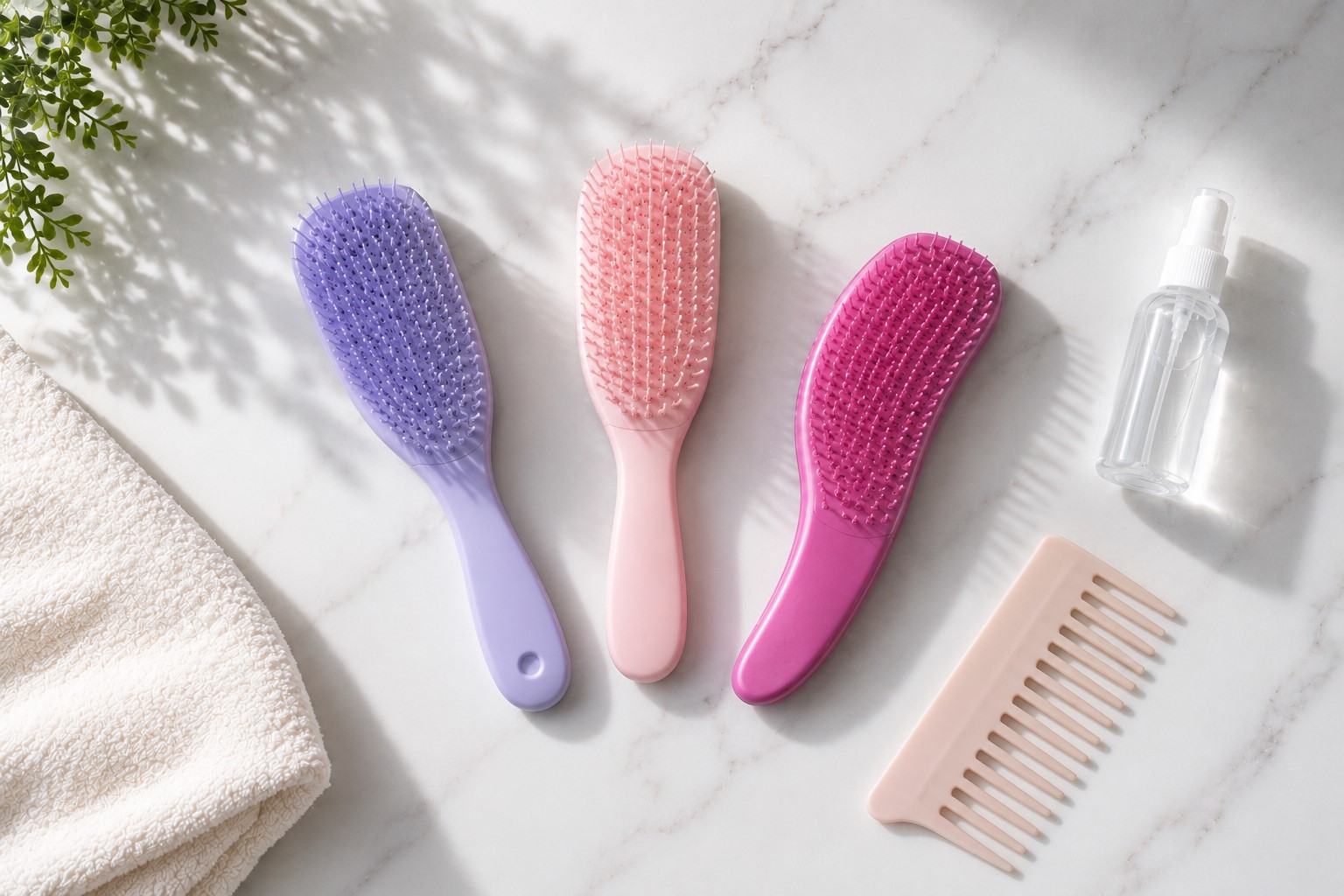
Sometimes you are using a brush and something just feels off but you cannot quite put your finger on what it is. Here are the signs that tell you the brush you have is not right for your child’s hair.
Your child complains of pain every time you brush: Some sensitivity is normal especially if the hair is tangled. But consistent pain with every stroke means the bristles are too stiff or the brush is not right for the hair type.
The hair looks more frizzy after brushing than before: This usually means you are using a brush that is disrupting the hair’s natural texture. A Denman on dry curly hair, for example, or a stiff nylon brush on fine wavy hair.
You are losing a lot of hair in the brush every session: Some shedding is normal. But if the brush is pulling out significant amounts of hair every time, the bristles are too stiff or the technique needs adjusting.
The brush is not smoothing the hair effectively: If you have to go over the same section multiple times and the hair still does not look smooth, the brush is either too soft for the hair density or the teeth are not the right spacing.
The brush feels scratchy on your own hand: Run the bristles gently over the back of your hand before using any brush on your child. If it feels scratchy or sharp to you, it will feel the same on your child’s scalp.
For more guidance on how to use your brush correctly once you have the right one, how to brush children’s hair on Little Hair Book covers the full technique in detail.
A Final Word on Choosing the Right Brush
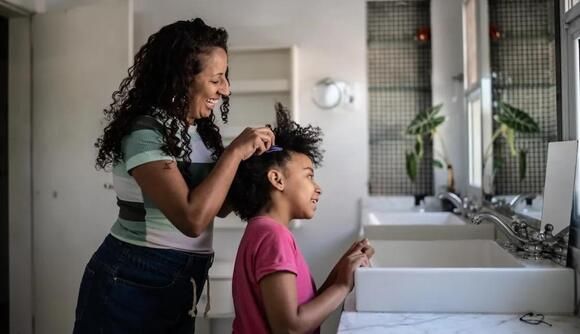
Choosing the right brush for your child does not have to be complicated. Know the hair type. Know the density and texture. Match the brush to those characteristics. Start gentle and adjust if needed.
And remember that the best brush in the world will not do much if the technique is wrong. The brush is a tool and like any tool it only works well when it is used correctly.
Pair the right brush with the right technique and your child’s brushing sessions will become one of the easiest parts of your whole hair care routine.
As you continue building out your child’s complete hair care toolkit, the next thing to look at is the products that work alongside your tools. Starting with the shampoo because everything in a healthy hair routine begins at wash day. Best shampoo for children on Little Hair Book is the perfect next read.

