
If you have ever finished washing your child’s hair and wondered why it still feels dry and rough even right after a wash, the shampoo you are using might be the problem.
A lot of parents assume that any shampoo labelled for children is automatically the right choice. But that is not always the case. Some children’s shampoos are too harsh, Some are too mild to actually clean properly and some are full of ingredients that do more harm than good even though they smell amazing and come in a cute bottle.
Finding the right shampoo for your child’s hair is one of the most important decisions you make for their hair health. Everything starts at wash day and wash day starts with shampoo.
We covered how to use shampoo correctly in how to wash children’s hair properly on Little Hair Book, and now we are going deeper into the actual products. Which shampoos are worth buying, which ingredients to look for, which ones to avoid, and how to match the right shampoo to your child’s specific hair type.
Why the Wrong Shampoo Causes So Many Problems
Shampoo is a cleanser. Its job is to remove dirt, sweat, product buildup, and excess oil from the scalp and hair. But how aggressively it does that job is where shampoos differ significantly.
Some shampoos clean so aggressively that they strip everything from the hair not just the dirt and buildup but also the natural oils that the scalp produces to keep the hair moisturized.
When those oils are stripped away completely, the hair comes out of the wash feeling dry, rough, and brittle. For children with natural or curly hair especially, this kind of over-stripping causes serious dryness that takes days of moisturizing to recover from.
On the other end of the spectrum, shampoos that are too mild do not actually clean the scalp properly. Product buildup accumulates, the scalp gets itchy and flaky, and the hair starts to feel heavy and dull.
Co-washing with conditioner only works for some hair types some of the time, but most children still need an actual shampoo on a regular basis to keep the scalp truly clean.
The right shampoo cleans effectively without stripping, it removes buildup without disrupting the hair’s natural moisture balance and it leaves the scalp and hair feeling fresh and ready to absorb the conditioner and moisturizing products that come next.
For a full breakdown of how to build your wash day routine around the right shampoo, weekly hair care routine for children on Little Hair Book maps out exactly how everything fits together.
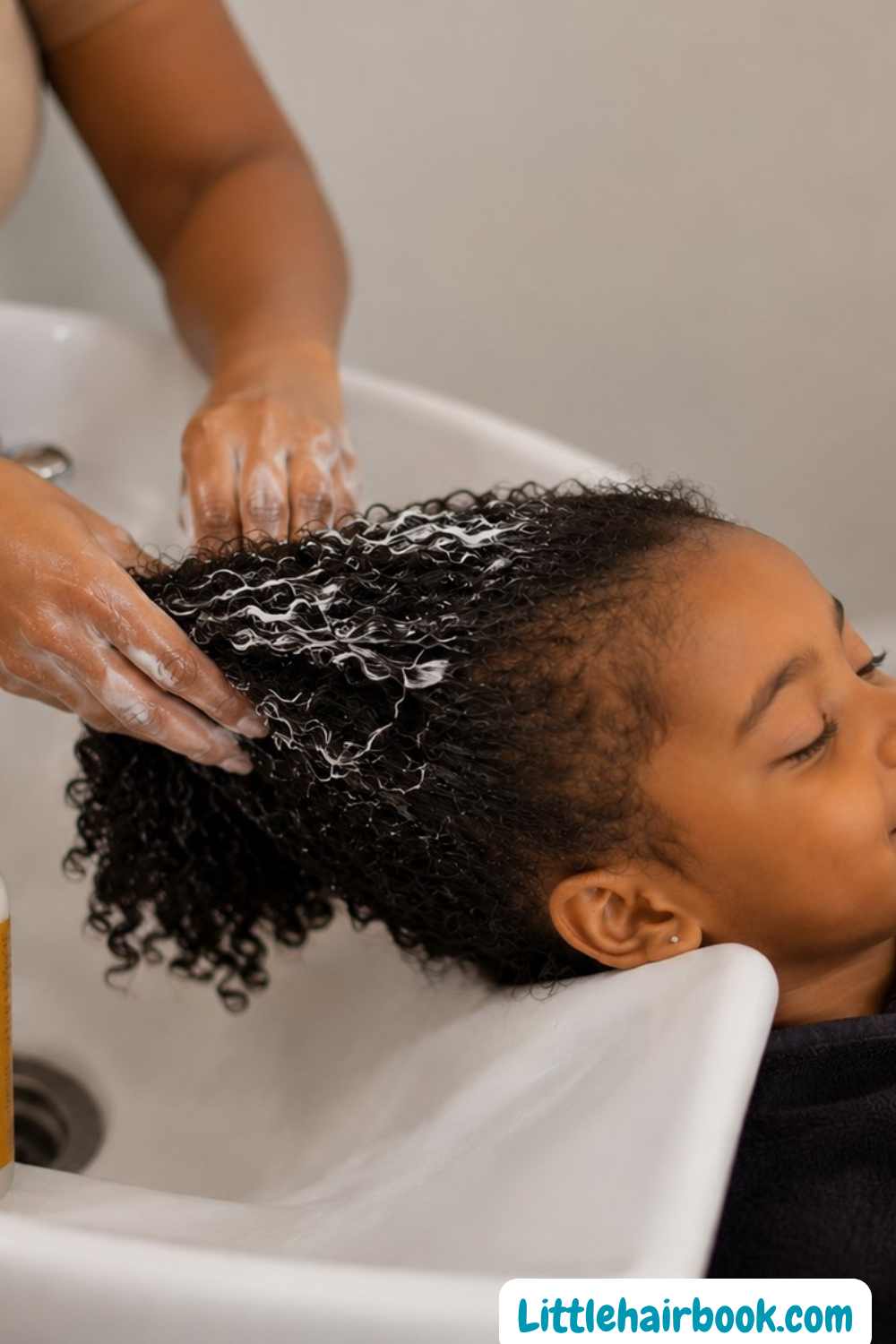
Ingredients to Look for in a Children’s Shampoo
Before we get into specific product recommendations, here is what to look for on the ingredient list of any shampoo you are considering for your child.
Gentle cleansing agents – Look for shampoos that use mild surfactants like cocamidopropyl betaine, sodium cocoyl isethionate, or decyl glucoside.
These are gentler cleansers that remove dirt and buildup without stripping the hair’s natural oils aggressively.
Moisturizing ingredients – A good children’s shampoo should have ingredients that add or preserve moisture as it cleans.
Look for things like glycerin, aloe vera, panthenol, or natural oils like coconut oil or argan oil in the ingredient list.
Natural extracts – Ingredients like chamomile, shea butter, honey, and oat extract are gentle and nourishing.
They support the scalp’s health and add softness to the hair during the wash.
pH balanced formula – Hair and scalp have a slightly acidic pH. A shampoo that is pH balanced preserves the hair’s natural acid mantle which keeps the cuticle smooth and the hair healthy.
Many good quality children’s shampoos mention being pH balanced on the packaging.
Bookmark this post: Choosing the Right Hair Brush for Your Child
Ingredients to Avoid in a Children’s Shampoo
What to Put Back on the Shelf
Just as important as knowing what to look for is knowing what to avoid. These ingredients show up in a lot of mainstream children’s shampoos and they cause more harm than most parents realise.
Sulfates – Sodium lauryl sulfate and sodium laureth sulfate are the most common sulfates found in shampoos. They are aggressive cleansers that create a lot of lather but strip the hair of its natural oils in the process.
For children with dry, curly, or natural hair, sulfate shampoos cause chronic dryness that no amount of conditioner can fully fix. Look for shampoos specifically labelled sulfate-free.
Parabens – These are preservatives used to extend the shelf life of products. There are ongoing concerns about their safety, especially for children.
Many brands now offer paraben-free options and these are always the better choice for a child’s hair and scalp.
Synthetic fragrances – Fragrance is one of the most common causes of scalp irritation in children. Synthetic fragrances can cause itching, redness, and flaking.
If your child has a sensitive scalp, look for shampoos that are fragrance-free or that use only natural essential oils for scent.
Formaldehyde releasing preservatives – Ingredients like DMDM hydantoin, diazolidinyl urea, and quaternium-15 release small amounts of formaldehyde over time.
These are not ingredients you want on your child’s scalp. Check labels carefully and avoid any shampoo that contains these.
Alcohol – Some shampoos contain drying alcohols high on the ingredient list. These contribute to dryness and scalp irritation. Short chain alcohols like ethanol or isopropyl alcohol are the ones to watch for and avoid.
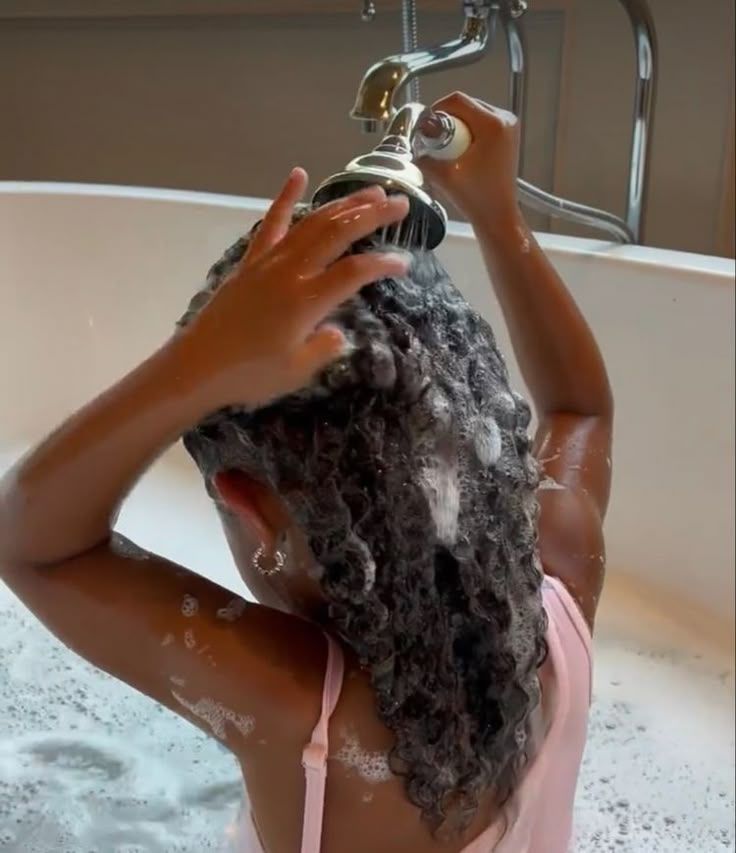
Best Shampoos for Children With Natural and Coily Hair
Natural and coily hair needs the gentlest shampoos available. This hair type is the most prone to dryness and the most sensitive to over-stripping. A sulfate-free, moisturizing shampoo is non-negotiable here.
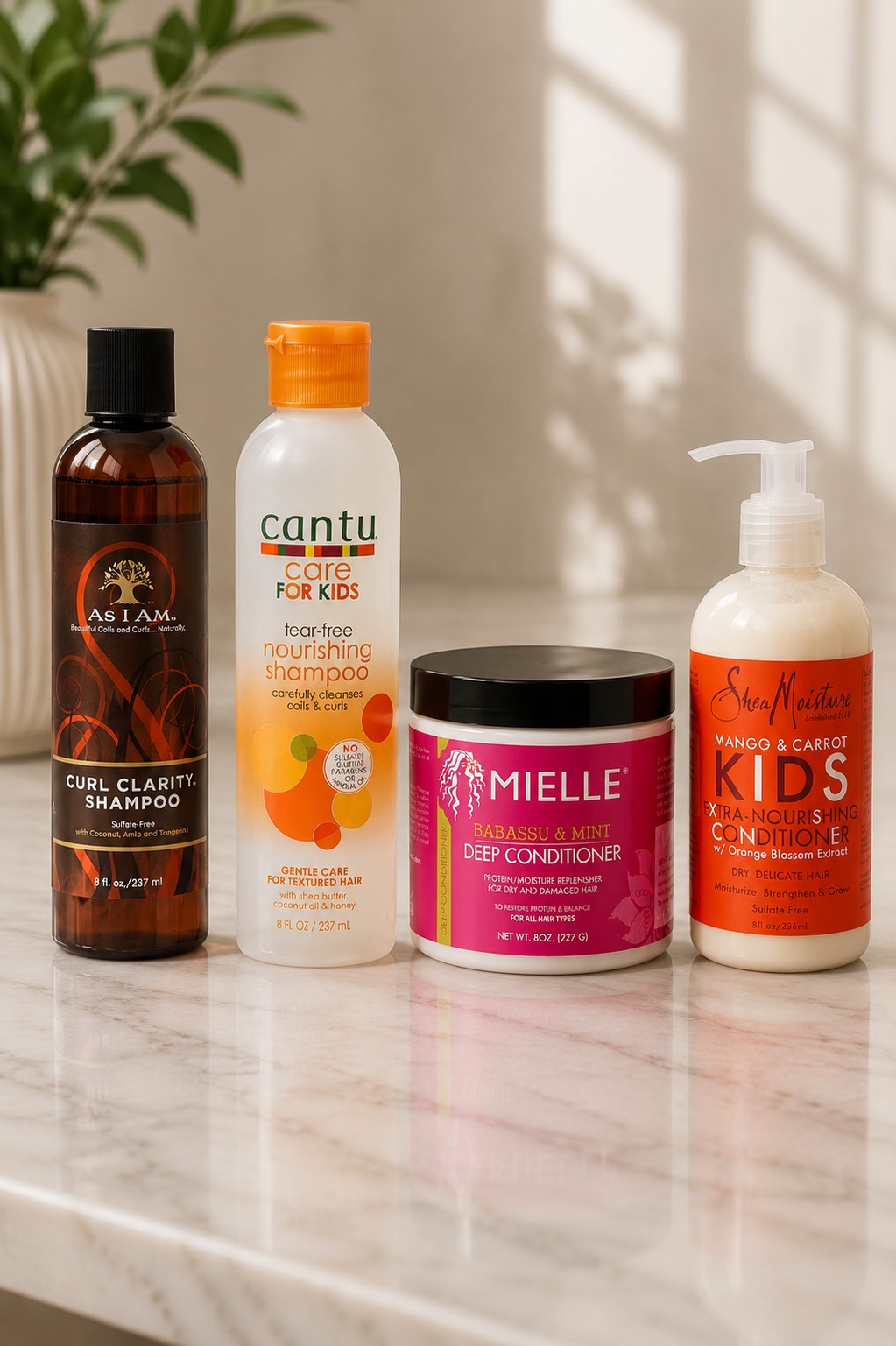
SheaMoisture Mango and Carrot Kids Extra-Nourishing Shampoo is one of the most popular natural hair shampoos for children and for good reason.
It is sulfate-free, packed with nourishing ingredients like shea butter, mango, and carrot, and it cleans effectively without stripping.
It also smells wonderful which is always a bonus for getting children to cooperate on wash day.
Cantu Care for Kids Sulfate-Free Gentle Shampoo is another excellent option for natural hair. It is free from sulfates, parabens, and mineral oil.
The formula is gentle enough for regular use and leaves the hair feeling soft and clean without that dry rough feeling that harsh shampoos cause.
As I Am Curl Clarity Shampoo works well for both natural and curly hair types. It contains tea tree oil which is great for scalp health, and it cleanses thoroughly without being overly stripping.
A good option if your child’s scalp tends to get itchy or flaky between washes.
Mielle Organics Babassu Oil and Mint Deep Conditioning Shampoo is a favourite for type 4 hair specifically. The babassu oil is deeply nourishing and the mint gives a refreshing feeling on the scalp.
It is gentle, sulfate-free, and leaves natural hair feeling clean and soft.
For natural hair, it also helps to shampoo in sections rather than all at once. Dividing the hair into four to six loose braids and washing each section separately prevents the hair from tangling during the wash. We covered this technique in detail in how to care for natural children’s hair on Little Hair Book.
Best Shampoos for Children With Curly Hair
Curly hair shares many of the same needs as natural hair when it comes to shampoo. It needs gentle cleansing, sulfate-free formulas, and moisturizing ingredients. The main difference is that curly hair can sometimes tolerate slightly more frequent washing than very tight natural hair.
Mixed Chicks Kids Shampoo is specifically formulated for children with mixed or curly hair textures. It is gentle, sulfate-free, and does a beautiful job of cleansing without disrupting the curl pattern.
Many parents in the curly hair community swear by this one.
Curly Kids Curly Hair Shampoo is a gentle everyday shampoo for curly hair that does not strip the curls of their natural moisture. It is free from harsh sulfates and leaves the hair feeling clean and ready for conditioning without that tight dry feeling.
Kinky-Curly Come Clean Natural Moisturizing Shampoo uses sea kelp as its primary cleansing agent which is one of the gentlest and most natural cleansing options available.
It removes buildup effectively without stripping and is a great option for children whose curly hair is particularly sensitive to harsh cleansers.
Carol’s Daughter Hair Milk Sulfate-Free Shampoo is a moisturizing shampoo that cleans gently while adding hydration at the same time.
It works well for looser curl types like 3A and 3B and leaves the curls feeling soft and defined after rinsing.
Pairing any of these shampoos with a good deep conditioner makes a significant difference in how the curls look and feel after wash day.
For tips on what to look for in a conditioner to use after shampooing, best conditioner for kids on Little Hair Book covers all of that in detail.

Best Shampoos for Children With Wavy Hair
Finding the Balance Between Clean and Moisturized
Wavy hair needs a shampoo that is gentle enough not to disrupt the wave pattern but strong enough to remove the product buildup that wavy hair tends to accumulate.
Wavy hair can get weighed down easily by heavy products and an effective shampoo helps reset it properly.
Briogeo Scalp Revival Charcoal and Coconut Oil Micro-Exfoliating Shampoo is a great option for wavy hair that tends to get product buildup quickly.
The charcoal draws out impurities while the coconut oil keeps the hair moisturized during the cleansing process. It is gentle enough for regular use and leaves wavy hair feeling light and clean.
Giovanni 2Chic Frizz Be Gone Shampoo is a sulfate-free option that cleans wavy hair gently while helping to control frizz.
The avocado and olive oil in the formula add moisture back into the hair during the wash which is great for wavy hair that tends toward dryness.
Acure Curl Defining Shampoo works well for both wavy and loosely curly hair. It is sulfate-free, vegan, and uses coconut cleansers that are gentle and effective.
The curl-defining ingredients help enhance the natural wave pattern during the wash rather than disrupting it.
For wavy hair, washing once a week is usually the right frequency. More often than that can strip the wave pattern and cause frizz. Less often and product buildup starts to weigh the waves down and make them look limp.
You will love this: How to Brush Children’s Hair

Best Shampoos for Children With Straight Hair
Straight hair tends to get oily faster than other hair types because the scalp’s natural oils travel down the hair shaft more easily.
This means straight hair usually needs more frequent washing and can tolerate slightly stronger shampoos than curly or natural hair.
Aveeno Kids Purely Comforting Shampoo is a gentle everyday shampoo that is perfect for children with straight or fine hair.
It is oat-based which makes it soothing for sensitive scalps and it cleans effectively without stripping. It is also very affordable and widely available.
Johnson’s Gentle Cleansing Shampoo has been a trusted children’s shampoo for decades. The formula is gentle, tear-free, and effective at removing daily dirt and oil from straight hair.
It is a solid everyday option for children who need frequent washing.
Burt’s Bees Baby Shampoo and Wash uses natural ingredients and is free from sulfates, parabens, and synthetic fragrances.
It is gentle enough for daily use on fine straight hair and works well for children with sensitive scalps.
Fairy Tales Rosemary Repel Daily Kid Shampoo is a popular option for school-age children with straight hair.
Beyond being a gentle and effective shampoo, it contains rosemary, citronella, and tea tree oil which are known to repel lice.
For parents whose children are in school environments where lice outbreaks happen, this is a practical and effective daily shampoo.
See what is trending now: How to Care for Curly Children’s Hair

Clarifying Shampoos for Children
Every child regardless of hair type needs a clarifying shampoo used occasionally. Regular shampoos remove daily dirt and oil but over time product buildup accumulates on the scalp and hair that regular shampoo cannot fully remove.
A clarifying shampoo is stronger than a regular shampoo and is designed to remove that stubborn buildup completely. It gives the scalp and hair a true reset.
The key is not to use it too often. Once a month or every few weeks is enough for most children. Using a clarifying shampoo every week is too stripping for any hair type.
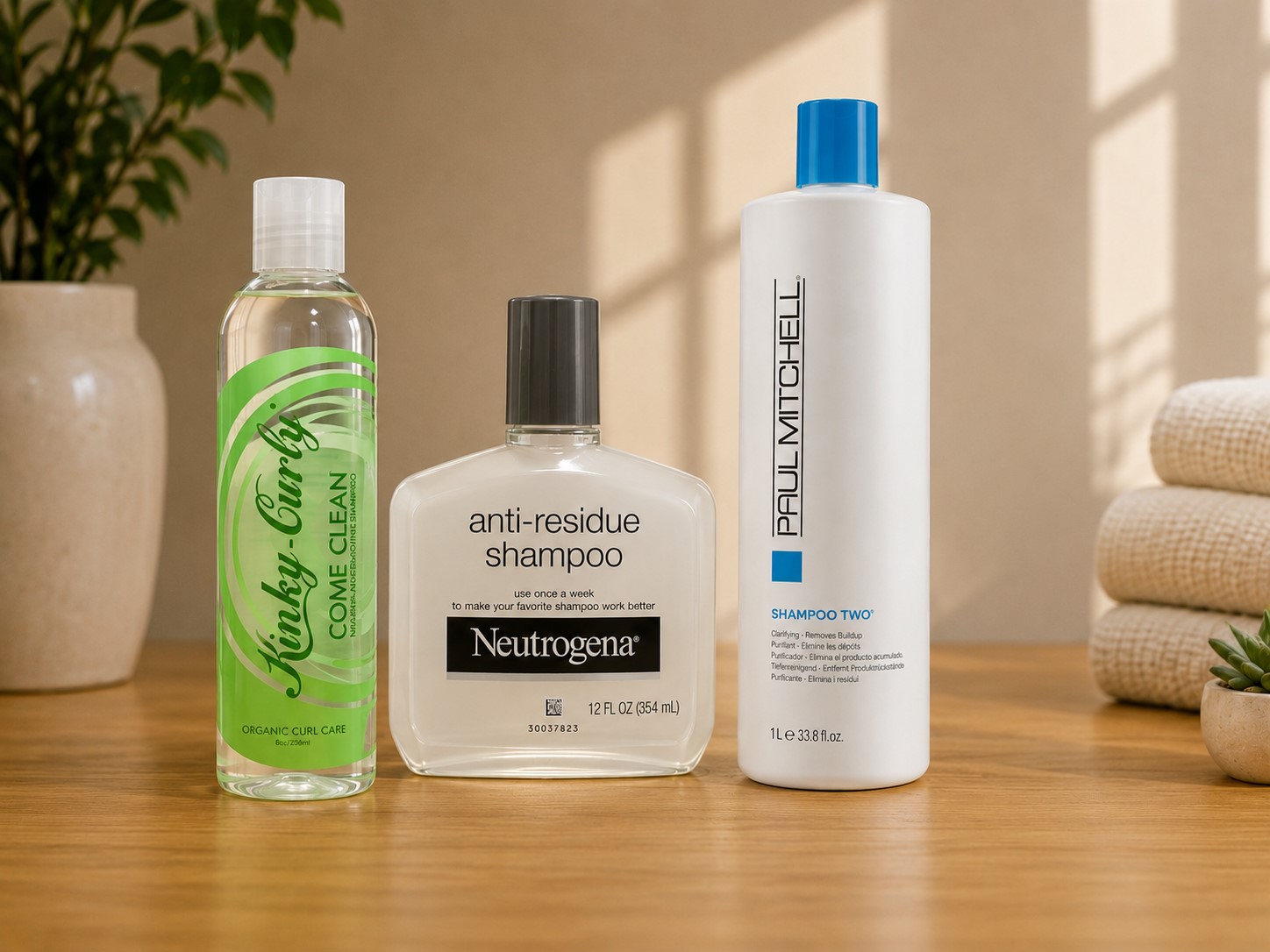
Kinky-Curly Come Clean doubles as an effective clarifying shampoo for natural and curly hair. It removes buildup without being overly harsh.
Paul Mitchell Shampoo Two is a classic clarifying shampoo that works well for straight and wavy hair. It removes buildup quickly and effectively and leaves the hair feeling completely clean and light.
Neutrogena Anti-Residue Clarifying Shampoo is affordable, widely available, and very effective at removing product buildup. It is best used on straight and wavy hair rather than natural or very curly hair as it can be quite stripping for those hair types.
After a clarifying shampoo, always follow up with a deep conditioner. The clarifying process removes everything from the hair including its natural oils so the hair needs thorough conditioning immediately after.
For tips on building the right deep conditioning routine, children’s hair care routine on Little Hair Book walks through how to incorporate deep conditioning into your weekly schedule.
Co-Washing as an Alternative to Shampooing
Co-washing means washing the hair with conditioner only and skipping shampoo entirely. It is a technique that works particularly well for very dry natural and curly hair types that find even gentle sulfate-free shampoos too stripping.
The conditioner cleanses the scalp lightly while adding moisture at the same time. It does not remove buildup as effectively as shampoo so it works best as an in-between wash option rather than a permanent replacement for shampooing.
For natural hair children who wash every week, co-washing on alternate weeks and shampooing every two weeks is a popular approach. The co-wash keeps the scalp feeling fresh between shampoo washes without over-stripping the hair.
As I Am Coconut Co-Wash is one of the most popular co-washing products for natural and curly hair. It cleanses gently and adds significant moisture at the same time.
SheaMoisture Coconut and Hibiscus Co-Wash Conditioning Cleanser is another well-loved option. It smells beautiful, cleanses effectively for a conditioner-based product, and leaves the hair feeling incredibly soft.
Co-washing is not suitable for straight or fine hair types as it tends to leave those hair types feeling heavy and greasy rather than clean.
Make sure to check out this post: How to Wash Children’s Hair Properly

How to Get the Most Out of Whatever Shampoo You Use
Even the best shampoo will not perform well if it is not used correctly. Here are a few simple things that make a real difference regardless of which shampoo you choose.
Dilute the shampoo slightly: Mixing a small amount of shampoo with a little water before applying it helps it distribute more evenly across the scalp and reduces the risk of over-concentrating the cleanser in one spot.
Focus on the scalp not the ends: Shampoo is for the scalp. Apply it directly to the scalp and massage with your fingertips in circular motions.
The lather that rinses down through the hair is enough to cleanse the ends without applying shampoo directly to them.
Rinse thoroughly: Leftover shampoo on the scalp causes itching, flaking, and buildup. Keep rinsing until the water runs completely clear and the hair no longer feels slippery from the shampoo.
Follow immediately with conditioner: Never leave the hair without conditioning after shampooing. Shampoo opens the hair cuticle and conditioning closes it back up and seals in moisture.

