
Walking into a store to buy a comb sounds like it should be the simplest thing in the world. You pick one up, you pay for it, you go home. But if you have ever stood in that aisle holding three different combs trying to figure out what the actual difference is between them, you know it is not always that straightforward.
The comb you use on your child’s hair matters more than most parents realise. The wrong comb on the wrong hair type causes pain, breakage, and a child who associates hair time with something they want to escape. The right comb, used correctly, makes the whole process faster, gentler, and so much more pleasant for everyone involved.
We just covered brushes in the last post and if you missed it, best hair brushes for children on Little Hair Book breaks down every brush type and which hair type each one works for. Combs and brushes work together in a routine so understanding both gives you the full picture.
Today though, we are talking entirely about combs. What makes a good one, which ones are worth buying, and how to match the right comb to your child’s hair.
Why the Comb You Choose Actually Matters
Most people think a comb is a comb. Teeth, handle, done. But there is actually quite a bit of variation between combs and those differences have a real impact on your child’s hair health.
The spacing between the teeth determines how the comb moves through the hair. Too close together and the comb catches on every strand. Too far apart and it misses sections entirely. The right spacing for your child’s hair type means the comb glides through smoothly without snagging.
The material the comb is made from matters too. Cheap plastic combs often have rough edges and seams along the teeth from the manufacturing process. Those rough edges snag on the hair cuticle every time the comb passes through.
Over time that constant snagging weakens the hair and causes breakage that looks like the hair is not growing when really it is just breaking off at the same rate.
The thickness of the teeth also plays a role. Thick teeth with rounded tips are gentler on the scalp than thin sharp teeth. For children especially, rounded tips make a real difference in comfort during combing.
Knowing what to look for before you buy saves you from going through several bad combs before finding one that actually works. For more on how combing fits into your daily hair routine, daily hair care for kids on Little Hair Book is a great reference alongside this post.
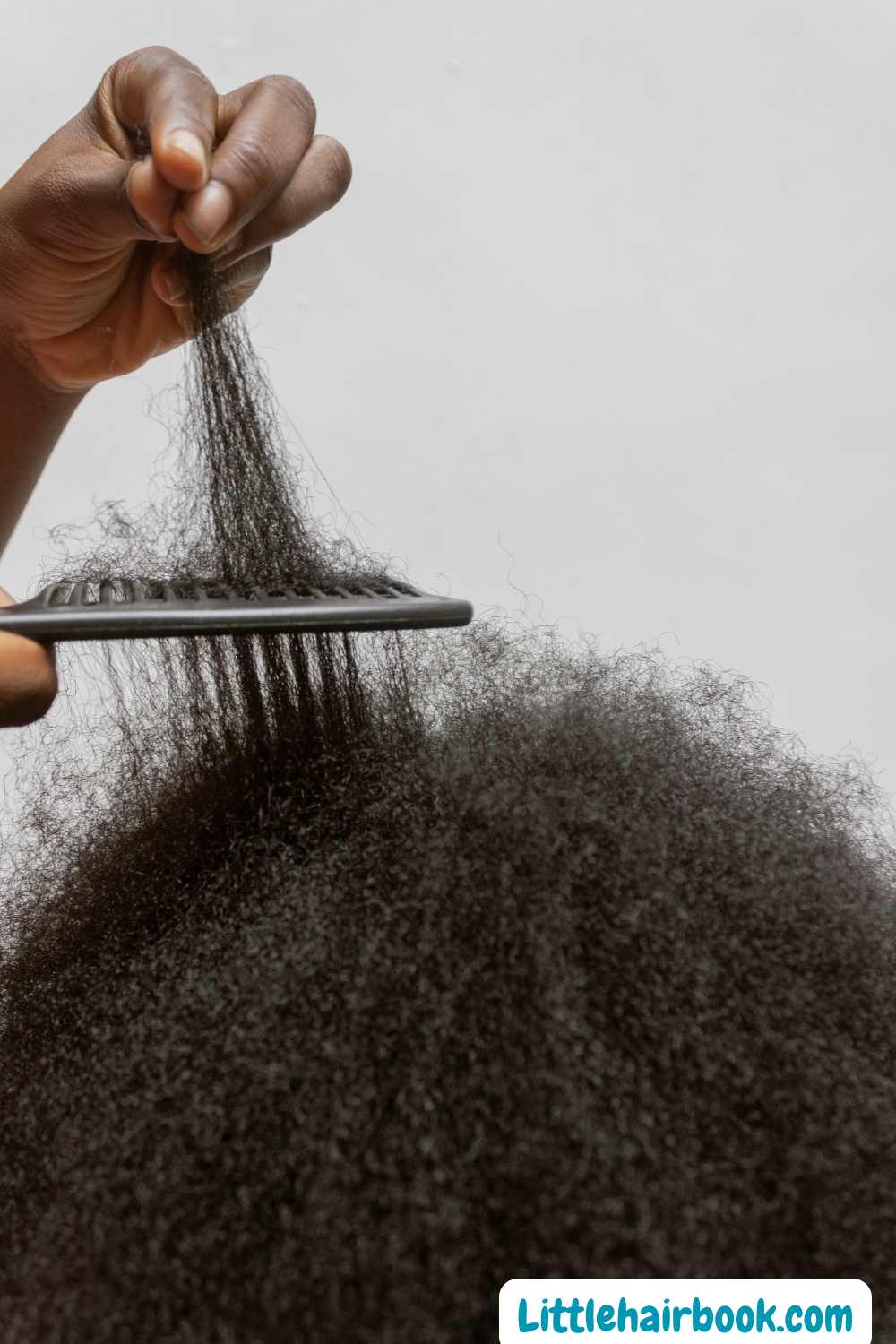
What to Look for in a Good Children’s Comb
Before we get into specific product recommendations, here are the key things to check whenever you are buying a comb for your child.
Seamless construction: This is the most important thing to look for. A seamless comb is made from a single piece of material with no mold lines or seams along the teeth.
Run your fingernail along the edge of the teeth before buying. If you feel a ridge or rough edge, put it back. Seamless combs glide through the hair without catching on the cuticle.
Rounded tooth tips: The tips of the teeth should be smooth and rounded, not sharp or pointed. Sharp tips scratch the scalp and cause discomfort, especially for children who are already sensitive about having their hair combed.
Tooth spacing appropriate for the hair type: Wide spacing for thick, curly, or natural hair. Medium spacing for wavy or medium-density hair. Fine spacing only for straight hair that is already fully detangled.
Flexible teeth: Some combs have teeth that flex slightly when they meet resistance rather than being completely rigid. Flexible teeth are gentler because they give a little instead of dragging through a knot.
Comfortable handle: The handle should feel secure in your hand and give you enough control to work through sections carefully. Handles that are too short or too thin make it harder to work precisely, especially on thick hair.
Durable material: Good combs are made from carbon fiber, hard rubber, cellulose acetate, or high-quality seamless plastic.
These materials are smooth, durable, and gentle on the hair. Avoid cheap brittle plastic that can snap and leave sharp edges.
Bookmark this post: How to Brush Children’s Hair
Best Wide-Tooth Combs for Children
The One Comb Every Parent Needs Regardless of Hair Type
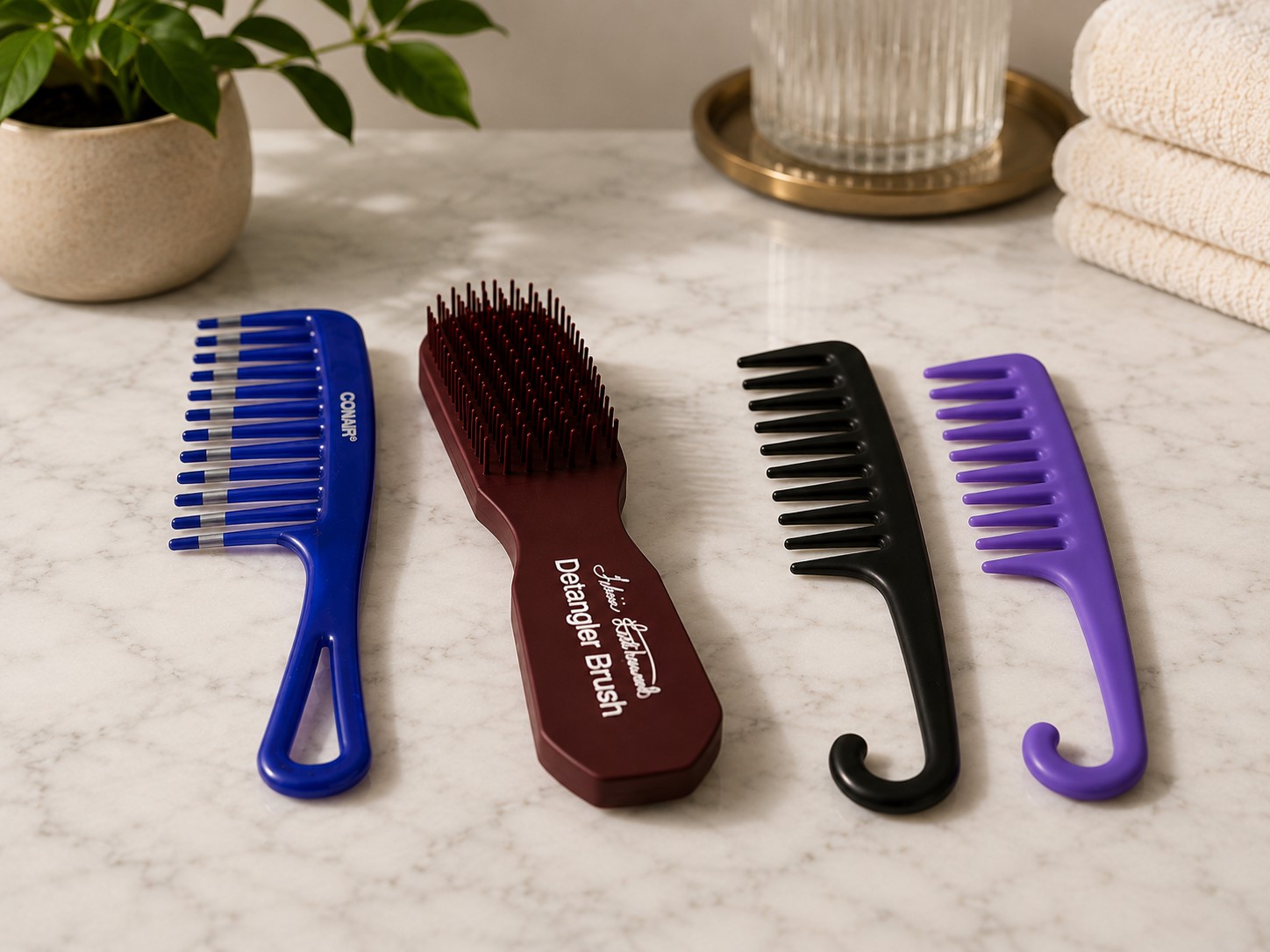
The wide-tooth comb is the single most important comb in any children’s hair care routine. If you only buy one comb, make it this one. It is the safest, most versatile, and most gentle option for detangling children’s hair of any type.
Fromm Seamless Wide Tooth Comb is one of the best wide-tooth combs available at an accessible price point. It is fully seamless, the teeth are smooth and rounded, and it glides through the hair without snagging.
It works well on all hair types from straight to natural coily hair.
Felicia Leatherwood Wide Tooth Comb was designed specifically with natural and curly hair in mind. The teeth are extra wide and smoothly finished.
It is particularly good for thick type 4 hair because the extra spacing between the teeth means it moves through dense coils without pulling aggressively.
shower Detangling Comb by The Wet Brush is a wide-tooth comb designed for use in the shower with conditioner in the hair.
The teeth are flexible and widely spaced, making it one of the gentlest options for detangling curly and natural hair on wash day. It has a comfortable grip that does not slip when wet.
Conair Detangling Comb is an affordable and widely available wide-tooth option. It is not fully seamless but the teeth are smooth enough for most hair types.
It is a solid everyday option for parents who want something functional without spending a lot.
For children with natural hair especially, a wide-tooth comb is not just one option among many. It is the only type of comb that should be going through the length of the hair. For more on why natural hair needs such specific handling, how to care for natural children’s hair on Little Hair Book covers all of it in detail.
Best Rat Tail Combs for Children
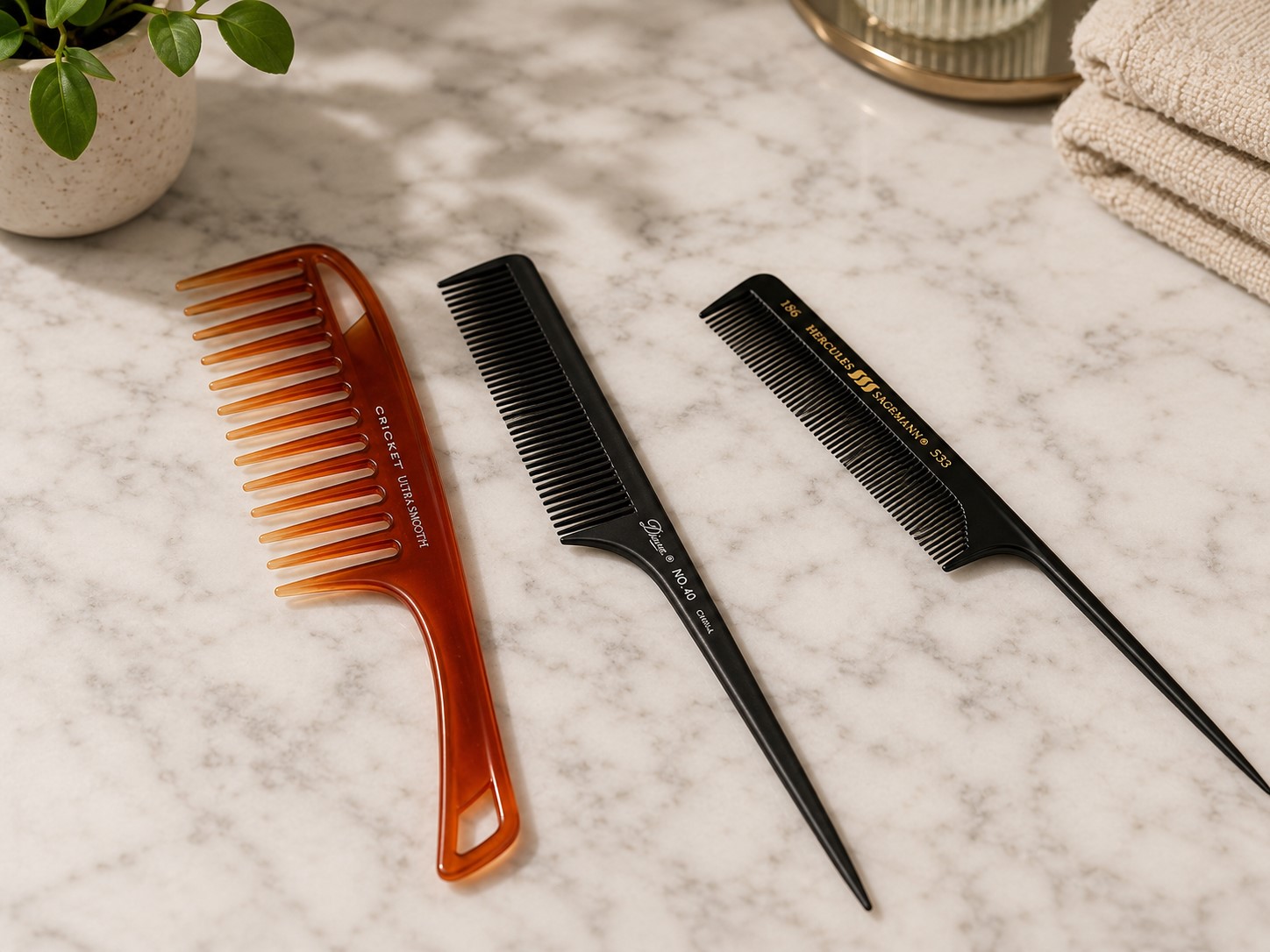
A rat tail comb has a long thin pointed handle and finer teeth. The pointed tail is used for parting the hair into clean, precise sections during styling. The teeth are for smoothing already detangled hair, not for detangling.
This comb is a styling tool. It should never be used on tangled hair. But for creating neat parts, sectioning the hair for braids or twists, and smoothing already combed sections, it is incredibly useful.
Diane Rat Tail Comb is one of the most popular and affordable rat tail combs on the market. It is widely available, the tail is fine enough for precise parting, and the teeth are smooth. It is a solid everyday option for styling.
Cricket Ultra Smooth Rat Tail Comb is a slightly more premium option. The teeth are seamless and very smooth, which makes it gentler when smoothing sections that are already detangled. The tail is long and fine for precise parting.
Hercules Sagemann Seamless Tail Comb is a professional-grade option made from seamless hard rubber. It is on the pricier side but it is extremely durable and the seamless construction means it is genuinely gentle on the hair even when smoothing. Worth the investment if you are doing a lot of detailed styling.
When using a rat tail comb on your child’s hair, use only the pointed tail for parting and the teeth for smoothing. Keep your touch light and always make sure the hair is already fully detangled before the rat tail comb comes anywhere near it.
Pin this post: Best Hair Moisturizers for Children
Best Detangling Combs for Children
Detangling combs are specifically designed to work through knots with as little pain as possible. They typically have extra-wide, flexible teeth that bend around resistance instead of forcing through it.
These combs sit somewhere between a wide-tooth comb and a detangling brush in terms of how they work. They are gentler than a standard wide-tooth comb on very tangled hair but give more precision than a detangling brush.
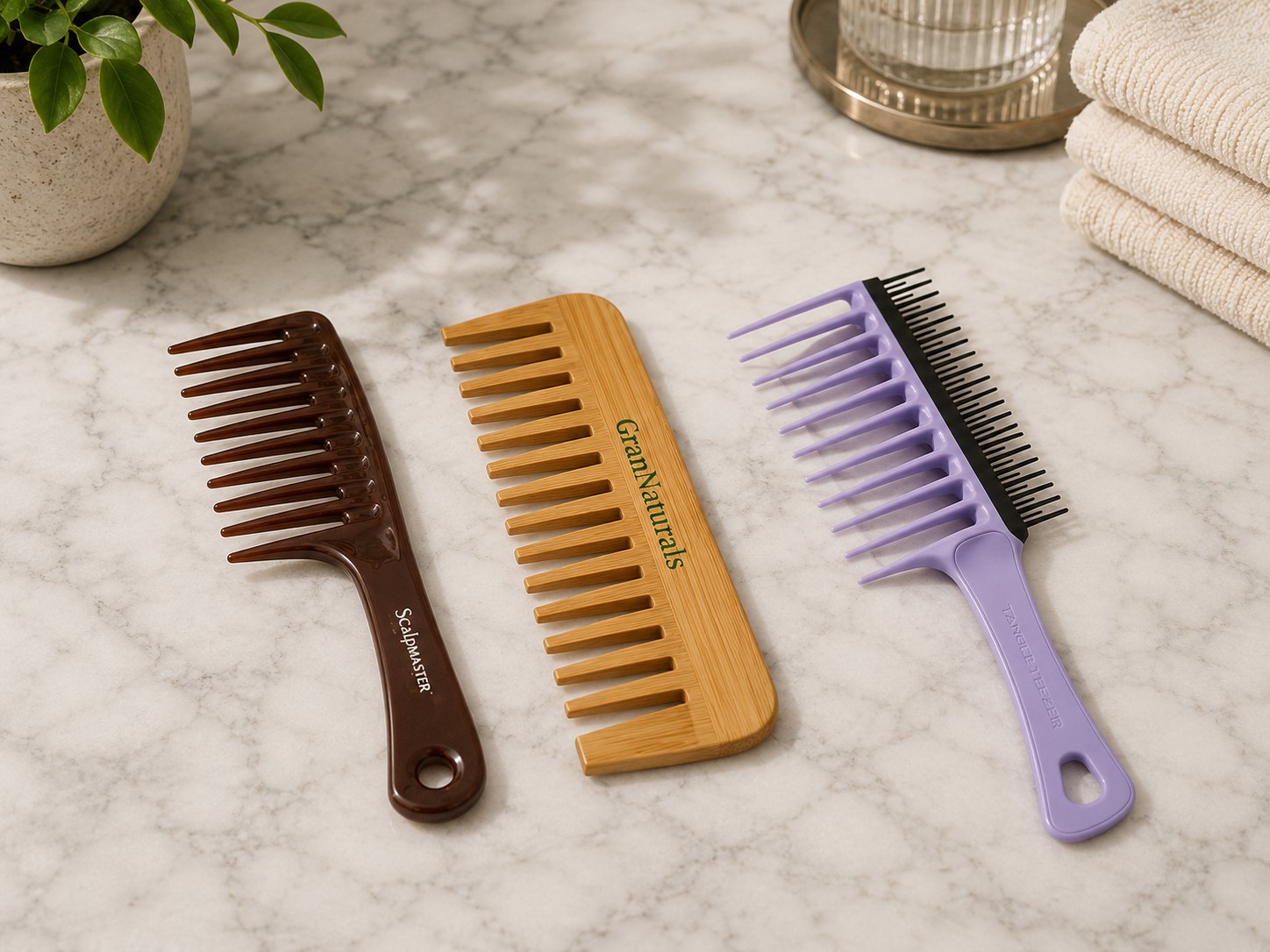
GranNaturals Wide Tooth Detangling Comb has extra-wide teeth with smooth, rounded tips. It is designed specifically for thick and curly hair and works well on natural hair types too.
The handle is comfortable and the comb is lightweight enough to use for extended detangling sessions without hand fatigue.
Tangle Teezer Wide Tooth Comb is the comb version of the popular detangling brush. The teeth are flexible and widely spaced with very smooth rounded tips.
It works beautifully on wavy and curly hair, especially when used with a detangling spray or leave-in conditioner.
Scalpmaster Detangling Comb is an affordable option with extra-wide teeth and a comfortable handle. It is a good entry-level detangling comb for parents who want something better than a standard drugstore comb without spending a lot.
For very tangled hair, always use a detangling comb after your fingers have already done the initial knot-loosening work. Going straight to a comb on severely tangled hair, even a detangling comb, causes unnecessary pain and breakage. And pairing any detangling comb with the right product makes a world of difference. Best detangling spray for kids on Little Hair Book covers the best products to use alongside your comb.
Best Fine-Tooth Combs for Children
For Finishing and Smoothing Only
Fine-tooth combs have teeth that are close together and are designed for smoothing and finishing already detangled hair. They give a very polished, smooth finish and are useful for creating sleek styles.
The important thing to remember is that fine-tooth combs should never be used on tangled hair. They are finishing tools only. On tangled hair, the close-together teeth catch on every knot and cause significant pain and breakage.
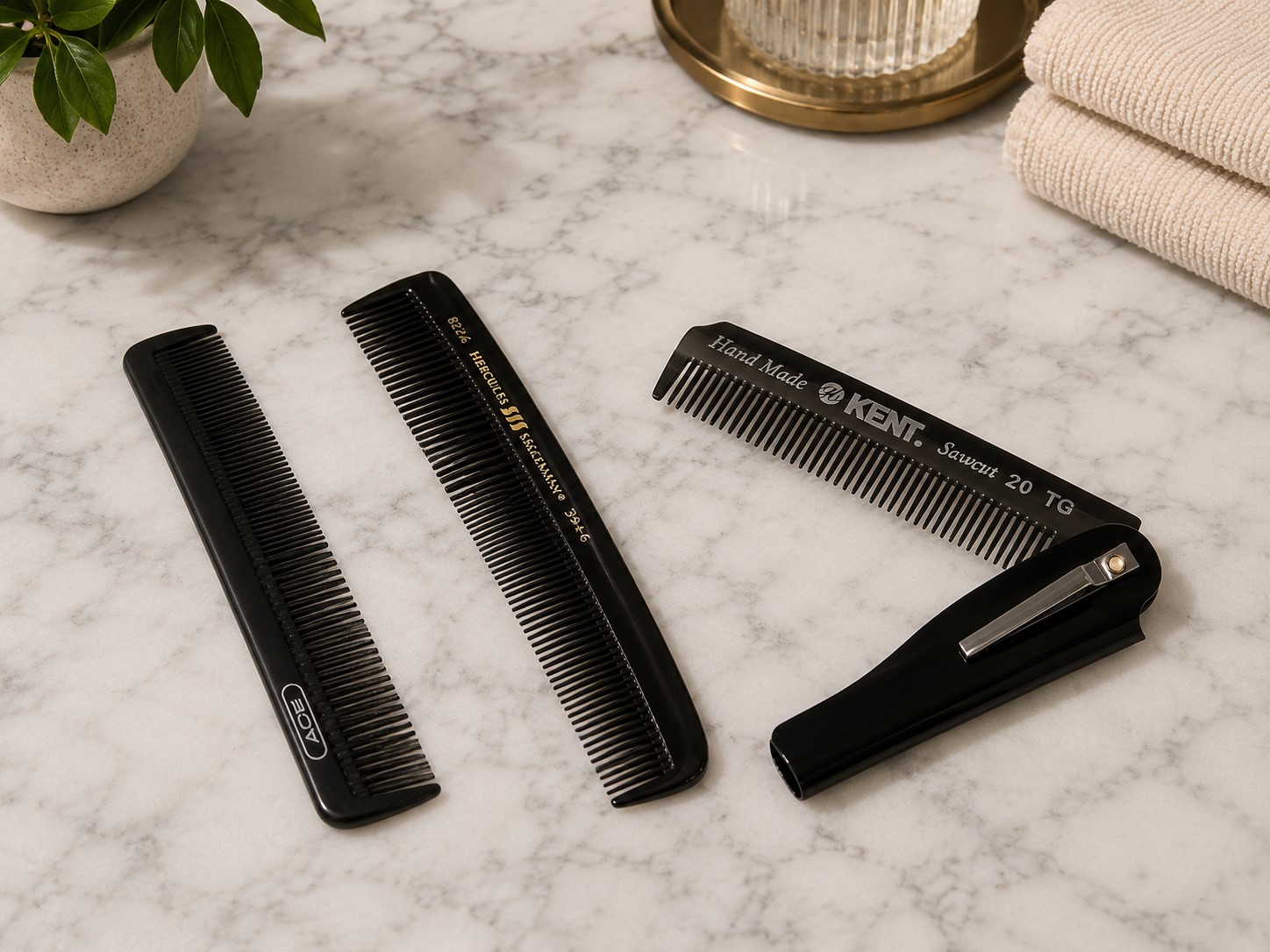
Ace Seamless Fine Tooth Comb is a simple, affordable, and widely available fine-tooth comb. It is seamless, which is the most important thing, and it does its job of smoothing and finishing well without being overly expensive.
Kent 20T Coarse and Fine Tooth Comb is a dual-sided comb with coarse teeth on one side and fine teeth on the other. The coarse side can be used for initial smoothing after detangling and the fine side for finishing. It is made from high-quality cellulose acetate which is smooth and gentle on the hair. A great two-in-one option.
Hercules Sagemann Seamless Finishing Comb is a professional-grade option made from seamless hard rubber. It is very smooth and gentle even on fine hair. Worth investing in if you do a lot of detailed styling that requires a very polished finish.
For children with straight hair, a fine-tooth comb used after detangling with a wide-tooth comb gives a beautifully smooth finish. For children with wavy, curly, or natural hair, fine-tooth combs are generally not part of the regular routine.
You will love this: Best Hair Creams for Children
Best Combs for Natural and Coily Hair Specifically
Natural and coily hair has the most specific comb needs. As we have covered, the hair is the most fragile hair type and needs the widest tooth spacing and the smoothest construction to prevent breakage.
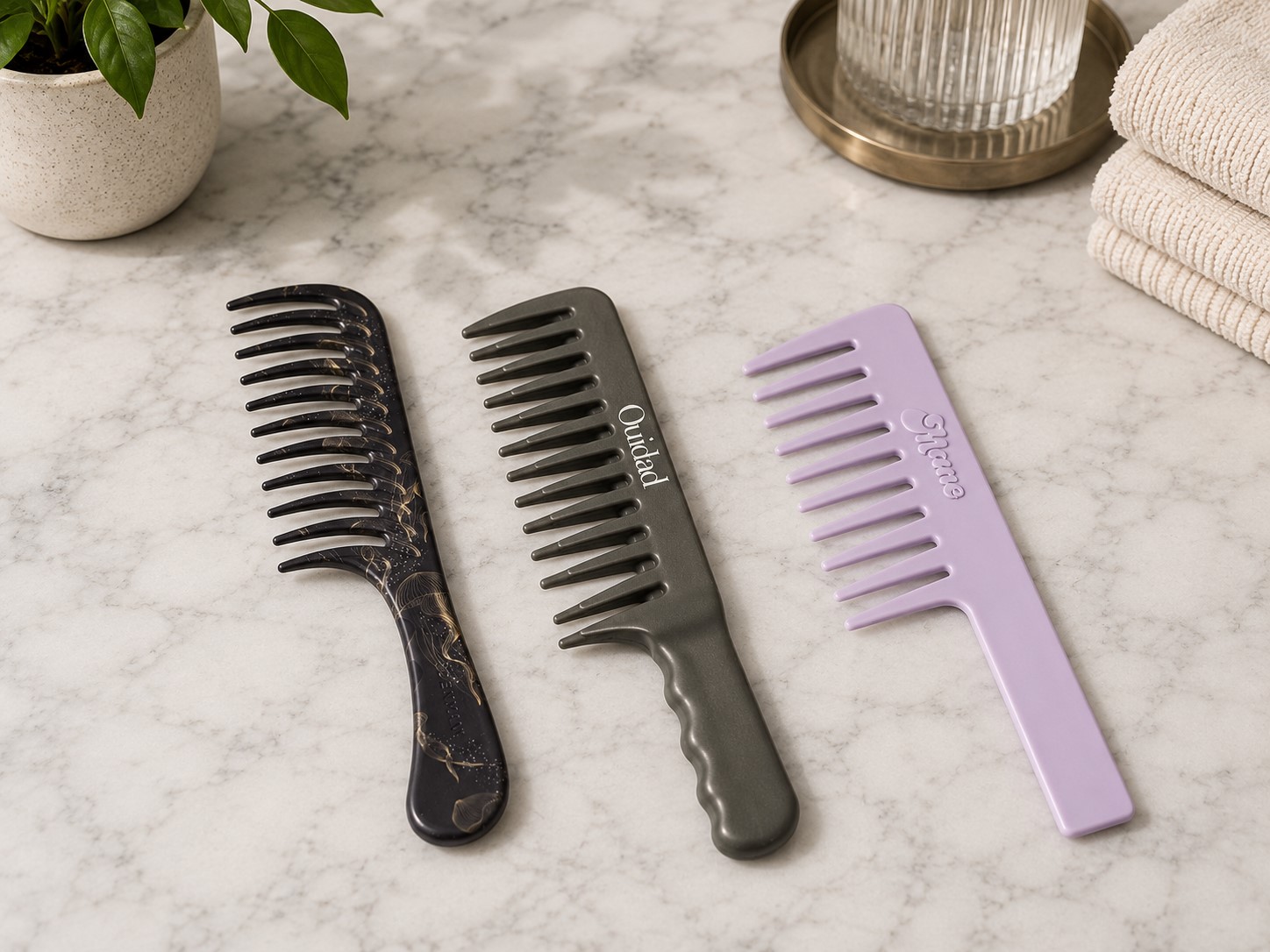
Denman D5 Original Styler Wide Tooth Comb is a favourite in the natural hair community. The widely spaced teeth glide through thick coily hair with much less resistance than standard combs.
It is durable, easy to clean, and works well both on dry hair with product and on wet hair during wash day.
Ouidad Double Detangler Comb has two rows of teeth rather than one. The idea is that the double row works through tangles more gently because it distributes the tension across more teeth at once.
It works particularly well on very thick type 4 hair.
The Mane Choice Wide Tooth Comb is designed specifically for natural hair. The extra-wide, smooth teeth move through dense coils with minimal snagging. It is affordable and widely available online and in beauty supply stores.
For natural hair, always use your wide-tooth comb on damp hair with product in it. Never comb dry natural hair without any slip. The strands will snap before the knot gives way every single time. For more on building the right detangling routine around your comb, how to detangle children’s hair on Little Hair Book walks through the full step-by-step process.
Best Combs for Curly Hair
Curly hair needs wide spacing and smooth teeth, similar to natural hair but with slightly more flexibility in what works well.
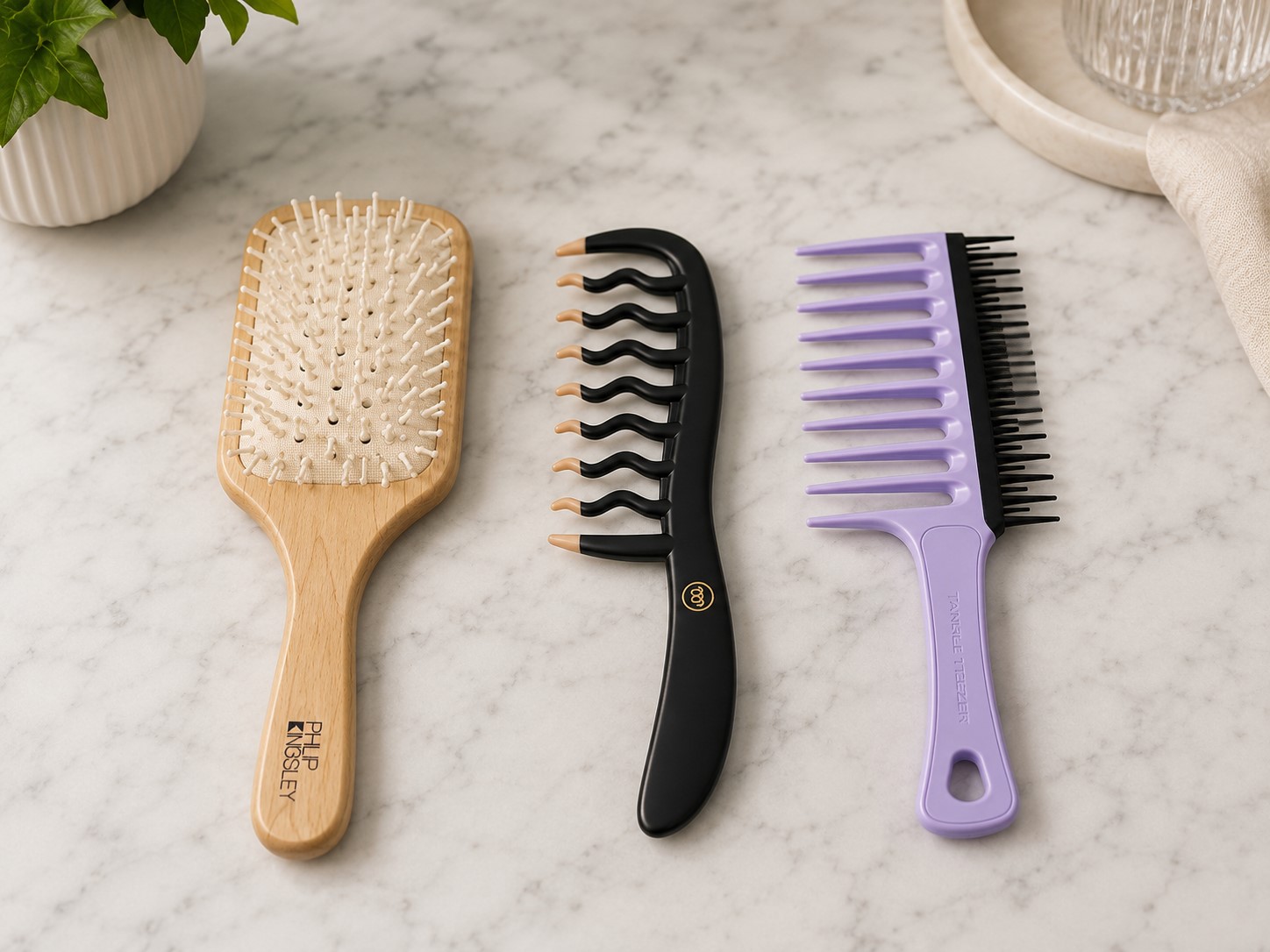
Tangle Teezer Thick and Curly Detangling Comb is specifically designed for curly and coily hair. The flexible teeth are extra smooth and widely spaced.
It works well on wet curly hair during wash day and on damp hair during midweek refreshes.
Conair Curl Collective Wide Tooth Comb is an affordable option specifically marketed for curly hair. The teeth are smooth and widely spaced and the handle is ergonomic and comfortable.
A good budget-friendly option for parents just starting out with a curly hair routine.
Philip Kingsley Vented Detangling Comb has wide teeth with vents between them that allow water and product to flow through the comb as you work.
This helps distribute conditioner more evenly through the curls during wash day detangling. A clever design that makes wash day easier.
For curly hair, combing should mostly happen on wash day when the hair is wet and loaded with conditioner. Between washes, finger detangling is generally gentler and less disruptive to the curl pattern. For tips on keeping curly hair healthy between wash days, how to care for curly children’s hair on Little Hair Book has everything you need.
How to Clean and Care for Your Child’s Combs
A clean comb works better and lasts longer. Product buildup on the teeth of a comb transfers back onto your child’s clean hair and can cause buildup on the scalp over time.
Here is a simple cleaning routine for combs.
Remove trapped hair after every use: Use your fingers or another comb to pull any hair out from between the teeth after each session. This keeps buildup from accumulating.
Wash weekly: Soak the comb in warm water with a small amount of shampoo for about five minutes. Use an old toothbrush to gently scrub between the teeth. Rinse thoroughly and let it air dry completely before using it again.
Check the teeth regularly: Run your finger along the teeth every few weeks to check for rough edges or chips. A comb with damaged teeth should be replaced immediately. Rough edges on the teeth cause more damage to the hair than you might expect from something so small.
Store properly: Keep combs in a clean, dry place. Tossing them loose into a drawer where they rub against other items can damage the teeth over time. A comb holder or a clean pouch keeps them in good condition longer.
A Quick Guide to Matching the Right Comb to Your Child’s Hair
Here is a simple summary to make the decision easier.
Straight hair- Wide-tooth comb for detangling, fine-tooth comb for finishing, rat tail comb for parting and styling.
Wavy hair – Wide-tooth comb for detangling, detangling comb for midweek maintenance, rat tail comb for parting.
Curly hair – Wide-tooth comb on wet conditioned hair on wash day, finger detangling between washes, rat tail comb for parting.
Natural and coily hair – Wide-tooth comb on damp hair with product always, detangling comb for stubborn knots, rat tail comb for parting and sectioning. Fine-tooth comb not recommended for the length of the hair at all.
Every hair type needs a wide-tooth comb. That is the one constant across all hair types and textures. Everything else depends on your child’s specific hair.
As you build out your full toolkit alongside your combs and brushes, the next thing to think about is the products that work alongside these tools. Choosing the right hair brush for your child on Little Hair Book is the perfect next read for making sure every tool in your routine is doing exactly what it should.

