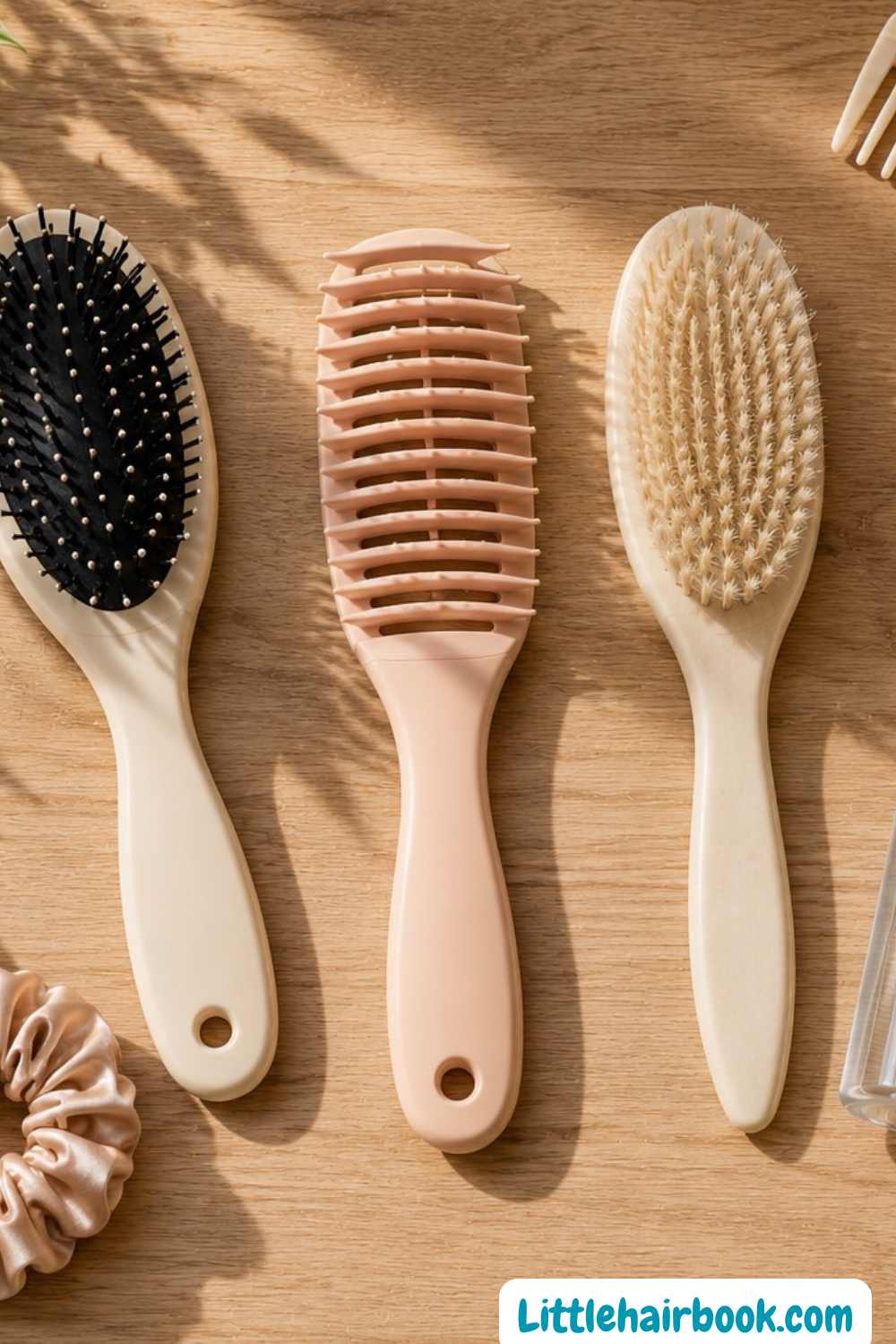
The right brush genuinely makes a significant difference in how your child’s hair looks, feels, and responds to styling. Using the wrong one, even with perfect technique, can cause breakage, frizz, and a very unhappy child sitting in front of you.
We already talked about technique in detail over on how to brush children’s hair on Little Hair Book. Today we are focusing entirely on the tools themselves. Which brushes are actually worth buying, what makes each one good, and how to match the right brush to your child’s specific hair type.
Let us get into it.
Why the Right Brush Matters More Than You Think
A lot of parents grab whatever brush is on sale and call it a day and honestly, that works until it does not.
Until the brush is pulling out more hair than it is smoothing or the bristles are scratching your child’s scalp and making them dread brush time. Until the hair is breaking off at the ends because the bristles are too stiff.
The brush you use is not a small detail. It is one of the most important tools in your hair care routine and choosing the right one for your child’s hair type is worth the extra thought.
Different brushes are designed for different purposes. Some detangle, smooth or define curls and some are specifically for edges. Using a brush outside of its intended purpose is where most of the damage happens.
Also, a good brush lasts a long time when it is properly cared for. Investing in the right one upfront saves you money and frustration in the long run. For more on how brushing fits into your overall routine, children’s hair care routine on Little Hair Book is a great reference to keep coming back to.

What to Look for When Buying a Hair Brush for Your Child
Before we get into specific recommendations, here are the things you should always check before buying any brush for a child.
Bristle type: This is the most important factor. Soft bristles are gentle on the scalp and work well for fine or baby hair. Boar bristles are great for distributing natural oils.
Nylon bristles help with detangling. Mixed bristle brushes combine both. The wrong bristle type for your child’s hair type causes more harm than good.
Bristle flexibility: Flexible bristles bend when they meet resistance instead of pulling through it. This is especially important for curly and natural hair. Stiff bristles that do not give at all are too harsh for most children’s hair types.
Cushion base: A brush with a cushioned base absorbs some of the pressure as you brush, which makes it gentler on the scalp. Look for brushes where the bristles sit in a soft rubber or foam cushion rather than a hard plastic base.
Handle comfort: You are holding this brush for extended periods. A comfortable grip matters. Look for a handle that fits well in your hand and does not slip when the brush is wet.
Seamless construction: Some brushes have seams along the base of the bristles from the manufacturing process. Those seams snag on hair and cause breakage. Look for brushes that are described as seamless or check the bristles yourself before buying.
Size: A smaller brush gives you more control, which is useful for children’s hair. A larger paddle brush covers more surface area quickly but is harder to maneuver in tight sections.
You will love this: Best Leave-In Conditioner for Children
Best Soft Bristle Brushes for Children
Perfect for Fine Hair, Baby Hair, and Everyday Edge Smoothing
Soft bristle brushes are the most gentle option available and they are a must-have for every parent regardless of their child’s hair type. Even if you have other brushes in your collection, a soft bristle brush earns its place for edge smoothing and for handling the most delicate sections of the hair.
1. Burt’s Bees Baby Brush is one of the most recommended soft bristle brushes for young children. The bristles are extremely soft and gentle, making it ideal for babies and toddlers.
It is also very affordable and easy to find. For older children with fine or straight hair, it works well for daily smoothing.
2. Wet Brush Pro Flex Dry has soft, flexible bristles that glide through the hair without scratching. It works well for children with fine to medium straight or wavy hair.
The flexible bristles bend around any resistance rather than pulling through it, which significantly reduces pain during brushing.
3. Denman D3 Original Styler has a cushioned base with medium nylon bristles. It is gentle enough for daily use on straight and wavy hair and firm enough to actually smooth and style effectively.
It is one of the most versatile options for children with straight to wavy hair types.
For children with natural or coily hair, soft bristle brushes are best reserved for the edges and hairline rather than the full length of the hair.
Running any brush through the full length of very tight natural hair daily causes more harm than good regardless of how soft the bristles are.
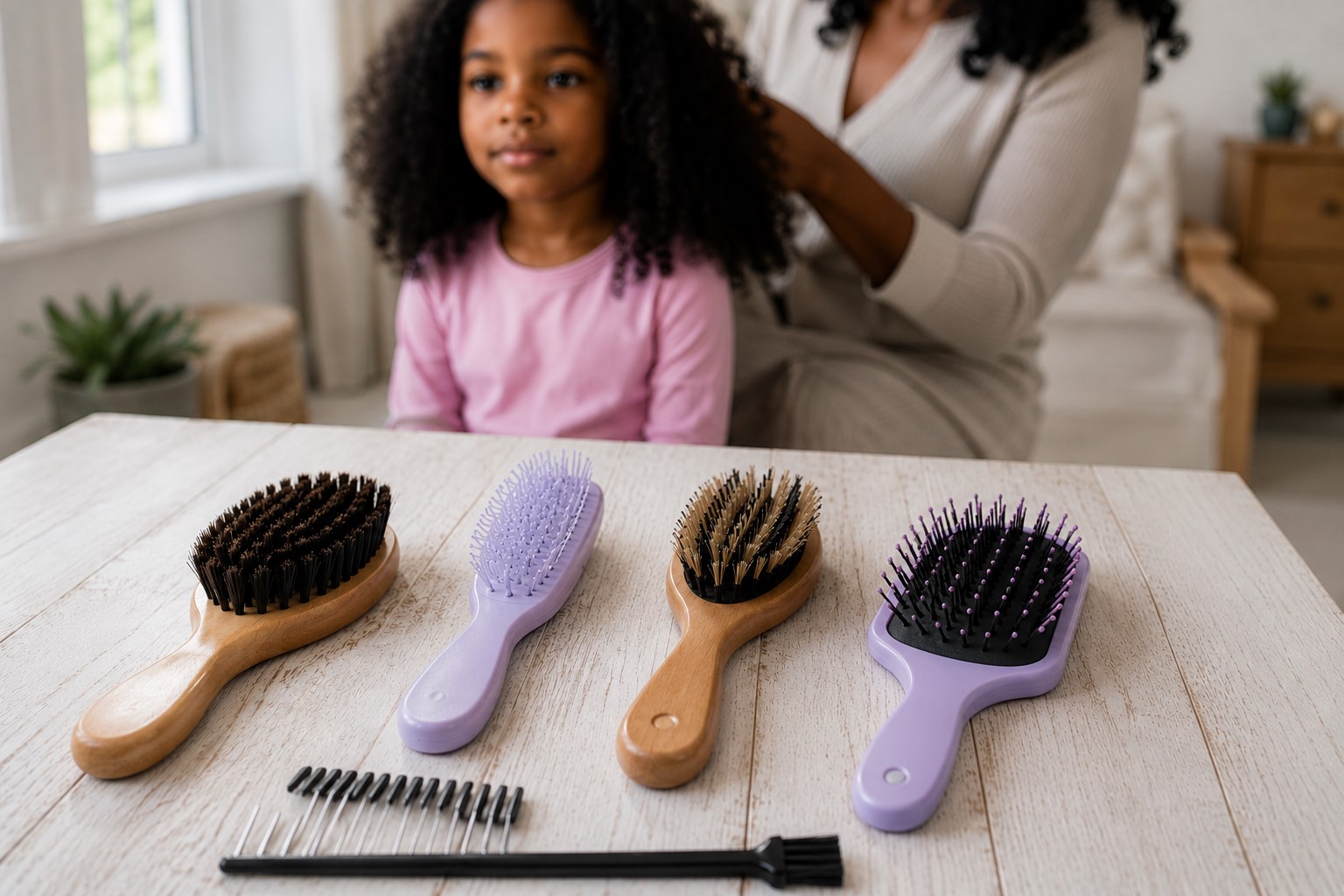
Best Boar Bristle Brushes for Children
Boar bristle brushes are in a category of their own. The natural bristles are firm enough to smooth the hair effectively but gentle enough not to scratch or pull.
What makes them especially valuable is their ability to distribute the scalp’s natural oils down the length of the hair shaft as you brush.
This oil distribution is what gives hair that natural shine and health between wash days. For children with straight or wavy hair, a boar bristle brush used regularly genuinely transforms how the hair looks and feels over time.
1. Mason Pearson Junior Bristle Brush is widely considered one of the best boar bristle brushes available. It is expensive but it is also built to last for years.
The cushioned base and pure boar bristles make it exceptionally gentle while still being effective. If you are going to invest in one quality brush for a child with straight or fine wavy hair, this is the one.
2. Denman Cushion Brush with Boar Bristles is a more affordable option that still delivers good results. The cushioned base makes it gentle on the scalp and the boar bristles do a good job of smoothing and adding shine.
3. Bass Brushes Pure Soft Natural Boar Bristle Brush is another solid option. The bristles are softer than average boar bristle brushes which makes it suitable for finer hair types. It also has a comfortable wooden handle that is easy to grip.
Boar bristle brushes work best on straight to loosely wavy hair. They are not suitable for thick natural or very curly hair because the bristles cannot penetrate the density of those hair types effectively.

Best Mixed Bristle Brushes for Children
Mixed bristle brushes combine boar bristles with nylon bristles. The nylon bristles help with detangling while the boar bristles smooth and distribute oils. This combination makes them a great middle-ground option for children with wavy or loosely curly hair.
1. Denman D4 Large Styling Brush has a mix of nylon and boar bristles set in a cushioned base. It works well for medium to thick wavy hair and is large enough to cover a good amount of surface area quickly.
Great for children with a lot of hair who need wash day brushing to go faster.
2. Olivia Garden Ceramic Ion Supreme Combo Brush is a popular mixed bristle option. The ceramic barrel helps distribute heat evenly if you are using a blow dryer, and the mixed bristles handle both detangling and smoothing in one step.
3. Conair Pro Boar Bristle Blend Brush is an affordable mixed bristle option that performs well above its price point.
It is widely available and a good starting point if you are not sure whether a mixed bristle brush is right for your child’s hair.
For children with wavy hair, mixed bristle brushes hit a sweet spot between the gentleness of soft bristle brushes and the oil distribution of pure boar bristle brushes.
They handle a little bit of texture without being too harsh. For more on keeping wavy hair moisturized between brushing sessions, how to moisturize children’s hair on Little Hair Book covers everything you need.
Best Detangling Brushes for Children
For the Knots That Refuse to Cooperate
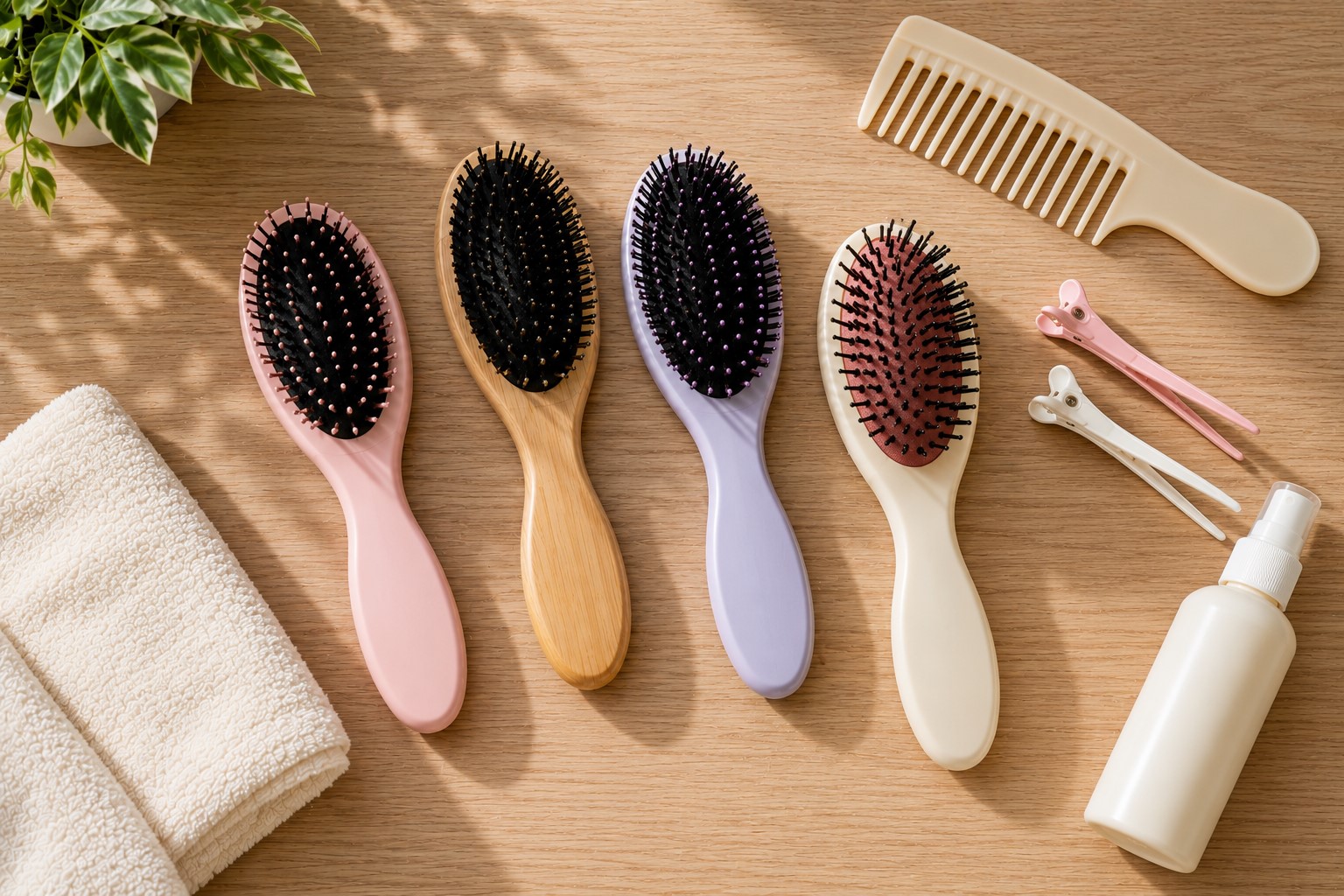
Detangling brushes are specifically designed to work through knots and tangles without causing the sharp pain that regular brushes cause. The bristles are flexible and widely spaced so they bend around knots instead of forcing through them.
These brushes are not meant to replace your wide-tooth comb for serious detangling. They work best as a finishing detangling tool after the bigger knots have already been loosened with fingers and a wide-tooth comb.
1. Tangle Teezer The Original is probably the most well-known detangling brush in the world and for good reason. The two-tiered flexible teeth work through tangles with minimal pain.
It is compact, easy to hold, and comes in versions specifically designed for children. It works well on wavy, curly, and even some natural hair types when the hair is damp and has product in it.
2. Wet Brush Original Detangler is another favourite. The IntelliFlex bristles are extremely flexible and glide through knots without pulling.
It is especially good for children who are very sensitive to brushing pain. Using it on damp hair with a leave-in conditioner makes the detangling process almost effortless for wavy and curly hair types.
3. Felicia Leatherwood Detangler Brush is a favourite in the natural hair community. The wide, flexible teeth work well on thicker hair types that other detangling brushes struggle with.
It is designed specifically for natural and curly hair and works best on wet hair with conditioner or a detangling product in it.
For children whose hair tangles severely between wash days, pairing a good detangling brush with the right products makes a huge difference. Best detangling spray for kids on Little Hair Book covers the product side of that equation in full detail.
Best Edge Brushes for Children
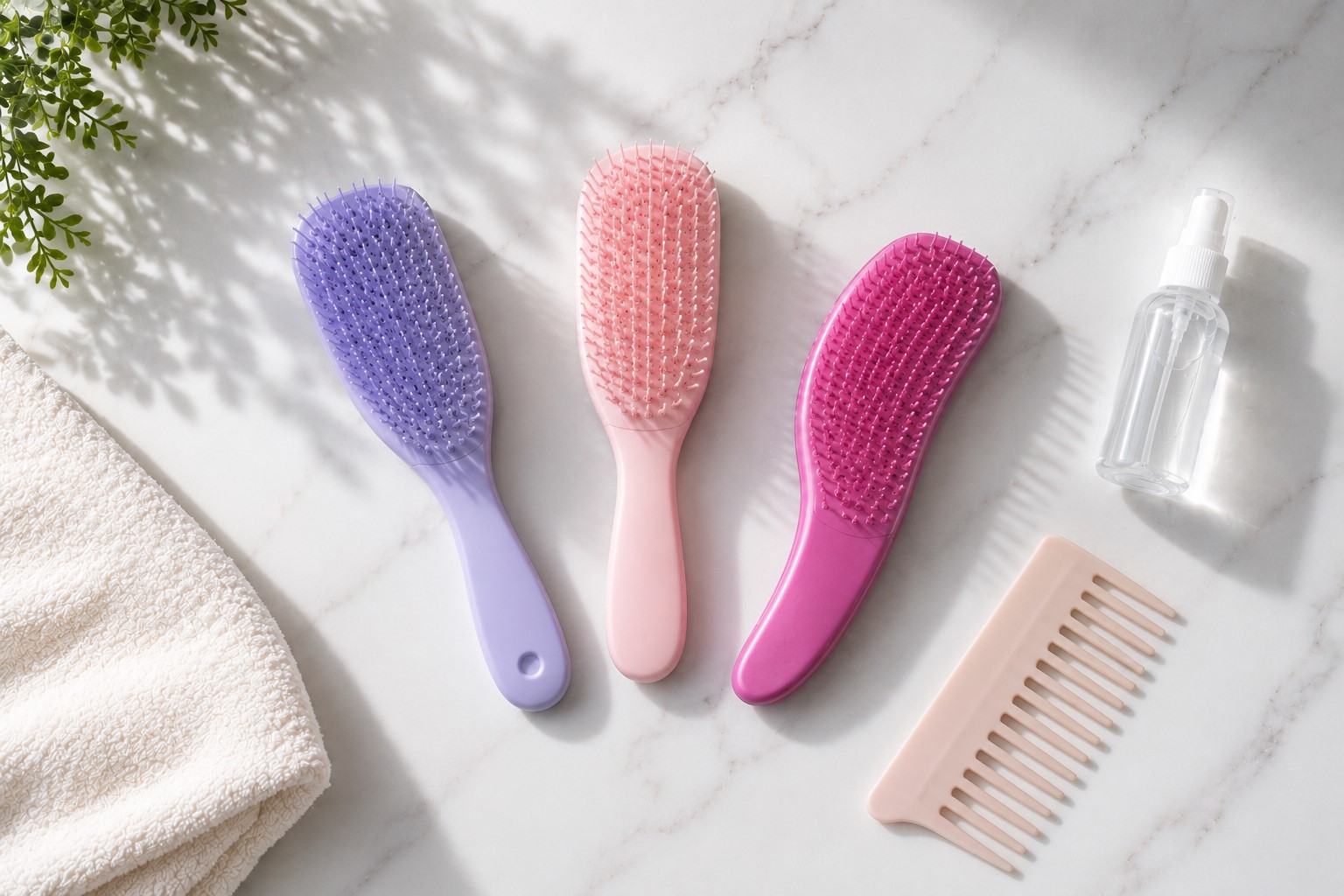
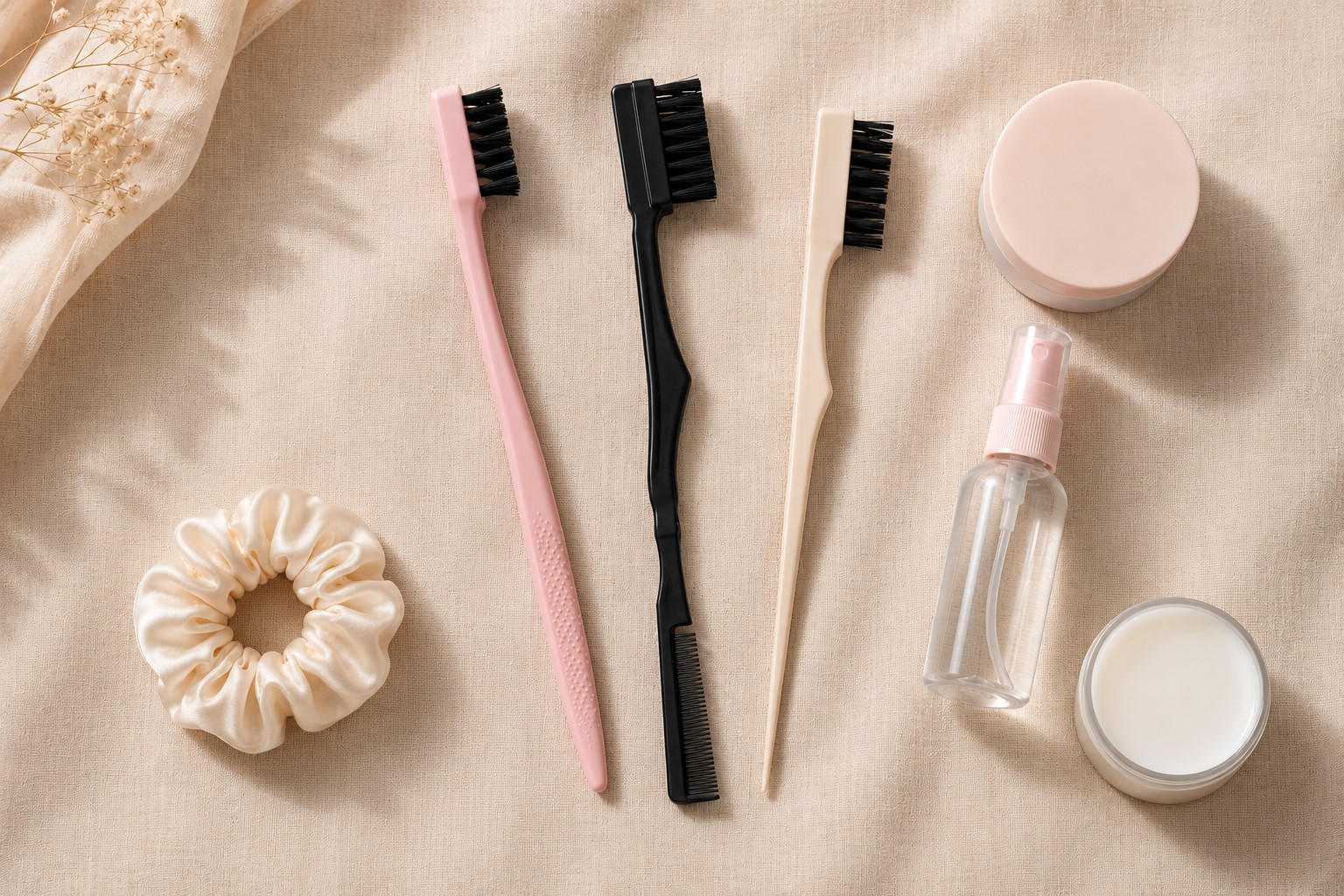
Edge brushes are small, soft-bristled brushes designed specifically for laying down the hairline and smoothing the edges. Every parent who does any kind of styling on their child’s hair needs one of these.
1. Okay Pure Naturals Edge Brush is affordable, widely available, and does exactly what it is supposed to do. The bristles are soft enough not to scratch the delicate hairline and the brush is small enough to give you precise control around the edges.
2. Brush King Edge Control Brush is a two-sided edge brush with a small soft bristle brush on one end and a fine-tooth comb on the other. The combination is useful for both smoothing the edges and creating clean parts along the hairline.
3. Mielle Organics Edge Brush comes with a brush on one end and a pointed tail for precise parting on the other. The bristles are very soft and gentle which is exactly what the delicate hairline needs.
When using an edge brush, always apply a little water, edge control, or a light cream to the edges first. Never drag a dry brush over the hairline. The edges are too fragile for that and over time dry brushing on the edges causes the hairline to thin.
Bookmark this post: Best Hair Moisturizers for Children
Best Brushes for Natural and Coily Hair
Natural and coily hair has the most specific brush needs of any hair type. As we mentioned, running a brush through the full length of type 4 hair daily is not recommended. But there are specific brushes that work beautifully for natural hair when used correctly and at the right times.
1. Denman D3 Original Styler is a cult favourite in the natural hair community. It has seven rows of nylon pins set in a rubber cushion.
It is used on wet, conditioned natural hair to define curl patterns and smooth sections before styling. Many natural hair parents remove a row or two of bristles to reduce tension on the hair.
2. Felicia Leatherwood Detangler Brush works for natural hair too, not just for detangling. On wash day with conditioner in the hair, it helps smooth and define the coils without causing excessive breakage.
3. Soft bristle baby brush for the edges: Regardless of how tight the natural hair is, a soft bristle brush on the edges is always appropriate. It is the gentlest way to smooth the hairline without putting tension on those fragile strands.
For natural hair, the brush is really only used on wash day when the hair is wet and loaded with conditioner, and on the edges during daily styling.
The rest of the week, fingers and a wide-tooth comb do the work. For more detail on building the right daily habits around natural hair, how to care for natural children’s hair on Little Hair Book covers everything from wash day to daily maintenance in full.

How to Care for Your Child’s Hair Brushes
A good brush lasts years when it is properly cared for. A neglected brush collects product buildup, old hair, dust, and bacteria and then transfers all of that back onto your child’s clean hair every time you use it.
Here is how to keep brushes in good condition.
1. Remove trapped hair after every use: Use a fine-tooth comb or a brush cleaning tool to pull the hair out from between the bristles. This takes thirty seconds and prevents buildup from accumulating.
2. Wash weekly: Fill a bowl with warm water and a small amount of shampoo. Dip the bristles into the water and gently work the shampoo through them with your fingers. For boar bristle brushes, be gentle and do not submerge the wooden handle as it can warp. Rinse well.
3. Air dry bristle side down: Lay the brush on a clean towel with the bristles facing down so the water drains away from the base. Never dry a brush bristle side up as the water sits in the cushion and can cause mold.
4. Replace when bristles splay or break: Damaged bristles do not perform well and can scratch the scalp. Most quality brushes last between one and two years with proper care.
Pin this post: Best Conditioner for Kids
Matching the Right Brush to Your Child’s Hair Type
To make this easy, here is a quick summary of which brush works best for each hair type.
Fine or straight hair: Soft bristle brush or boar bristle brush for daily smoothing. Detangling brush for any knots.
Wavy hair: Mixed bristle brush for daily use. Detangling brush for post-wash detangling.
Curly hair: Detangling brush on wet conditioned hair on wash day. Soft bristle brush for edges. No brushing on dry curly hair.
Natural and coily hair: Denman or Felicia Leatherwood brush on wet conditioned hair on wash day only. Soft bristle brush for edges daily. No brushing through the length on dry hair.
Every hair type needs an edge brush regardless of what else is in your collection. It is the one tool that crosses all hair types and hair textures.
For more on choosing the right tools to go alongside your brushes, best combs for kids on Little Hair Book is the perfect next read.
Final Thoughts on Choosing the Right Brush
There is no single best brush for every child. The best brush is the one that matches your child’s hair type, is used with the right technique, and is kept clean and in good condition.
Start with a soft bristle brush and a detangling brush. Those two cover the most ground for most hair types.
Then add a boar bristle or mixed bristle brush if your child has straight or wavy hair, or a Denman style brush if they have curly or natural hair and always, always have an edge brush.
Take care of your brushes and they will take care of your child’s hair. It really is that simple.

