
One of the most frustrating things a parent can experience is watching their child’s hair seem completely stuck at the same length for months on end. You are washing it, you are moisturizing it, you are putting it in protective styles, and yet it just does not seem to be going anywhere.
The length stays the same, the ends look the same and you start wondering if there is something fundamentally wrong with your child’s hair.
Here is what you need to know first. Hair almost never actually stops growing. The follicles are almost always producing new hair at the root.
What looks like stopped growth is almost always a retention problem. The hair is growing but it is breaking off at the ends at roughly the same rate it is being produced at the roots. So the length stays the same even though growth is happening continuously.
We covered the habits that support healthy hair growth in the last post on Little Hair Book and if you have not read it yet, healthy hair habits for kids gives you the foundation of what consistent hair care should look like. Today we are going deeper into the specific reasons why children’s hair appears to stop growing and exactly what to do about each one.

Eight Reasons Why Children’s Hair Stops Growing
1. Breakage Is Cancelling Out the Growth
This is the most common reason children’s hair appears to stop growing and it is worth understanding clearly before we move on to anything else.
Hair grows at roughly half an inch per month from the root. If the ends of the hair are breaking off at a similar rate, the overall length stays the same. You are essentially running in place. New growth at the top, loss at the bottom, net result of zero visible progress.
Breakage happens for many reasons. Dryness, rough handling, tight styles, skipping the satin bonnet, using the wrong products. All of these contribute to ends that are too weak to survive daily wear and tear.
The fix for breakage-related stagnation is addressing every single cause of breakage simultaneously rather than fixing one thing and leaving the others. Moisturize consistently. Handle gently. Protect at night. Keep the ends sealed and tucked away. Trim the split ends before they travel further up the shaft.
When you eliminate the breakage, the growth that was always happening starts to show. Sometimes within just a few weeks of fixing the routine, parents notice a visible difference in length that was not there before. The growth did not suddenly increase. The breakage just stopped cancelling it out.
For a full breakdown of every cause of breakage and how to address each one specifically, how to prevent hair breakage in children on Little Hair Book covers all of it in detail.
2. The Hair Is Chronically Dry
Dry hair is brittle hair. Brittle hair snaps and hair that snaps constantly never retains its length no matter how much it grows at the root.
Chronic dryness in children’s hair usually comes from one or more of the following. Using shampoos with harsh sulfates that strip the hair of its natural moisture every wash day. Not conditioning thoroughly enough after washing. Skipping the leave-in conditioner between washes. Not sealing moisture in with oil and cream after applying leave-in. Not using a satin bonnet at night so the hair loses moisture to the cotton pillowcase while sleeping.
Any one of these is enough to keep the hair in a chronic state of dryness. Most parents who are dealing with dry hair that will not grow are actually dealing with several of these at the same time without realising it.
The fix is building a proper moisture routine and following it consistently. Water first always, Leave-in conditioner on damp hair. Oil to seal, Cream as the final layer for natural and curly hair. Satin bonnet every night without exception. Deep conditioner every single wash day.
When the hair is properly and consistently moisturized, it becomes softer, more elastic, and significantly more resistant to breakage. That resistance to breakage is what allows the length to accumulate over time.
For guidance on building the right moisture routine for your child’s specific hair type, how to keep children’s hair healthy on Little Hair Book covers everything from product choice to application technique in full detail.
3. Tight Hairstyles Are Damaging the Follicles
When the Style Is the Problem
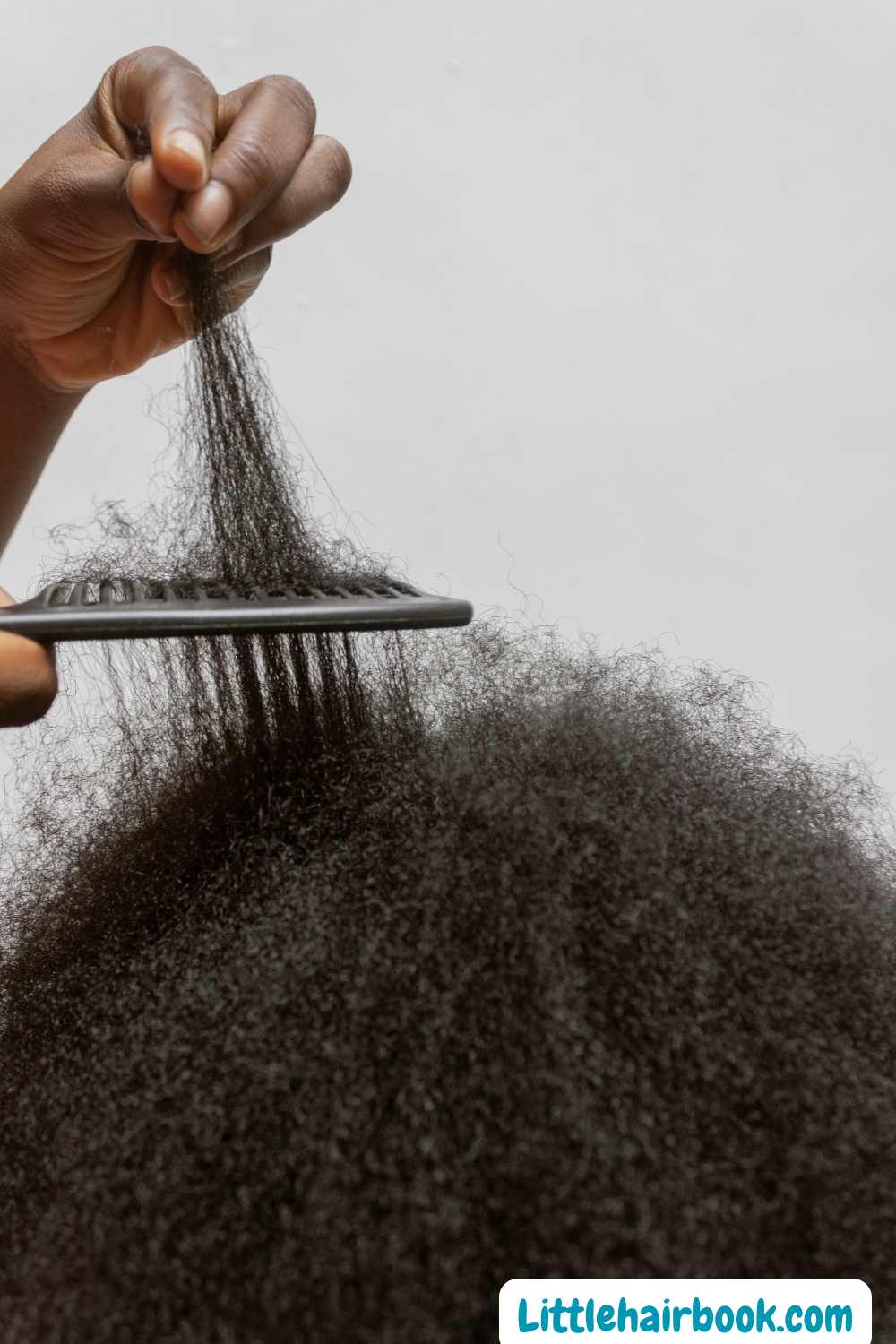
Traction alopecia is hair loss caused by tension. It happens when hairstyles consistently pull too tightly on the hair, particularly around the edges and hairline. And it is one of the most common causes of apparent hair growth stagnation in children, especially along the hairline and temples.
The damage from tight styles happens gradually. In the beginning the hair just looks a little sparse along the edges. Then the edges start to recede visibly.
Then the follicles in that area become damaged enough that they stop producing hair entirely in those spots.
The insidious thing about traction alopecia is that it develops slowly enough that parents often do not notice it until significant damage has already been done.
By the time it is obvious, months of tight braids, tight ponytails, or tight cornrows have already taken their toll.

How to Recognise Traction Alopecia Early
Look for these early signs. Small bumps or pimples along the hairline after a new style is put in. Redness or tenderness along the edges. Fine baby hairs along the hairline breaking off rather than growing.
The hairline appearing to move backward over time.
If you notice any of these signs, act immediately. Stop any style that is putting tension on those areas. Give the hairline a rest with loose, tension-free styles.
Keep the edges moisturized and gently massaged to stimulate blood flow to the affected follicles.
The fix going forward is keeping all styles loose enough that your child does not feel tightness or discomfort after the style is done. If they say it is too tight, it is too tight. Loosen it. No style is worth damaging the follicles.
4. Product Buildup Is Blocking Growth
When heavy products accumulate on the scalp over time, they clog the hair follicles. Clogged follicles produce weaker hair and in some cases slow down the rate of hair production.
Product buildup is a sneaky cause of apparent growth stagnation because it builds up gradually and is not always visible.
Signs of product buildup on the scalp include persistent itching that does not go away even after washing, flaking that looks different from dandruff and does not respond to anti-dandruff treatments, hair that always feels heavy or coated even right after washing, and a scalp that smells even when the hair appears clean.
The fix is a clarifying shampoo used once a month to strip away the accumulated buildup and give the scalp a true reset.
Follow the clarifying shampoo immediately with a deep conditioner to restore the moisture that the clarifying process removes.
Going forward, be more mindful about what goes directly on the scalp. Heavy butters, thick creams, and products containing mineral oil or petrolatum should not be applied directly to the scalp regularly.
Keep scalp product application to light oils and let heavier products stay on the hair rather than the scalp.
For more on how to choose the right shampoo for keeping the scalp clean without over-stripping the hair, best shampoo for children on Little Hair Book covers exactly what to look for and what to avoid.

5. Not Enough Protein in the Hair Care Routine
Hair is made of protein. Specifically keratin. When the hair is lacking in protein, it becomes weak, limp, and extremely prone to breakage.
This is called protein deficiency in the hair and it is different from the diet-related protein deficiency we talked about in the previous posts.
Hair that lacks protein stretches excessively when wet and then snaps rather than springing back. It feels mushy or gummy when wet. It breaks easily even when it seems moisturized.
These are signs that the hair needs more protein from its products rather than just more moisture.
The fix is incorporating a protein treatment into the hair care routine. Protein treatments or protein-rich deep conditioners are applied similarly to regular deep conditioners but they specifically deposit protein into the hair shaft to strengthen it.
Use a protein treatment once a month or every two weeks if the hair is severely protein deficient. Do not overdo it.
Too much protein makes the hair stiff and brittle which is the opposite problem. Balance protein treatments with moisturizing treatments so the hair gets both in the right amounts.
Look for deep conditioners and treatments that contain hydrolyzed keratin, silk amino acids, hydrolyzed wheat protein, or egg protein.
These are effective protein ingredients that strengthen the hair shaft and reduce breakage significantly when used consistently.
6. Heat Damage Is Weakening the Hair
When Heat Becomes the Enemy of Growth
Regular heat styling is one of the most common causes of hair damage and apparent growth stagnation in children’s hair.
Blow dryers, flat irons, and curling wands all use heat that weakens the protein bonds inside the hair shaft when used at high temperatures or too frequently.
Heat-damaged hair loses its natural texture and elasticity.
Hair may become straight in areas that were once curly or wavy, feel dry and rough even after being moisturized, and break easily where the damaged section meets the healthier hair above it.
For children’s hair, minimizing heat use is always the right approach. Air drying is gentler than blow drying. Diffusing on low heat is better than blow drying on high.
Protective styles that do not require heat are better for the hair than styles that need a flat iron to achieve.
When heat is used on children’s hair, always use a heat protectant product first. Apply it to damp hair before any heat is applied. Use the lowest effective heat setting rather than the highest. Keep the heat moving rather than holding it on one section for too long.
If heat damage has already occurred, the only true fix is cutting off the damaged sections and starting fresh. Heat damage cannot be repaired. It can only be managed until it is grown out and trimmed away.
Going forward, reduce heat use significantly to prevent the damage from recurring.
7. Nutritional Deficiencies Are Affecting Growth
We touched on diet in previous posts but it is worth addressing specifically here because nutritional deficiencies are a genuine cause of hair growth stagnation that is completely overlooked when parents are focused only on external hair care.
Iron deficiency is the most common nutritional cause of hair growth problems in children. When iron levels are low, the body reduces blood flow to the hair follicles because it is prioritizing more essential functions.
The follicles receive less oxygen and fewer nutrients and hair growth slows significantly or stops entirely in some areas.
Vitamin D deficiency has also been linked to hair loss and slow growth. Children who do not get enough sun exposure or who have diets low in vitamin D may experience hair thinning or growth stagnation as a result.
Zinc deficiency affects the oil glands around the follicles and can lead to hair loss and slow growth. Biotin deficiency, while less common, also affects hair health and growth rate.
If you have addressed every external factor, the routine is solid, the products are right, the handling is gentle, and the hair is still not growing, it is worth visiting a doctor to check your child’s nutritional levels.
A simple blood test can identify any deficiencies and supplementation or dietary changes can address them. Always consult a doctor before giving children any supplements.
8. The Hair Needs a Better Routine
Sometimes the honest answer is that the hair appears to have stopped growing because the routine simply is not thorough enough yet.
Washing without deep conditioning. Moisturizing without sealing. Skipping the satin bonnet some nights but not others. Detangling roughly, leaving split ends untrimmed for too long. Each of these gaps in the routine contributes to breakage that cancels out growth.
The fix is building a proper comprehensive routine and following it consistently. Not perfectly. Consistently. There will be weeks where things get skipped. That is life. But the overall pattern should be thorough enough that the hair is getting what it needs the vast majority of the time.
For a structured week-by-week routine that covers every step the hair needs to retain its growth, children’s hair growth routine on Little Hair Book maps out exactly what to do each day of the week to give your child’s hair the best possible environment to grow and thrive.
When to See a Doctor
Most of the time, hair that appears to stop growing is a retention problem that can be fixed with the right routine and products.
But there are some situations where the hair loss or stagnation is caused by something medical that requires professional attention.
See a doctor if your child is losing hair in patches rather than experiencing general thinning. Patchy hair loss can indicate alopecia areata which is an autoimmune condition that requires medical treatment.
See a doctor if the hair loss is accompanied by scalp redness, scaling, or itching that does not improve with regular washing. This could indicate a fungal infection like tinea capitis which needs antifungal treatment.
See a doctor if your child is losing hair along with other symptoms like extreme fatigue, weight changes, or changes in mood. These can indicate thyroid issues or other systemic conditions that affect hair growth.
See a doctor if you have genuinely addressed every external factor and the hair is still not growing after several months of consistent proper care. A doctor can run tests to identify any underlying issues that are contributing to the problem.
For more on what truly healthy growing hair looks like so you can tell the difference between a routine problem and something that needs medical attention, signs of healthy children’s hair on Little Hair Book gives you a clear picture of what you should be seeing when the hair is thriving.

