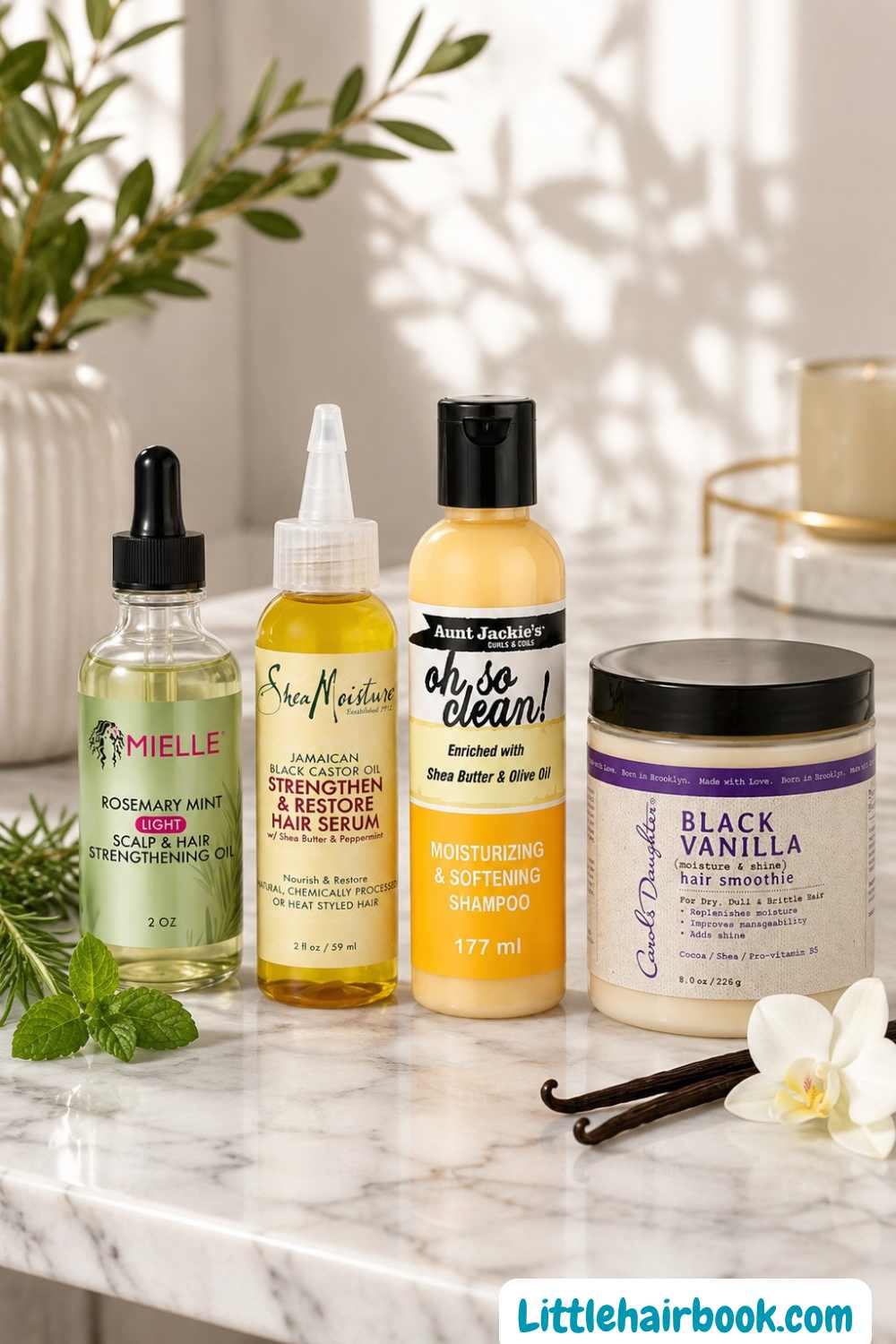
If you have been following along on Little Hair Book, by now you have your shampoo sorted, your conditioner sorted, and your leave-in conditioner sorted.
Your wash day routine is coming together and your daily moisture routine is starting to make a real difference in how your child’s hair looks and feels. But there is one more product that sits right in the middle of all of that and ties everything together. Hair oil.
A lot of parents either skip oil entirely or use it the wrong way. They apply it to dry hair hoping it will fix dryness, or they pour too much on and end up with hair that looks greasy and heavy.
Oil used correctly though is one of the most powerful tools in your child’s hair care routine. It seals moisture in, protects the hair from breakage, nourishes the scalp, and keeps everything working longer between wash days.
We covered leave-in conditioners in the last post and if you have not read it yet, best leave-in conditioner for children on Little Hair Book is worth going through first because oil works directly alongside leave-in conditioner in the LOC method.
Today we are going deep into hair oils. What different oils do, which ones work for which hair types, and the best ones currently available for children’s hair.

Why Hair Oil Is Not the Same as Moisture
This is probably the most important thing to understand about hair oil before we get into anything else. Oil is not a moisturizer. Water is the only true moisturizer for hair. Oil is a sealant.
When you apply oil to the hair, it does not add moisture. What it does is create a barrier on the outside of the hair shaft that slows down how quickly moisture evaporates from inside the hair.
Think of it like cling film over a bowl of food, the cling film does not add anything to the food. It just keeps what is already there from drying out.
This is why applying oil to completely dry hair does not fix dryness. If there is no moisture in the hair to begin with, the oil has nothing to seal in. It just sits on top of the hair and makes it look greasy without actually helping.
The right way to use oil is always on top of water or a water-based product like leave-in conditioner. That way the oil is sealing in the moisture that the water or leave-in brought to the hair.
That is when oil becomes genuinely effective and that is when you start seeing real results.
Pin this post: Best Detangling Spray for Kids
Light Oils vs Heavy Oils
Not all oils behave the same way on the hair. Some absorb into the hair shaft and some sit on top of it. Knowing the difference helps you choose the right oil for your child’s hair type.
Light oils have small molecules that can actually penetrate the hair shaft rather than just sitting on the surface.
They absorb quickly, do not leave a greasy feeling, and work from the inside out. Examples include jojoba oil, argan oil, sweet almond oil, and grapeseed oil.
These oils work best for fine, straight, or wavy hair types that get weighed down easily by heavier products. They add shine, softness, and a light layer of protection without making the hair feel heavy or look greasy.
Heavy oils have larger molecules that cannot penetrate the hair shaft and instead sit on the outside of the hair creating a protective barrier.
You will love this: Best Combs for Kids
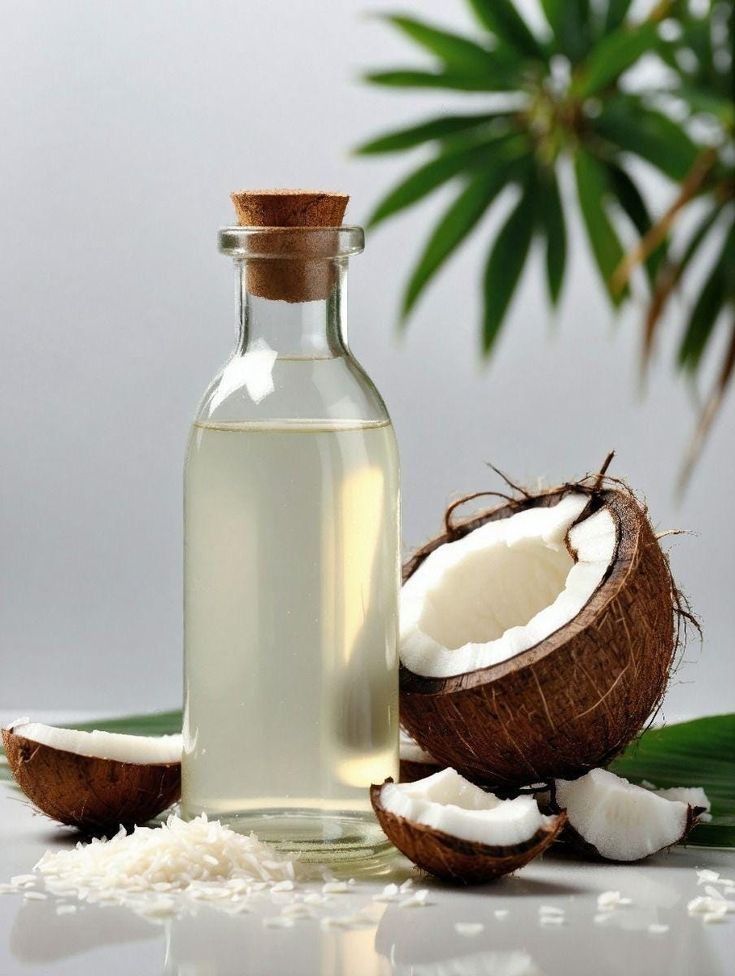
They provide a stronger seal which makes them better for locking moisture into very dry or porous hair. Examples include castor oil, coconut oil when used as a sealant, olive oil, and avocado oil.
These oils work best for thick, natural, or curly hair types that need a stronger barrier to hold moisture in between wash days. For very fine or straight hair, heavy oils tend to weigh the hair down and make it look greasy quickly.
For more on how oil fits into the full moisturizing routine for your child’s hair, how to moisturize children’s hair on Little Hair Book explains the LOC method and where oil sits in that process in full detail.
Best Oils for Natural and Coily Hair
Natural and coily hair needs oils that provide the strongest possible seal. This hair type loses moisture faster than any other and needs a heavy enough oil to slow that moisture loss significantly.
Jamaican Black Castor Oil is the most popular oil in the natural hair community and it has earned that status genuinely. It is thick, rich, and provides an exceptionally strong seal on the hair.
Beyond sealing, it is also known for supporting hair growth and strengthening the hair shaft over time. It is particularly popular for use on the scalp and edges.
The one thing to know about jamaican black castor oil is that it is very thick. If used on its own it can feel heavy and difficult to distribute evenly.
Mix it with a lighter oil like jojoba or sweet almond oil to make it easier to apply and to reduce the heaviness on the hair.
Coconut Oil is one of the few oils that actually penetrates the hair shaft rather than just sitting on top. This makes it a unique crossover between a light and heavy oil.
It reduces protein loss from the hair, adds moisture from within, and also creates a reasonable seal on the outside. It works well for natural hair both as a pre-poo treatment before washing and as a sealant after leave-in conditioner.
Olive Oil is a rich, heavy oil that has been used on hair for centuries. It adds significant moisture and shine and provides a strong seal.
It works particularly well for very dry type 4 hair that needs more than a lighter oil can provide. Use it in small amounts as it can feel heavy on the hair if over-applied.
Avocado Oil is rich in vitamins and fatty acids that nourish both the hair and the scalp. It is slightly lighter than olive oil which makes it easier to distribute through thick natural hair. It adds moisture, shine, and a good seal without being as heavy as castor oil.
For natural hair, applying oil to the scalp in addition to the hair is important. The scalp of natural hair children can get dry and itchy between washes.
Massaging a light to medium weight oil into the scalp every few days keeps it nourished and supports healthy hair growth. For more on the daily scalp care routine, daily hair care for kids on Little Hair Book covers how to incorporate scalp oiling into your everyday routine.

Best Oils for Curly Hair
Finding the Balance Between Seal and Weight
Curly hair needs oils that seal well without weighing the curls down. Heavy oils like castor oil can flatten curls and make them look limp. Lighter oils that still provide a reasonable seal work better for most curly hair types.
Argan Oil is a favourite for curly hair. It is lightweight, absorbs quickly, and adds beautiful shine without any heaviness.
It also has anti-frizz properties which makes it particularly useful for curly hair that tends toward frizz in humid weather.
A small amount goes a long way and it leaves the curls looking shiny and defined rather than greasy.
Jojoba Oil is chemically very similar to the scalp’s own natural sebum which makes it one of the most compatible oils for both hair and scalp use.
It is lightweight, absorbs well, and provides a good seal without buildup. It works beautifully as the oil step in the LOC method for curly hair.
Sweet Almond Oil is another lightweight option that works well for curly hair. It is rich in vitamin E and fatty acids that nourish the hair and scalp.
It absorbs quickly, does not leave a greasy residue, and adds a lovely softness and shine to the curls.
Grapeseed Oil is one of the lightest oils available and is a great option for looser curl types that get weighed down even by argan or jojoba oil.
It absorbs almost immediately and leaves virtually no residue. It adds a light seal and a nice shine to the curls without any heaviness.
For curly hair, apply oil on top of leave-in conditioner while the hair is still damp. Warm a small amount between your palms and then scrunch it into the hair from ends to roots following the same scrunching motion you use for other products.
This encourages the curl pattern rather than stretching it out.
Keep this handy: Weekly Hair Care Routine for Children

Best Oils for Wavy Hair
Wavy hair needs the lightest oils available. Heavy oils flatten wavy hair quickly and make the waves look limp and undefined.
The goal is a barely-there seal that adds shine without any weight.
Argan Oil works just as well for wavy hair as it does for curly hair. It is light enough not to weigh the waves down and adds a beautiful shine that makes wavy hair look healthy and glossy.
Apply just a few drops warmed between the palms and smooth lightly over damp hair after leave-in conditioner.
Grapeseed Oil is an excellent choice for fine wavy hair. It is so light that it is almost imperceptible on the hair but still provides enough of a seal to slow moisture loss between wash days.
A small amount applied to damp hair after leave-in conditioner keeps the waves moisturized without any heaviness.
Rosehip Oil is a lighter oil that is rich in essential fatty acids and vitamins. It adds softness and a light seal to wavy hair and has additional benefits for scalp health.
It absorbs quickly and does not leave a greasy feeling which makes it a good daily option for wavy hair.
For wavy hair, less is always more when it comes to oil. Start with two to three drops and see how the hair responds before adding more.
Wavy hair shows greasiness much faster than curlier hair types so erring on the side of less product is always the safer approach.
Save this inspiration: How to Detangle Children’s Hair

Best Oils for Straight Hair
Straight hair needs the least oil of any hair type. The scalp’s natural oils travel down straight hair easily so there is already more natural lubrication on straight hair than on curlier types. Adding too much oil on top of that makes straight hair look greasy very quickly.
That said, a tiny amount of a very light oil can add beautiful shine to straight hair and help protect it from daily wear and heat styling.
Argan Oil is the most popular choice for straight hair. Just one or two drops smoothed over dry or damp straight hair adds incredible shine and smoothness without any greasiness.
Many parents use it as a finishing product after styling to give the hair a polished look.
Jojoba Oil works well for straight hair too, especially for children whose scalp tends to get dry between washes.
Applied sparingly to the scalp and ends it adds nourishment and shine without making the hair look oily.
Marula Oil is an exceptionally lightweight oil that is ideal for fine straight hair. It absorbs almost instantly and leaves the hair looking shiny and smooth rather than oily.
It is on the pricier side but a very small amount is all you need so one bottle lasts a long time.
For straight hair, apply oil as the very last step after all other products are already in the hair. Use the smallest amount you think you need and then use even less than that to start.
You can always add a little more but it is very hard to remove oil from straight hair once it has been applied.
Make sure you check this out: How to Care for Curly Children’s Hair
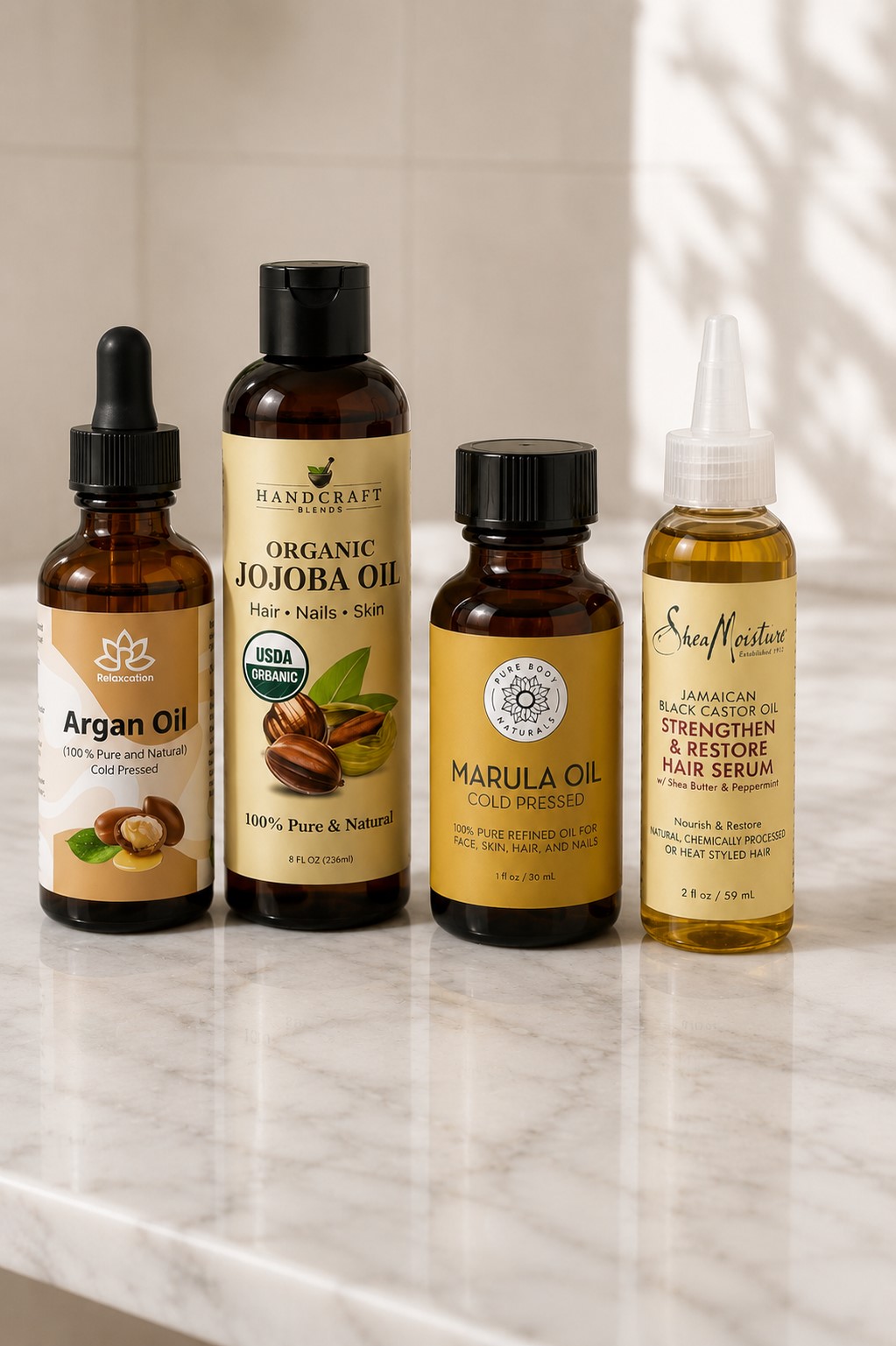
Best Multi-Purpose Hair Oils for Children
Some hair oils are formulated as blends rather than single oils. These blends combine multiple oils to give you the benefits of several different oils in one product.
They are convenient and often more effective than a single oil because each oil in the blend covers different needs.
Mielle Organics Rosemary Mint Scalp and Hair Strengthening Oil has become one of the most talked-about hair oils for children in recent years.
The rosemary oil in the formula supports hair growth and scalp health while the mint gives a refreshing sensation on the scalp.
It works well for natural, curly, and wavy hair types and has shown impressive results for many parents who use it consistently on their children’s scalps.
SheaMoisture Jamaican Black Castor Oil Strengthen and Restore Serum combines jamaican black castor oil with argan oil and shea butter.
The blend gives you the sealing power of castor oil with the lightness of argan oil. It works well for natural and curly hair without being as heavy as pure castor oil.
Aunt Jackie’s Oh So Clean Moisturizing and Softening Hair Oil is an affordable blend that works across multiple hair types.
It contains a combination of coconut oil, olive oil, and vitamin E that nourishes the hair and scalp while providing a reasonable seal.
A solid everyday option that does not break the budget.
Carol’s Daughter Black Vanilla Hair Smoothie blends shea butter, sweet almond oil, and other nourishing ingredients into a lightweight hair oil that works well for curly to natural hair types.
It adds moisture, shine, and a light seal without heaviness.
For children with natural hair who are building their full product routine, using a multi-purpose oil blend simplifies the routine without sacrificing results.
For guidance on how all the products in your routine work together from shampoo through to oil and beyond, children’s hair care routine on Little Hair Book maps out the full picture.

How to Apply Hair Oil Correctly
We touched on this at the beginning of the post but it is worth going through in detail because application technique makes a significant difference in how well the oil works.
Always apply to damp hair: After applying your leave-in conditioner, the hair should still be damp. That is the perfect time to apply oil.
The oil seals the moisture from the leave-in into the hair shaft.
Warm the oil between your palms first: Rubbing the oil between your palms before applying distributes it more evenly and helps it absorb better.
Cold oil applied directly to the hair tends to sit on top rather than distributing through the strands.
Work in sections for thick or natural hair: Divide the hair into sections and apply oil to each section separately.
This ensures even coverage especially for very thick or dense hair.
Focus on the ends: The ends are the driest and most fragile part of the hair, they need the most oil.
Apply a little extra to the ends and work your way up toward the roots, using less as you go.
Apply to the scalp separately: Scalp oiling and hair oiling are two different things. For the scalp, part the hair in sections and apply a small amount of oil directly to the scalp using your fingertips or a dropper bottle.
Massage gently with circular motions.
Use less than you think you need: Start with a small amount every time. You can always add more but removing excess oil is much harder.
For fine or straight hair especially, starting with a very small amount prevents the greasy look that too much oil causes.
How Often Should You Oil Your Child’s Hair
The frequency depends on hair type and what the oil is being used for.
Use hair cream after every leave-in application. For natural and coily hair, that’s usually daily or every other day.
For wavy hair, every few days is enough, while straight hair typically only needs it 2–3 times a week.
Scalp oiling should be done 2–3 times a week for most children’s hair types.
Natural hair children may benefit from daily scalp oiling especially in dry or cold weather when the scalp tends to dry out faster.
For pre-poo treatment before washing, apply oil generously the night before wash day and leave it on overnight under a plastic cap.
This is a separate use from daily sealing and it only happens once a week or every two weeks on wash day eve.
Signs You Are Using Too Much Oil
Oil is one of those products where more is definitely not better. Here are the signs that you are overdoing it.
The hair looks greasy or wet even hours after applying the oil. The hair feels heavy and limp rather than light and moisturized.
Product buildup is accumulating on the scalp faster than usual. The hair is attracting more dust and lint than normal.
If you notice any of these signs, reduce the amount of oil you are using and see if that helps. Sometimes switching to a lighter oil also solves the problem if the one you are using is simply too heavy for your child’s hair type.
As you continue building out your child’s complete product routine, the next step after oil is finding the right cream to use as the final sealing layer. Best hair creams for children on Little Hair Book covers everything you need to know about choosing and using the right hair cream alongside your oil.

