
Hair cream is the final step in the LOC method. It goes on after the leave-in conditioner and the oil and it acts as the last layer of sealing that keeps everything underneath locked in for as long as possible.
It also adds softness, definition, and manageability to the hair in a way that oil alone cannot. For children with natural, curly, or dry hair especially, a good hair cream is not optional. It is what makes the difference between hair that stays moisturized for a day and hair that stays moisturized for several days.
We covered hair oils in the last post on Little Hair Book and if you missed it, best hair oils for kids is worth reading first because understanding how oil and cream work together in sequence helps you use both products more effectively.
Today we are going deep into hair creams. What they do, what ingredients to look for, which ones are worth buying, and how to use them correctly for your child’s specific hair type.
What Hair Cream Actually Does for Your Child’s Hair
Hair cream sits in a unique space in the product lineup. It is thicker than a leave-in conditioner but lighter than a heavy butter. It is not as fluid as an oil but it spreads more easily than shea butter on its own. That middle-ground consistency is exactly what makes it so useful.
When applied as the last step in the moisturizing routine, hair cream does a few important things at the same time.
It adds another layer of sealing on top of the oil, which means the moisture from your leave-in conditioner is now locked in by two layers of product rather than one. This significantly extends how long the hair stays moisturized between wash days.
It also adds softness and smoothness to the hair that oil alone does not provide. The emollients and butters in a good hair cream coat each strand and make the hair feel luxuriously soft to the touch.
For children with coily or curly hair, this softness translates directly into more manageable hair that detangles easier and styles better.
For curly and natural hair types, many hair creams also add definition to the curl or coil pattern. They help the curls and coils clump together into defined groups rather than separating into individual frizzy strands.
This is what gives natural and curly hair that polished, well-defined look rather than a frizzy undefined cloud.
You will love this: Best Hair Brushes for Children
Hair Cream vs Hair Butter vs Hair Lotion
These three products are sometimes used interchangeably but they are actually different in consistency, weight, and how they work on the hair.
Hair cream is the middle ground. It is thick enough to seal but light enough to distribute through the hair without too much effort. It works for most hair types when used in the right amount.
Hair butter is heavier than cream. It is usually made from a base of shea butter, mango butter, or cocoa butter and it provides the strongest possible seal. It works best for very dry, very thick, or type 4C hair that needs maximum moisture retention. On finer or less dense hair, hair butter tends to be too heavy and can make the hair look greasy.
Hair lotion is lighter than cream. It has a more fluid consistency and absorbs into the hair more quickly. It works well for wavy hair or finer curly hair types that get weighed down easily by thicker products.
Knowing which of these three your child’s hair needs comes down to hair type and density. Very thick natural hair needs butter or a rich cream. Curly hair does well with a regular cream. Wavy hair does better with a lotion. Straight hair rarely needs any of the three beyond a very light lotion occasionally.
For more on how cream fits into the full moisturizing routine alongside leave-in and oil, how to moisturize children’s hair on Little Hair Book explains the LOC method and each product’s role in that process clearly.

What to Look for in a Children’s Hair Cream
Ingredients That Make a Cream Worth Buying
Shea butter: This is the most common and most effective base ingredient in children’s hair creams. Shea butter is rich in fatty acids and vitamins that nourish the hair deeply.
It provides a strong seal and adds significant softness. A cream with shea butter high on the ingredient list is almost always a good choice for natural and curly hair.
Natural oils: Creams that contain coconut oil, avocado oil, or sweet almond oil alongside their butter base are more nourishing than those that rely on synthetic ingredients for their consistency. Natural oils add both moisture and seal.
Humectants: Glycerin, aloe vera, and honey in a hair cream help draw moisture from the environment into the hair even after the cream has been applied.
This means the cream keeps working to add moisture long after application rather than just sitting on the hair.
Slip agents: Cetyl alcohol and behentrimonium methosulfate add slip to the cream which makes it easier to distribute through the hair and also makes detangling easier when the cream is applied.
Water near the top of the ingredient list: A cream that lists water high up is adding actual moisture alongside its sealing properties.
This makes it more effective than a cream that is purely oil and butter based with no water component.
Ingredients to Avoid in a Children’s Hair Cream
Mineral oil and petrolatum. These coat the hair without moisturizing it and build up quickly when used daily.
They are particularly problematic in a product like hair cream that is applied regularly between washes.
Heavy non-soluble silicones. Silicones like dimethicone provide a smooth feeling but build up on the hair over time and block moisture from getting in.
Since hair cream is used frequently, silicone buildup happens fast with this type of product.
Synthetic fragrances. Daily application of synthetic fragrance to a child’s hair and scalp can cause irritation over time.
Look for creams that are fragrance-free or that use only natural essential oils for scent.
Drying alcohols. These have no place in a product that is supposed to be adding and sealing moisture. Check the ingredient list and avoid any cream that lists ethanol or isopropyl alcohol.
Best Hair Creams for Natural and Coily Hair
Natural and coily hair needs the richest, most sealing hair creams available. This hair type benefits most from creams that are butter-based, deeply nourishing, and provide the strongest possible moisture seal.
SheaMoisture Coconut & Hibiscus Curl Enhancing Smoothie is a favorite for type 3 and type 4 hair. Its shea butter, coconut oil, and hibiscus formula moisturizes, seals, and enhances curl definition.
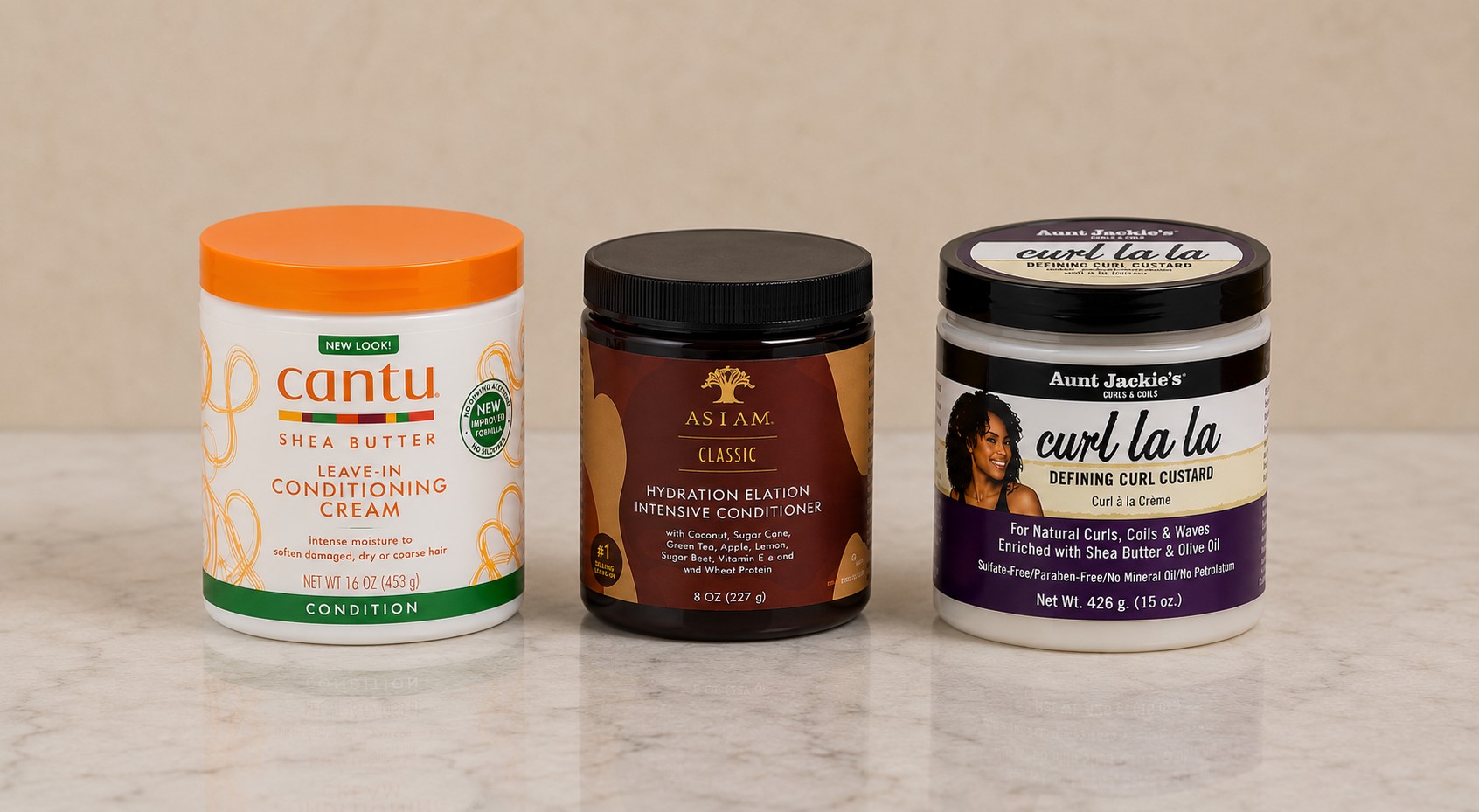
Cantu Shea Butter Leave-In Conditioning Cream is an affordable option for type 4 hair. It deeply moisturizes dry hair and can be used as both a leave-in conditioner and a sealing cream.
As I Am Hydration Elation Intensive Conditioner is rich enough to double as a cream for very dry natural hair, leaving coils soft, defined, and well-moisturized.
Aunt Jackie’s Curl La La Defining Curl Custard defines 4A and 4B curls while adding moisture and shine. Its creamy formula glides easily through thick hair.
Mielle Organics Pomegranate & Honey Curl Defining Smoothie combines honey, shea butter, and coconut oil to hydrate, seal in moisture, and enhance curl definition for type 3 and type 4 hair.
For children with natural hair, applying cream in sections after leave-in and oil gives the most even coverage. Work through each section completely before moving to the next one and make sure the ends get the most product since they are the driest and most fragile part.
For more on how to structure your wash day around these products, weekly hair care routine for children on Little Hair Book maps out exactly how and when to use each product through the week.
Best Hair Creams for Curly Hair
Curly hair needs creams that are moisturizing and defining without being so heavy that they weigh the curls down. The curls need to be able to spring and bounce and a cream that is too rich for the hair type flattens them instead.
DevaCurl SuperCream Coconut Curl Styler defines curls without stiffness and provides lasting moisture. Best for 2C–3B curls.
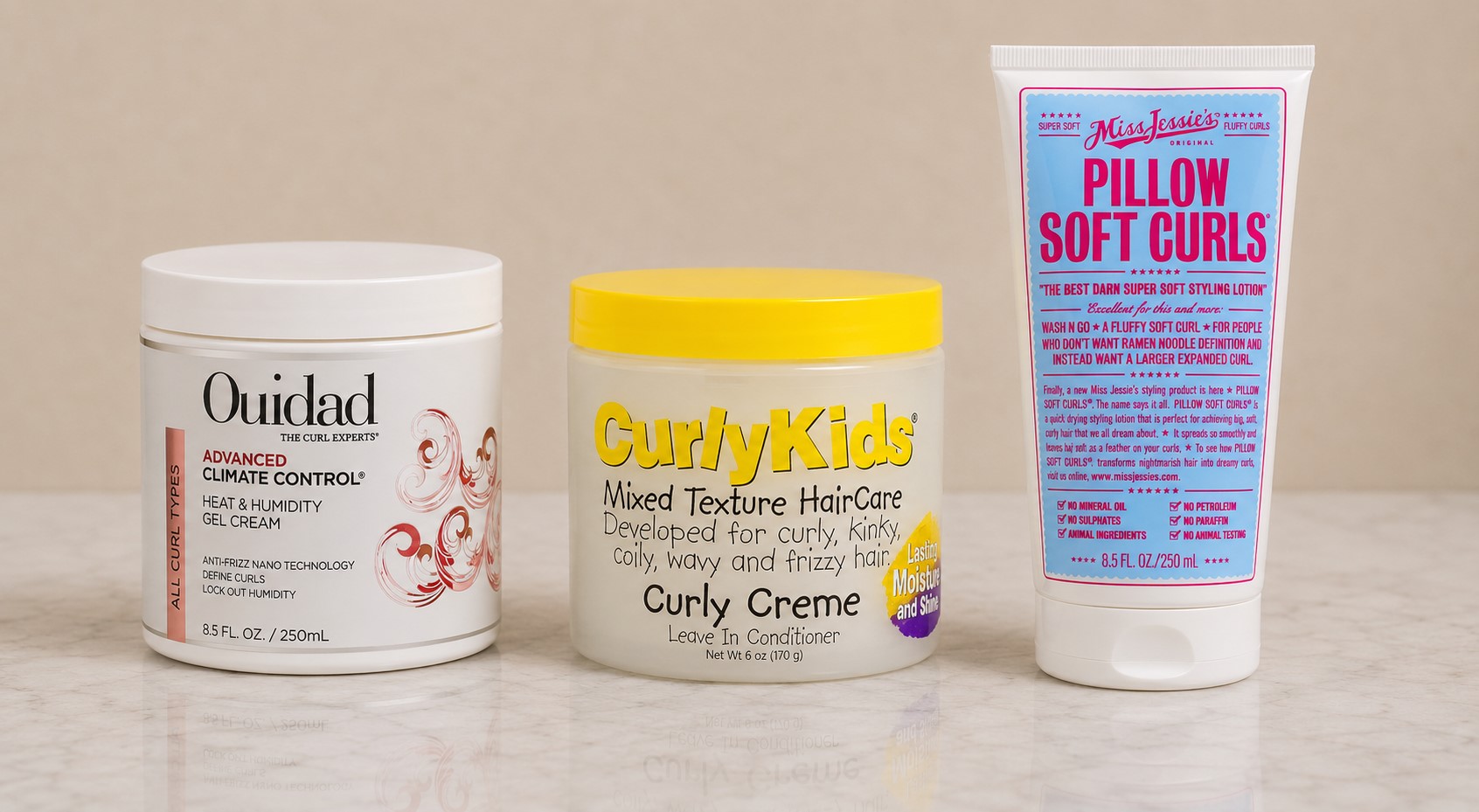
Ouidad Advanced Climate Control Heat & Humidity Gel Cream is a lightweight gel-cream that defines curls, controls frizz, and seals in moisture, making it ideal for humid climates.
Curly Kids Curly Creme is made for children, with a gentle, lightweight formula that moisturizes and softly defines curls without harsh ingredients.
Miss Jessie’s Pillow Soft Curls is perfect for 2C–3A curls. It adds moisture, enhances definition, and leaves curls soft and bouncy without weighing down fine hair.
It is a good option for children with fine curly hair that gets weighed down easily.
For curly hair, apply cream by scrunching it into the hair from ends to roots after your leave-in and oil. This encourages the curl clumping that gives curly hair its definition.
For more on styling curly hair to its best potential alongside using the right cream, how to care for curly children’s hair on Little Hair Book covers all the technique details.
Best Hair Creams for Wavy Hair
Lightweight Options That Define Without Weighing Down
Wavy hair needs the lightest creams available. The wave pattern is delicate and a heavy cream flattens it quickly. For wavy hair, a hair lotion often works better than a traditional cream but there are some creams lightweight enough to work well.
Not Your Mother’s Curl Talk Curl Defining Cream is a lightweight cream that enhances wave definition without any heaviness. It adds moisture, controls frizz, and lets the natural wave pattern come through clearly. It is also very affordable which makes it easy to use generously without worrying about cost.
Briogeo Curl Charisma Rice Amino and Avocado Curl Defining Cream is a slightly more premium option for wavy hair. The rice amino acids strengthen the hair while the avocado oil adds moisture and definition. It is lightweight enough not to flatten waves and provides a good enough seal to keep the hair moisturized between wash days.
Bounce Curl Light Creme Gel sits between a cream and a gel which makes it ideal for wavy hair. It defines the waves, adds moisture, and provides a light hold that keeps the waves intact throughout the day. It dries soft without crunch which is important for wavy hair that you want to look natural and touchable.
For wavy hair, apply a small amount of cream after leave-in conditioner and smooth it through the hair in the direction of the waves. Avoid scrunching with wavy hair the way you would with curly hair as this can make wavy hair look frizzy rather than defined.

Best Hair Creams for Children With Straight Hair
Straight hair rarely needs a traditional hair cream. The scalp’s natural oils keep straight hair lubricated and adding a heavy cream on top makes it look greasy very quickly.
For straight hair, a very light hair lotion applied to the ends only is usually the most that is needed. This addresses any dryness at the ends without making the rest of the hair look oily.
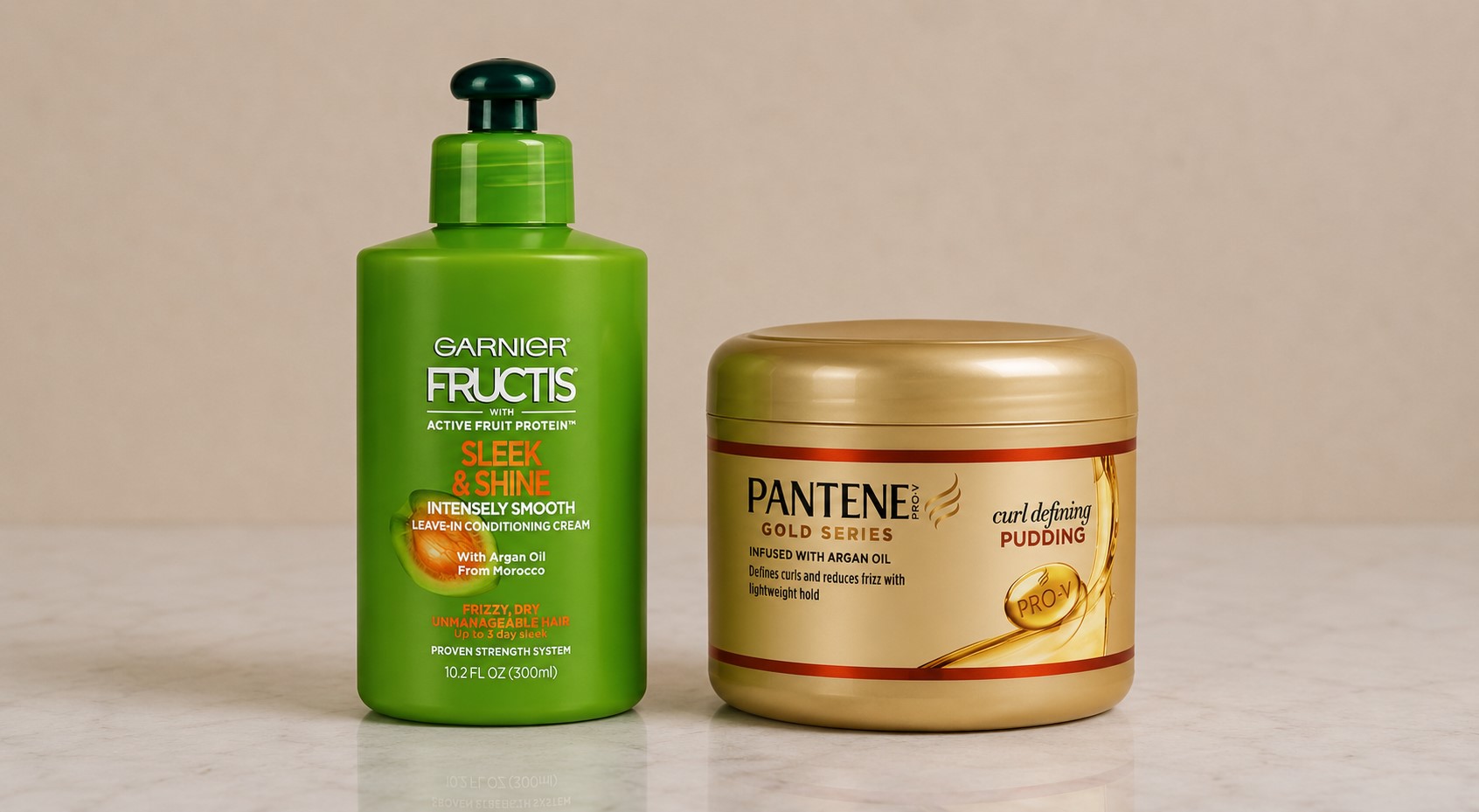
Garnier Fructis Sleek and Shine Leave-In Conditioning Cream is lightweight enough for straight hair and works well for adding smoothness and shine to the ends. Apply a tiny amount to the ends only and avoid the roots entirely.
Pantene Gold Series Curl Defining Pudding works as a light cream for straight hair that tends toward dryness at the ends. It is light enough not to weigh straight hair down and adds softness and smoothness where the hair needs it most.
For most children with straight hair, the leave-in conditioner and a small amount of light oil is sufficient for daily moisture. A cream is an occasional addition when the ends feel particularly dry rather than a daily step in the routine.
Bookmark this post: Choosing the Right Hair Brush for Your Child
How to Apply Hair Cream Correctly
Even the best hair cream gives disappointing results when it is not applied the right way. Here is how to get the most out of whatever cream you choose.
Apply in the right order: Apply hair cream after your leave-in conditioner and oil. In the LOC method, cream is the final step to help seal in moisture.
Apply to damp hair: Hair should be slightly damp so the cream can lock in moisture as it dries. Applying it to dry hair is less effective.
Use the right amount: Coily hair needs the most cream, curly hair a moderate amount, wavy hair a small amount, and straight hair very little. Start with a small amount and add more only if needed.
Work in sections: Divide thick or natural hair into at least four sections to ensure every strand is evenly coated.
Focus on the ends: Apply more cream to the ends, where hair is driest, and use less as you work toward the roots. The scalp’s natural oils help keep the roots moisturized.
For more on how to detangle the hair alongside applying your cream, how to detangle children’s hair on Little Hair Book covers how to work through knots gently while products are in the hair.
How Often Should You Apply Hair Cream
The right frequency depends on your child’s hair type and how quickly their hair loses moisture.
For natural and coily hair, applying cream every time you moisturize is appropriate. If you are moisturizing daily or every other day, the cream goes on every time as the final sealing step.
For curly hair, applying cream every one to two days works well for most children. On refresh days when you are not doing a full product application, a very small amount of cream smoothed over any dry sections is enough.
For wavy hair, applying cream two to three times a week is usually sufficient. More frequent application tends to cause buildup on wavy hair that makes it look limp.
For straight hair, use cream only when the ends feel particularly dry. Once or twice a week on the ends only is more than enough.
Pin this post: Best Shampoo for Children
Common Hair Cream Mistakes to Avoid
Applying to dry hair: Cream on completely dry hair just sits on the surface without being absorbed properly. Always start with damp hair.
Using too much: More cream does not mean more moisture. Too much cream causes buildup and makes the hair look greasy and heavy. Start with a small amount every time.
Skipping the leave-in and oil: Cream works best as the final layer in a sequence of products. Using it on its own without the leave-in and oil underneath means it is doing all the work alone and the results will not be as good.
Using a cream that is too heavy for the hair type: A rich shea butter cream on fine wavy hair will flatten it immediately. Match the weight of the cream to the density and type of your child’s hair.
Not applying to the ends: The ends are always the driest part and they need the most product. Do not spread the cream evenly from root to tip. Give the ends extra attention every single time.
As you complete your child’s full product lineup, the last product to add to the routine is a good detangling spray for the days when the hair needs a little extra help with knots and tangles between wash days. Best detangling spray for kids on Little Hair Book is exactly what you need next.

