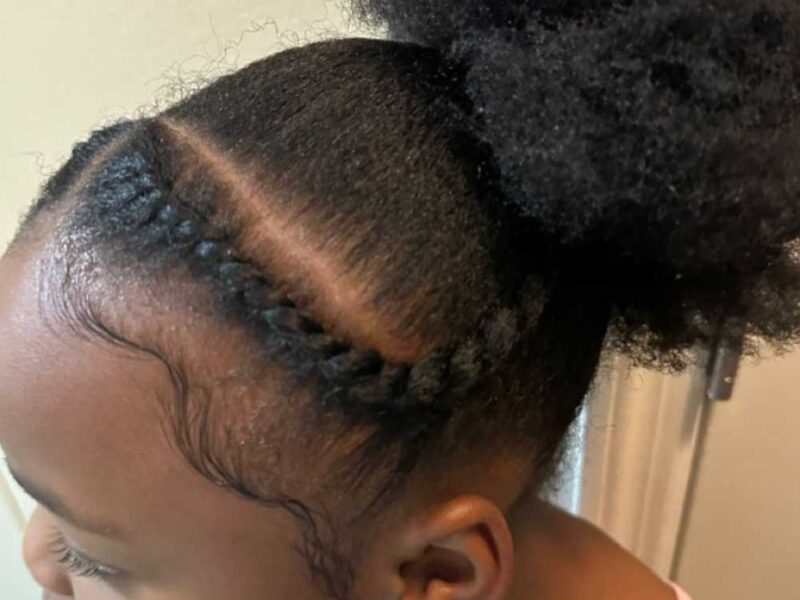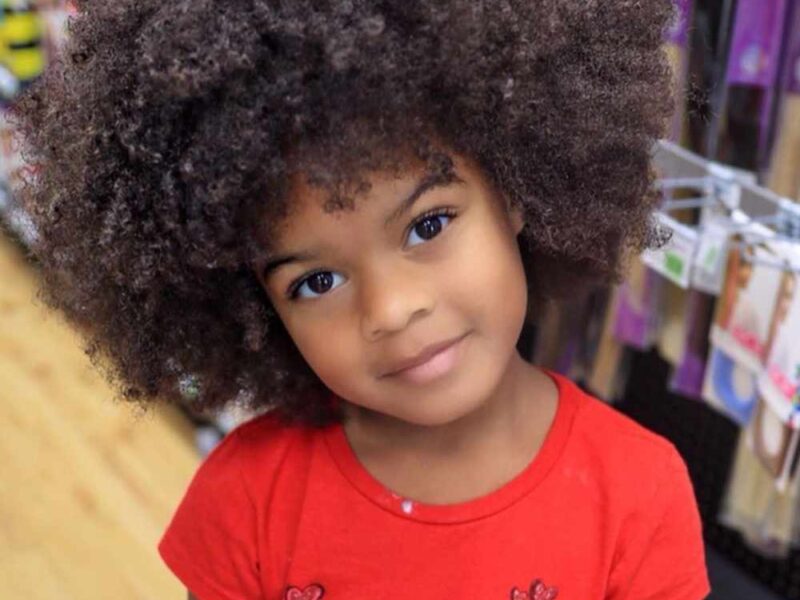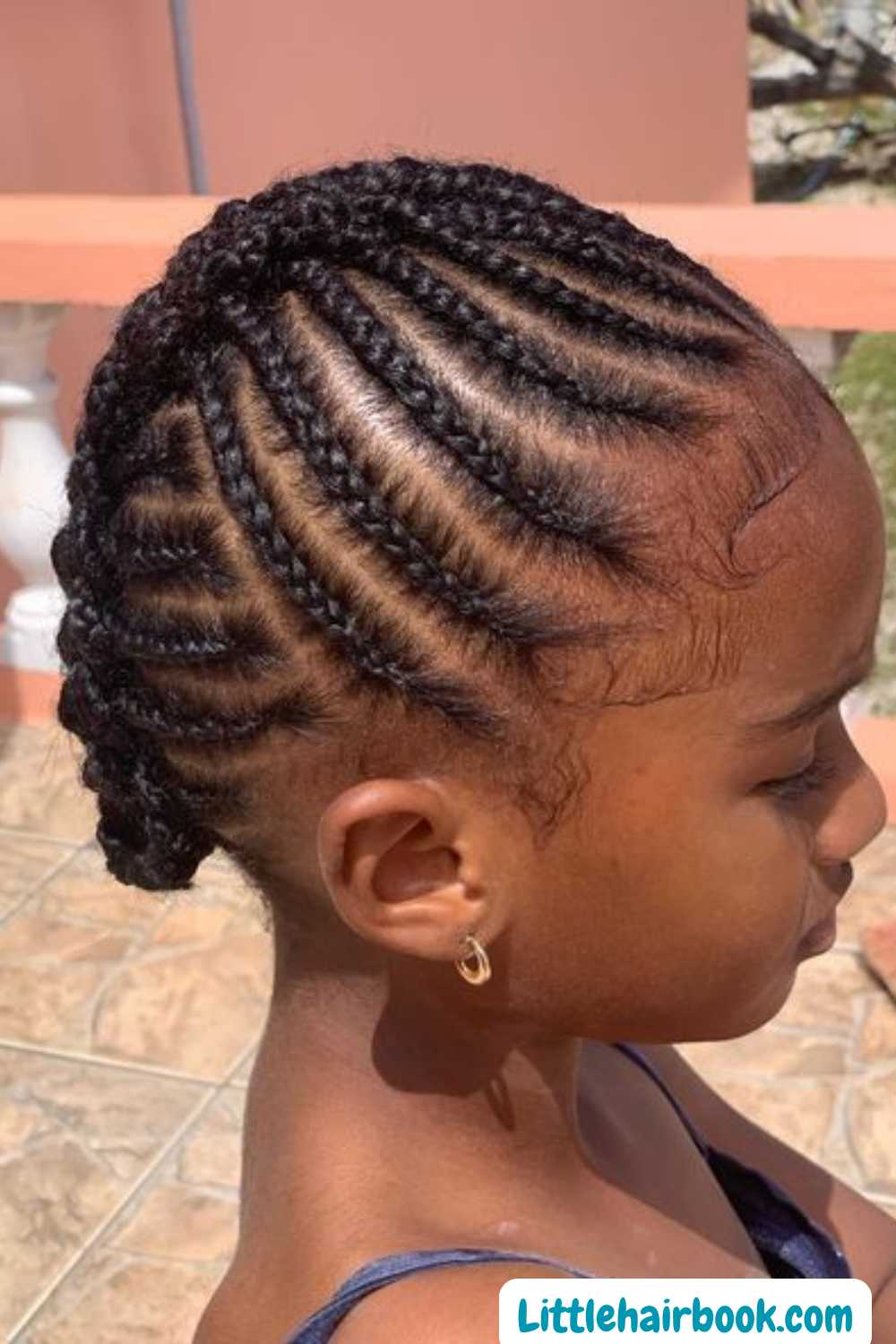
If you have been following along on Little Hair Book, we have already covered how to moisturize children’s hair and that post alone will change how you handle your child’s hair on non-wash days. But today we are going one step further.
We are talking about building an actual routine, something you can follow every single day and every single week without feeling overwhelmed.
I know how it is, you wake up, you have to get your child ready for school, and their hair is the last thing you want to fight with at 7am. I have been there so many times but here is what I learned. When you have a routine in place, mornings become so much easier.
You are not figuring it out as you go. You already know what to do, in what order, and with what products. That kind of clarity saves you time and saves your child from unnecessary pain.
A good hair care routine is not about doing the most. It is about doing the right things consistently. And that is exactly what this post is going to help you build.
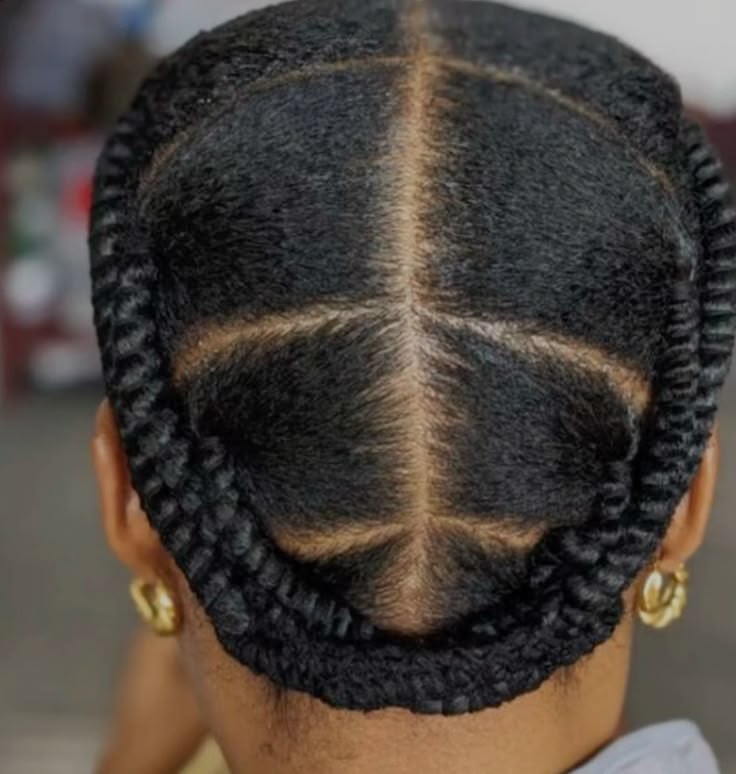
What a Children’s Hair Care Routine Actually Looks Like
A lot of parents hear the word routine and immediately think it means spending hours on their child’s hair every single day. That is not what this is about at all.
A children’s hair care routine is simply a set of steps you follow regularly to keep your child’s hair clean, moisturized, and healthy. Some steps happen daily, others happen weekly and some happen monthly. When you know which is which, the whole thing stops feeling like a chore and starts feeling manageable.
Think of it like brushing teeth. You do not deep clean your child’s teeth every single morning but you brush them every day to keep them healthy.
Hair works the same way, there are maintenance steps that happen daily and deeper care steps that happen less often.
Now if you are just starting out and you are not sure how often your child’s hair actually needs attention, daily hair care for kids on Little Hair Book breaks down exactly what needs to happen every single day in a way that is simple and easy to follow.
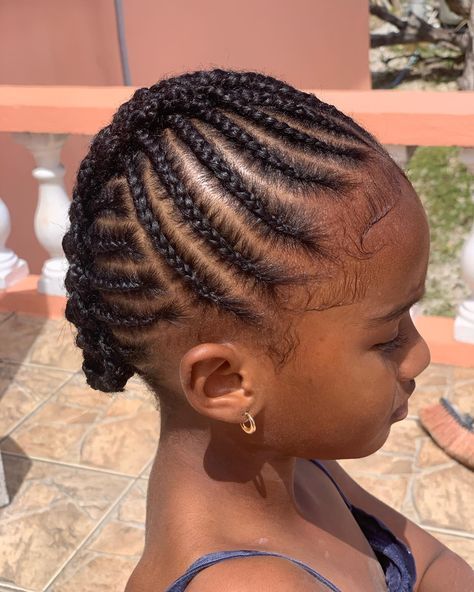
Start By Understanding Your Child’s Hair Type
Before you build any routine, you need to know what kind of hair you are working with. Not every child has the same hair, and what works for one child may not work for another.
Hair types are usually grouped into four categories. Type 1 is straight hair, type 2 is wavy, type 3 is curly, type 4 is coily or kinky, which is what most children with natural African hair have.
Within type 4, there are also subcategories. Type 4A has a defined curl pattern that looks like tight springs. Type 4B has a zigzag pattern. Type 4C is the tightest and most fragile of all, with little to no visible curl definition.
Knowing your child’s hair type helps you choose the right products and the right techniques. Fine straight hair needs lighter products and less frequent washing. Thick coily hair needs heavier moisturizers and more gentle handling.
You do not need to be an expert in hair typing to get this right. Just observe your child’s hair. How does it look when it is freshly washed and air dried with no products? That natural state will tell you a lot about what type of hair you are working with.
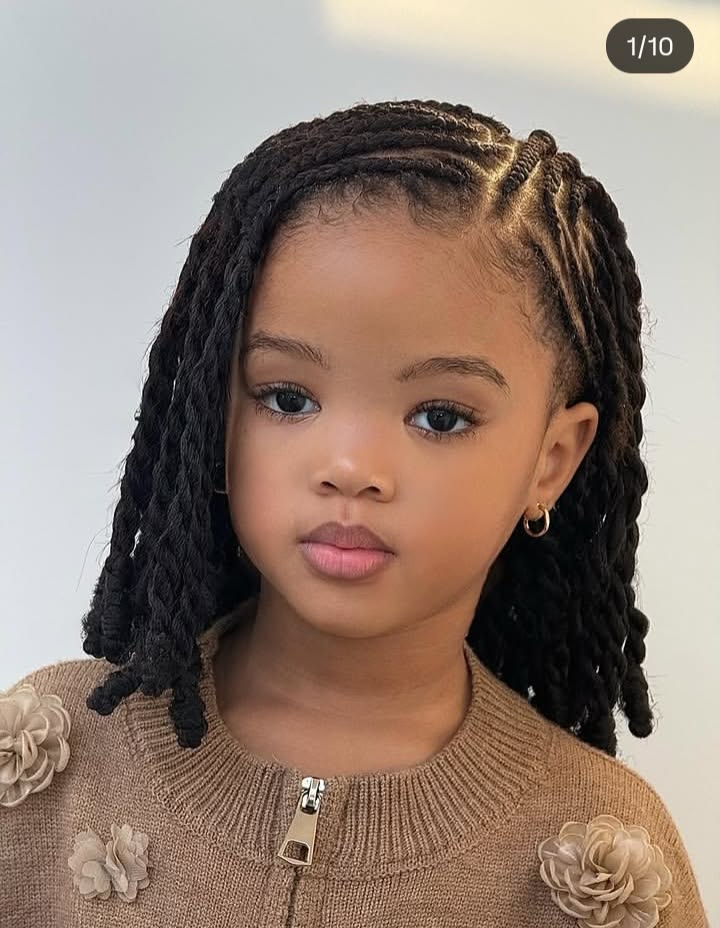
Building the Daily Part of Your Routine
What Daily Hair Care Should Actually Include
Daily hair care for children does not need to take long. In most cases, five to ten minutes is enough if the hair is in a protective style or was properly moisturized the day before.
Here is what daily care usually looks like:
Check the hair in the morning: Look at how it is holding up. Is it still moisturized from the day before? Are there any areas that look dry or frizzy? Are the edges looking rough?
Refresh the moisture if needed: If the hair feels dry, lightly mist it with water and apply a small amount of leave-in conditioner or hair cream. You do not need to redo the whole moisturizing process every single day. Just a quick refresh is enough most of the time.
Smooth down the edges: Use a soft bristle brush and a little edge control or water to lay the edges down neatly. This keeps the style looking fresh without disturbing the rest of the hair.
Re-braid or re-twist if needed: If your child’s hair comes undone at night, re-do any loose sections in the morning. This is why a protective style matters. It means less work every morning.
Put on a satin bonnet at night: Before bed, cover the hair with a satin bonnet or lay your child on a satin pillowcase. This one step reduces how much moisture the hair loses overnight and keeps styles intact longer.
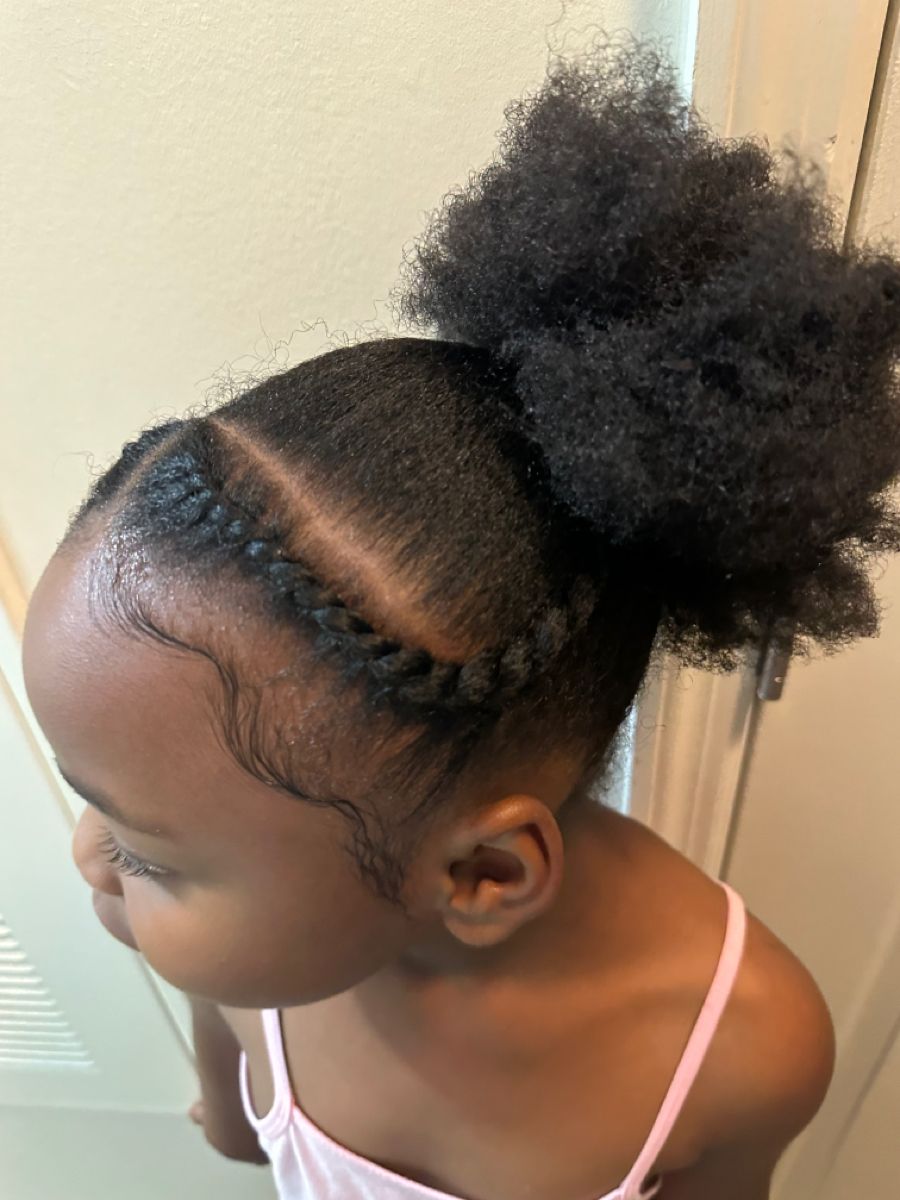
Building the Weekly Part of Your Routine
The weekly part of your routine is where the deeper work happens. This is when you wash, deep condition, and fully moisturize the hair from scratch.
Pick one day each week or every two weeks as your wash day. Stick to it as much as possible. When your child knows that Saturday is wash day, for example, there is less resistance because it becomes expected.
On wash day, this is the general flow:
Detangle before washing: Always detangle dry hair before it gets wet. Wet tangles are tighter and harder to remove. Use a wide-tooth comb and work from ends to roots.
Wash with a gentle shampoo: Focus the shampoo on the scalp and let it rinse down the hair. Do not pile the hair on top of the head and scrub. That causes tangles.
Deep condition: After shampooing, apply a deep conditioner and leave it on for at least fifteen to thirty minutes. Cover the hair with a plastic cap to help the conditioner penetrate better. This step is what brings real softness and strength to the hair.
Rinse, moisturize, and style: Rinse out the conditioner, apply your leave-in, oil, and cream following the LOC method, then style the hair into a protective style that will last through the week.
For a full step-by-step breakdown of what wash week should look like, weekly hair care routine for children on Little Hair Book goes deep into all of it.
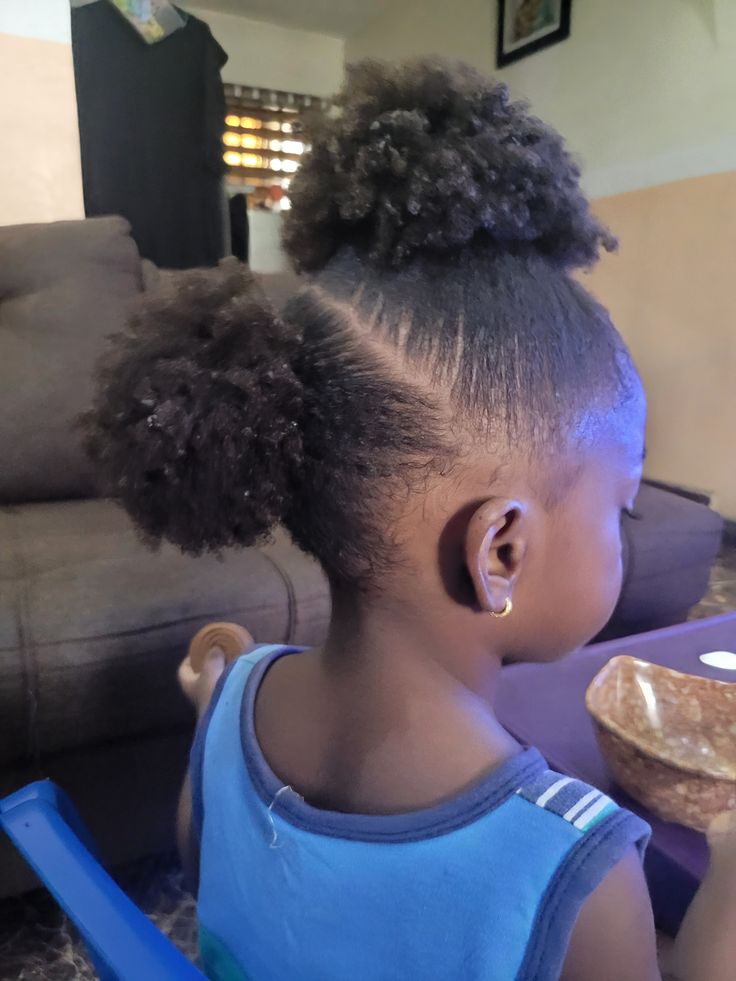
The Monthly Steps You Should Not Forget
Trimming and Scalp Care
Beyond daily and weekly care, there are a few things that only need to happen once a month or so. But they are important enough that skipping them will show up in your child’s hair over time.
Trim the ends: Split ends do not repair themselves. Once an end is split, it will keep splitting further up the hair shaft if you leave it alone.
Trimming the ends every six to eight weeks keeps the hair healthy and prevents breakage from traveling upward. You do not need to take off much. Even a tiny trim makes a difference.
Do a scalp check: Once a month, take a close look at your child’s scalp. Part the hair in different sections and look at the scalp directly.
You are checking for flaking, redness, buildup, or any unusual patches. Catching these things early makes them much easier to deal with.
Clarify if needed: Regular conditioners and creams can leave buildup on the scalp and hair over time. Once a month or every few weeks, use a clarifying shampoo to remove that buildup and start fresh.
Do not use a clarifying shampoo every week because it is stronger than a regular shampoo and can strip the hair if overused.
Choosing the Right Products for Your Routine
You do not need ten different products to run a good hair care routine. In fact, keeping it simple is better. Too many products layered on top of each other can cause buildup and weigh the hair down.
Here is a simple product lineup that works for most children:
A gentle sulfate-free shampoo for wash day, look for one that cleans without stripping.
A deep conditioner to use after shampooing once a week or every two weeks.
A leave-in conditioner for daily moisture, water should be the first ingredient.
A light oil like jojoba or argan oil for sealing in moisture on finer hair types.
A heavier oil or butter like shea butter or castor oil for thicker, coilier hair types.
An edge control for smoothing the hairline and keeping styles neat.
That is honestly all you need to start. As you learn more about your child’s specific hair needs, you can adjust and add things. But do not overwhelm yourself by buying everything at once.
How to Handle Setbacks in Your Routine
Life happens, there will be weeks where wash day gets skipped. There will be mornings where there is simply no time to do anything with the hair. That is okay because a routine is a guide, not a strict rule you can never break.
What matters is that you come back to it. One skipped wash day does not ruin your child’s hair but consistently skipping care over weeks and months will show up as dryness, breakage, and a frustrated child who dreads having their hair touched.
When you get off track, just start again from where you are. Detangle, moisturize, and get back into your weekly rhythm. Do not try to do too much at once to make up for lost time. That can cause more harm than good.
If your child’s hair has become severely tangled from a missed routine, how to detangle children’s hair on Little Hair Book will walk you through exactly how to handle that without causing pain or breakage.
Making the Routine Work for Your Child’s Personality
Every Child Is Different and That Is Okay
Some children sit still perfectly during hair time. Others cannot stay still for more than two minutes. Knowing your child helps you adapt the routine to fit them.
For very active or restless children, break the routine into smaller chunks. Do the detangling in the morning. Do the moisturizing in the evening. You do not have to do everything at once.
For children who are sensitive about their hair being touched, go slowly. Use your fingers before tools. Talk to them as you work, you can explain what you are doing and why.
Children who understand what is happening are usually less resistant than children who feel like something is just being done to them without explanation.
For children who have had bad experiences with hair pain in the past, rebuilding trust takes time. Start with very gentle sessions. Even if you only manage to moisturize and smooth the hair down before they get upset, that is still progress. Keep showing up consistently and gently.
Adjusting the Routine as Your Child Grows
Your child’s hair needs will change as they get older. A baby’s hair is very different from a toddler’s hair. A toddler’s hair is different from a school-age child’s hair. And a preteen’s hair brings a whole new set of needs.
Pay attention to how the hair responds to your current routine over time. If the products that used to work stop working, it might be time to switch. If the hair seems to need more or less moisture than before, adjust how often you are moisturizing.
Also as children get older, they start to have opinions about their own hair. That is actually a good thing. Get them involved in choosing products, picking styles, and eventually learning how to care for their own hair. Building that independence early sets them up for a lifetime of healthy hair habits.
For children with curly hair especially, learning to embrace and care for their natural texture from a young age is so valuable. How to care for curly children’s hair on Little Hair Book is a great resource to explore together with your child as they grow.
A Sample Weekly Routine You Can Start Using Today
Here is a simple template you can adapt to fit your child’s hair type and your schedule.
Monday: Morning refresh, lightly mist hair, smooth edges, re-braid any loose sections.
Tuesday: Check moisture, add leave-in conditioner to any dry areas. Satin bonnet at night.
Wednesday: Mid-week refresh, mist and moisturize if needed. Keep protective style intact.
Thursday: Check scalp, apply a light oil to the scalp and massage gently.
Friday: Prep for wash day, detangle hair gently while dry. Apply pre-poo oil if needed.
Saturday: Wash day, shampoo, deep condition, moisturize using the LOC method, and style into a protective style.
Sunday: Rest day, keep the bonnet on. Let the hair breathe.
This is just a starting point. You will find your own rhythm as you go. The goal is simply to have a plan so you are never just winging it.
Teaching Your Child to Love Their Hair
This is something I feel strongly about, a hair care routine is not just about the physical health of the hair. It is also about how your child feels about their hair.
When children see their parents handling their hair with care and intention, they learn that their hair is worth taking care of. They grow up proud of their hair instead of seeing it as a problem.
Talk positively about your child’s hair during routine time. Point out what is beautiful about it. Celebrate the growth, the thickness, the texture. These little moments add up over years and shape how your child sees themselves.
If your child has natural hair, how to care for natural children’s hair on Little Hair Book is a wonderful read for building that pride and giving you the practical tools to back it up.
The One Thing That Makes Every Routine Work
Consistency, that is it, that is the secret.
You do not need the most expensive products. You do not need to spend hours on your child’s hair. You just need to show up for it regularly with the right steps and a gentle hand.
A routine that you actually follow every week will always beat a perfect routine that you only do once in a while. Start simple. Stay consistent. And adjust as you learn what your child’s hair loves.
Also, as you build your routine, pay close attention to how you are handling the hair during styling. Brushing and combing done the wrong way can undo all the good work your routine is doing. How to brush children’s hair on Little Hair Book will help you make sure that part of the process is just as gentle as everything else.